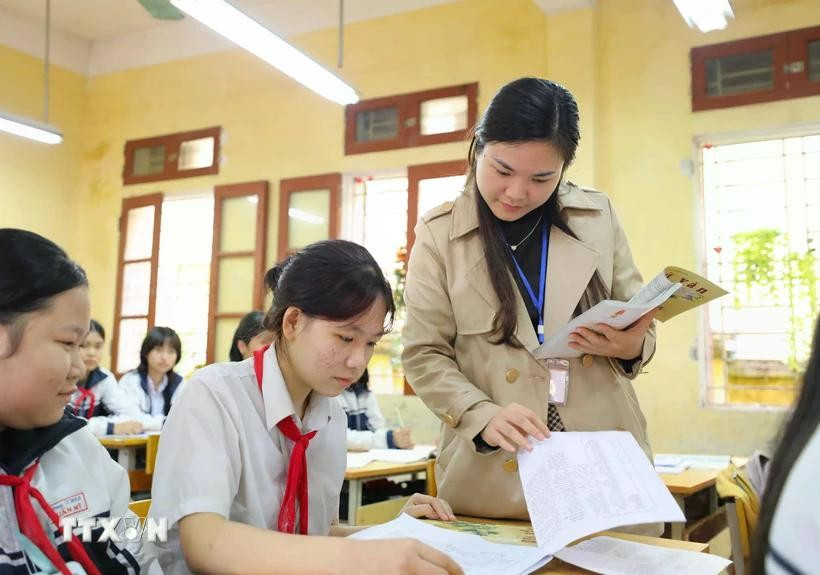
Hanoi (VNA) - UNESCO Representative to Vietnam Jonathan Wallace Baker has commended the adoption of the Law on Teachers by the National Assembly, especially the groundbreaking policy to rank teachers’ salaries at the highest level within the administrative and public service salary scale system.
In an interview with the Vietnam News Agency, Jonathan Baker pledged that UNESCO will continue to advise Vietnam so that it adopts and implements policies that have a real impact on equity in access to education and contribute to improving the quality of education.
Following is the full text of the interview.
Reporter: Could you please share your opinion on the Vietnamese National Assembly’s adoption of the Law on Teachers, particularly the policy that teachers’ salaries are ranked highest within the administrative and public service salary scale system?
Jonathan Wallace Baker: UNESCO welcomes and commends the adoption of the Law on Teachers by the National Assembly of Vietnam, especially the groundbreaking policy to rank teachers’ salaries at the highest level within the administrative and public service salary scale system.
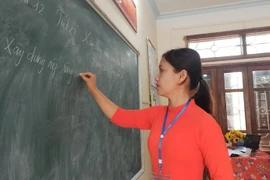
Throughout history, teachers have held a deeply respected role in Vietnamese society, as echoed in the saying, “Khong thay do may lam nen” – “Without teachers, you cannot succeed.” The broad consensus from the parliament underscores not only the country’s enduring cultural reverence for teachers but also a forward-looking commitment to investing in the people who are at the heart of education transformation.
UNESCO is proud to have partnered with the Ministry of Education and Training throughout the development of the Law to promote a holistic, teacher-centred approach to national education policy. In today’s rapidly changing world filled with uncertainties, teachers must be empowered, professionally supported, and adequately compensated to meet the evolving needs of learners and communities. This milestone for Vietnam sets a positive precedent in the region and beyond.
Reporter: In your view, what impact or influence will the new Law on Teachers have on Vietnam’s efforts to ensure access to quality education for all groups in society?
Jonathan Wallace Baker: Education systems around the world are being reshaped by rapid technological, environmental, and social changes. Teachers today are expected to go beyond delivering content to nurturing critical thinking, creativity, and lifelong learning. Vietnamese teachers are no exception.
The new Law on Teachers will help attract and retain qualified educators, especially in the most disadvantaged and remote areas where access to quality education is most critical. Just as importantly, it helps create an enabling environment where teachers can be motivated, continue to learn, transform themselves, and lead as lifelong learners and agents of change.
By empowering teachers in this way, Vietnam is not only addressing equity gaps and improving learning outcomes, but also fostering a more inclusive, resilient, and happy society. Ultimately, investing in teachers lays the foundation for a safer, more stable, and better world for all.
Reporter: Could you share specific plans or cooperation programmes between UNESCO and Vietnam to implement the Law on Teachers, which will take effect next year, effectively and substantively aiming toward a sustainable, inclusive, and high-quality Vietnamese education system?
Jonathan Wallace Baker: We are truly impressed by the long and thoughtful journey that led to the adoption of the Law on Teachers. This process began as early as 2008, when Vietnam took the initiative to translate and draw lessons from two key international instruments: the ILO/UNESCO Recommendation concerning the Status of Teachers (1966) and the UNESCO Recommendation concerning the Status of Higher-Education Teaching Personnel (1997). These documents outline the principles for ensuring the rights, responsibilities, and professional conditions of educators across all levels.
In recent years, UNESCO has worked closely with the Ministry of Education and Training, together with the Secretariat of the International Taskforce on Teachers, to provide technical assistance, policy guidance and dialogues as well as and international perspectives during the drafting and finalisation of the Law.
Looking ahead, we remain committed to supporting the effective and inclusive implementation of this Law. Our focus will be on supporting and promoting leadership roles and capacities at both system and school levels in implementing this Law, and on strengthening evidence-based policymaking through improved data, foresight, and research on the teaching profession.
We will also work to ensure that implementation promotes gender equality, inclusion, and well-being for all teachers and learners — especially in disadvantaged contexts — while addressing opportunities and risks brought by digital transformation and broader societal shifts.
These efforts are deeply connected to Vietnam and UNESCO’s shared vision of building Happy Schools — where learning is meaningful, equitable, and joyful for both students and teachers. Supporting the well-being and professional empowerment of teachers is central to advancing Vietnam’s national development goals by fostering a sustainable, inclusive, and high-quality education system — and ultimately, a happier and more resilient society.
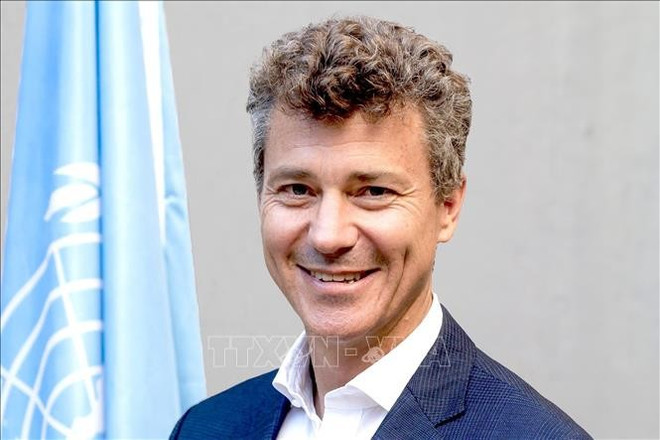
Reporter: The Vietnamese National Assembly is currently discussing the adoption of a resolution on tuition exemption and support for preschool children, general education students, and learners of the general education programme at educational institutions within the national education system. What is your assessment of this policy initiative by the Vietnamese government?
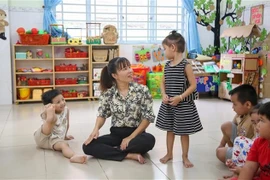
Jonathan Wallace Baker: UNESCO commends the Government of Vietnam for its bold and inclusive policy initiative to waive tuition fees for learners across all levels of general education including pre-school children. This is a significant step toward ensuring equitable access to education, particularly for vulnerable and disadvantaged groups, helping to eliminate financial barriers and enabling every child to pursue their right to quality learning.
This policy is further reinforced by the Government’s commitment to implementing full-day schooling for all elementary and lower secondary students in public schools starting from the 2025–2026 academic year. This is a timely and strategic move to reduce academic pressure, ease parental burden, and promote a more holistic, child-centred learning experience.
In this context, UNESCO will continue to advise Vietnam so that it adopts and implements policies that have a real impact on equity in access to education, contribute to improving the quality of education, and encourage the development of non-public education.
We will also work with Vietnam to enhance the recognition, motivation, and capacity of support staff — ensuring they are integral to a whole-school approach that maximises learning outcomes, particularly in the context of digital transformation and implementation of the Happy Schools framework.
With its large and dynamic population, Vietnam’s investment in inclusive and equitable education will serve as a key driver of socio-economic development and accelerate progress toward achieving the Sustainable Development Goals. UNESCO looks forward to continued cooperation with the Government of Vietnam and all partners in advancing lifelong learning opportunities for all.
Reporter: Thank you very much!