Unlocking potential for Vietnamese firms to reach global heights

For Vietnamese businesses to reach regional and global heights, attention must be paid to three pillars of support - a transparent and stable institutional framework; financial and credit policies that encourage innovation; and modern infrastructure with a high-quality workforce.

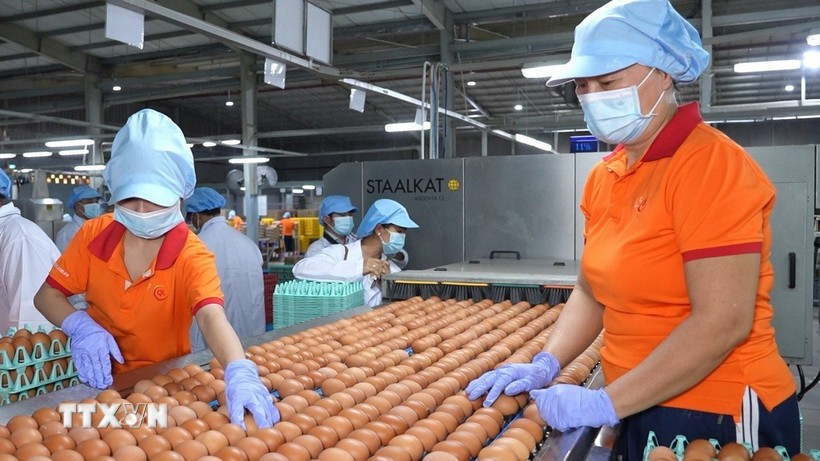
Workers package eggs at the factory of the QL Vietnam Agroresources Co. Ltd. (Photo: VNA)

Hanoi (VNA) - Vietnamese businesses are presented with a significant opportunity to break through, as their creative potential is supported by progressive policies and a favourable business environment, establishing a strong foundation for expansion into global markets.

Phan Minh Thong, Chairman of Phuc Sinh Corporation, whose products, including pepper and coffee, are exported to 120 countries, said that the company’s ambition is to take Vietnamese goods to the world.

However, he expressed concerns that despite exporting 30-40 containers of agricultural products daily, Vietnam lacks a commodity exchange.

Global agricultural commodity prices fluctuate greatly, and Vietnam controls 55% of the world’s pepper market and 20-30% of the coffee market, he explained, adding that if Ho Chi Minh City had an exchange linked to real goods, it would create more jobs, attract international buyers and sellers, and help businesses better control the market. Indeed, many Vietnamese businesses are asserting their new position thanks to innovation and a desire to expand.

According to Dang Hong Anh, Chairman of the Vietnam Young Entrepreneurs Association (VYEA), this is a moment of convergence between the internal strength of businesses and the open policies from the state, offering an opportunity for the private sector to thrive. When businesses tap into their full potential, they can excel in this new era of integration, digital transformation, and green economy.

The Fourth Industrial Revolution presents an opportunity for Vietnamese enterprises to leapfrog. Especially, the set of four strategic resolutions from the Politburo, including Resolution 68-NQ/TW, which recognises the private economic sector as a key driver of economic growth, provides a solid legal framework for entrepreneurs to boldly invest, innovate, and assert their pivotal role, he underlined.

For Vietnamese businesses to reach regional and global heights, the VYEA leader outlined three pillars of support - a transparent and stable institutional framework; financial and credit policies that encourage innovation; and modern infrastructure with a high-quality workforce.

Nguyen Ngoc Hoa, Chairman of the Ho Chi Minh City Business Association (HUBA), highlighted that after years of opening up and development, the Party’s resolutions have shaped and elevated Vietnam’s economic standing.

He emphasised that Resolution 68 will provide even better conditions for businesses to grow and expand and called on ministries and local authorities to implement these policies with tailored programmes and solutions for businesses of all sizes - from large to micro.

HUBA, which has been tasked by the HCM City People's Committee to research the International Financial Centre (IFC) proposal, also advocates for the establishment of a commodity exchange as an essential component, he stated.

Building a commodity exchange at the IFC is entirely within reach, as Vietnam has the internal strength and sufficient production volumes to attract international customers, he said, expressing his hope that when people think of buying coffee, pepper, rice, or rubber, they will immediately think of Vietnam.

From a government perspective, Nguyen Loc Ha, Vice Chairman of the HCM City People's Committee, stated that the city will focus on three main solutions, with the business community playing a central role.

The first is improving the business investment environment, boosting competitiveness, increasing transparency, and cutting costs and administrative delays. The second is reviewing and removing obstacles for stalled projects, particularly large ones facing issues related to fire safety, land use, investment, and construction. The third is increasing mobilisation of social resources for development investment, beginning with public investment disbursement, which will then attract private investments and help develop State-owned enterprises, the official stated./.

VNA
See more

NSMO Chairman Nguyen Duc Cuong speaks at the event (Photo: VNA)

Experts seek to improve power dispatch in new energy era

Electricity demand is expected to rise strongly, while global energy markets remain volatile. In this context, rooftop solar and BESS are emerging as key solutions to improve flexibility and ensure supply, especially during peak periods.

Prime Minister Pham Minh Chinh speaks at the conference. (Photo: VNA)

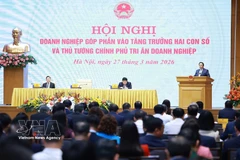
Enterprises must pioneer in achieving double-digit economic growth from 2026: PM

Reports delivered at the conference showed that Vietnam had about 1 million active enterprises by late 2025, up more than 25% from 2020, contributing roughly 60% of GDP and employing more than 16 million workers. They also account for the bulk of the country’s trade turnover, while Vietnam ranks among the world’s top 15 destinations for foreign direct investment.

Visitors browse the Vietnamese product display booths at the "Vitality of Vietnamese Goods" exhibition and livestream in Hanoi from March 7-9, 2026. (Photo: VNA)

Vietnamese goods promotion: Greater transparency needed

As transparency, traceability and social responsibility increasingly become essential entry requirements, proactive compliance will give Vietnamese enterprises a clear advantage in building trust among international partners.

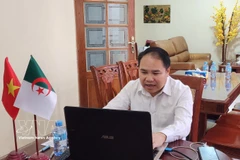
Trade Counsellor Hoang Duc Nhuan of the Vietnam Trade Office in Algeria speaks at the online export consultancy session on the markets of Algeria, Senegal and Tunisia for more than 40 Vietnamese agencies and enterprises on March 26. (Photo: VNA)

Opportunities for Vietnamese businesses to promote exports to African markets

Vietnamese exporters were advised to seek partners through reputable channels and to use secure payment methods, such as irrevocable letters of credit confirmed by trusted European or American banks, or documentary collection with a deposit of at least 20% of the contract value. Deferred payment arrangements should be avoided.

Prime Minister Pham Minh Chinh speaks at the conference (Photo: VNA)

Prime Minister stresses firms’ role in double-digit growth target

While the Party and State will continue refining institutional framework, mechanisms and policies, Prime Minister Pham Minh Chinh made clear that enterprises must be the main drivers of growth. He urged them to take greater responsibility for rapid and sustainable development, while actively contributing to institutional reform.

Illustrative photo (Photo: deplacementspros.com)

Aviation authority grants Qatar Airways permission for three flights

According to the authority, these flights will not carry domestic passengers on the Hanoi–Ho Chi Minh City leg. Instead, they are intended to transport passengers affected by the exceptional situation in the Middle East, while gradually restoring air transport activities between Qatar and Vietnam, including passengers, cargo and parcels.

Rice packaged for export at the factory of Vinh Phat Wilmar Rice Co., Ltd. in Binh Duc ward, An Giang province. (Photo: VNA)

Vietnam steps up rice market diversification through FTAs

Effective utilisation of free trade agreements (FTAs) has also been identified as a key solution to expand export markets. Authorities are incorporating rice into support roadmaps helping enterprises maximise FTA benefits while accelerating negotiations to expand tariff quotas with partners such as the EU and the UK.

Consumers shop at a supermarket. (Illustrative photo: VNA)

Launch of Vietnam Consumer Rights Day 2026 set to take place this weekend

At the national launch ceremony, scheduled for the afternoon of March 28, representatives of ministries and agencies, social organisations and businesses are expected to make commitments affirming their responsibility to comply with the law, provide safe and transparent products, and help build consumer confidence and a fair marketplace.

Deputy Prime Minister Ho Quoc Dung (right) receives Yongsoo Huh, Vice Chairman and CEO of GS Energy. (Photo: chinhphu.vn)

Deputy PM meets GS Energy leader, encourages renewable investment

Deputy Prime Minister Ho Quoc Dung called on GS Energy to continue working closely with Vietnamese authorities and partners to explore solutions for developing local supply chains, enhance mutually beneficial cooperation and contribute to the sustainable development of both countries.

Party General Secretary To Lam speaks at the meeting with representatives of more than 40 international corporations from the Asia Business Council in Hanoi on March 26 (Photo: VNA)

Vietnam pledges partnership to develop resilient, green supply chains: Party leader

Party General Secretary To Lam affirmed that Vietnam will continue to encourage domestic enterprises to expand partnerships with foreign investors, while directing legislative, executive and judicial bodies, along with agencies in the political system, to create the best possible conditions for businesses to grow, enhance international cooperation, and move up global value chains.