Hanoi (VNA) - Vietnam is an "emerging potential" player in ASEAN’s artificial intelligence (AI) landscape, yet experts warn that bridging the investment gap with global powerhouses remains the nation's most formidable challenge.
At Vietnam AI Day 2025 (AI4VN 2025) held in Hanoi on September 26, industry leaders analysed Vietnam's position on the global AI map, outlining both the obstacles and opportunities that could propel the country toward a technological breakthrough.
Global AI race takes the heat
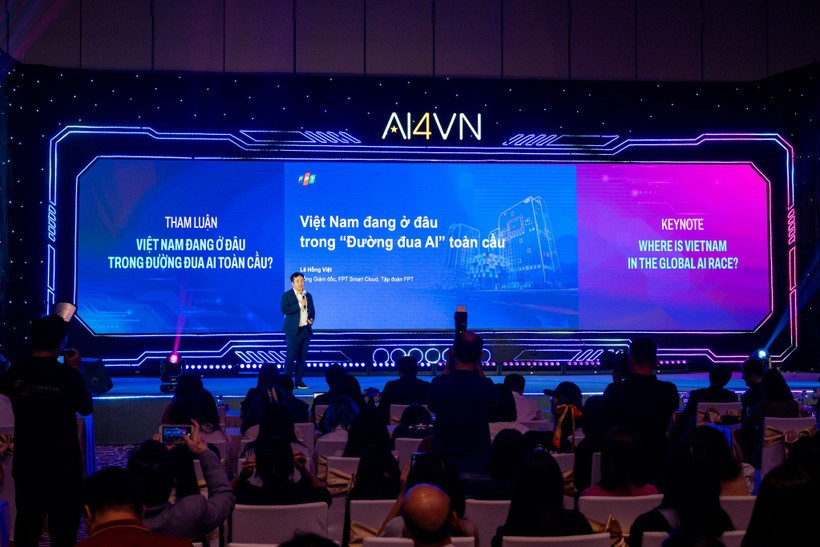
According to FPT Smart Cloud General Director Le Hong Viet, the global AI race is intensifying across the development of foundational models and academic research. Citing reports by IDC and PwC, he noted that AI is expected to contribute 19.9 trillion USD to the global economy and boost global GDP by 15% by 2035.
The landscape has been dominated by the US with 40 leading AI models and total private investment of 471 billion USD from 2013 to 2024. China has 15 high-quality models, and over 817,800 AI-related patents, the highest globally.
Vietnam stands out as an emerging potential player in ASEAN, he said, adding the gulf in investment is massive as the country’s total AI funding is 56 times smaller than that of the US and China, and lags well behind Singapore.
Beyond investment gaps, Vietnam faces shortages of high-quality talent, inadequate R&D spending, and an incomplete AI legal framework, he highlighted.
Meanwhile, Chief Technology Officer at Viettel AI Nguyen Hoang Hung said global tech titans such as Meta, Microsoft, and OpenAI have each invested tens or even hundreds of billions of USD to secure millions of graphics processing units (GPUs). For instance, training Meta’s Llama 3 model required 30.84 million GPU hours, a task that could take 55 years to complete using a modest domestic server cluster. That alone demonstrates the scale of disparity in computing capacity.
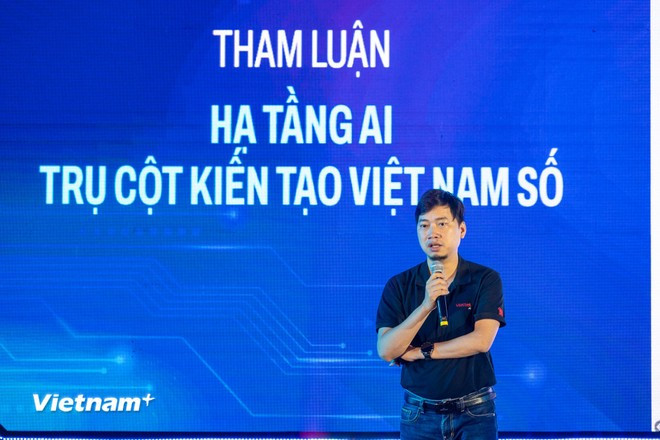
Jumping on the bandwagon, the Vietnamese Government has issued multiple ambitious strategies, eyeing top 3 in ASEAN and Top 50 globally in AI research by 2030. Nevertheless, the domestic data centre market remains modest compared to regional neighbours, Hung emphasised.
Encouragingly, Vietnam’s AI readiness is gaining international recognition. A report by the Worldwide Independent Network of Market Research (WIN) ranked Vietnam sixth out of 40 countries for AI readiness. The domestic AI ecosystem is heating up rapidly, with 2024 investment reaching 80 million USD, alongside a 500,000-strong technology workforce and high AI adoption rates, with 42% among the general population and 65% among small and medium enterprises.
Vietnam boasts strengths in competitive costs, proactive government policies, and a fast-growing economy. Yet weaknesses remain, including fragmented AI infrastructure, a shortage of skilled experts, underdeveloped regulations, and limited R&D spending.
Roadmap for Vietnam’s sovereignty AI development
Mastering AI infrastructure is the prerequisite for the country’s digital transformation, Hung said, stressing it lays a solid foundation for Vietnam’s technological self-reliance and innovation for a sustainable digital future.
Viet shared that AI has moved beyond future speculation into present reality, reshaping the digital competition among enterprises. For every dollar invested in generative AI, businesses can achieve an estimated 3.7-times return on investment.
In Vietnamese practice, AI Agents are being deployed to transform business operations. FPT Smart Cloud has implemented over 1,500 AI Agents for clients, automating 46% of customer service centres’ workloads, increasing telesales revenue by 20%, and processing more than 400 million documents annually with over 95% accuracy.
Regarding human resources, AI assistants are facilitating regular learning for 20,000 employees, boosting knowledge quality by 15% while saving 80% on training resources.
FPT Smart Cloud General Director Le Hong Viet (Photo: VietnamPlus)
Based on the analysis, Vietnam proposed a roadmap on building sovereign AI for Vietnam, structured around people, digital infrastructure, products, and an ecosystem. It should be developed in three phases, 2025 for foundation and preparation, 2026-2027 for deployment and expansion, and 2028-2030 for regional leadership.
Experts agreed that infrastructure challenges are the motive for Vietnam to find its own way, such as leveraging competitive cost advantages, a large young technology workforce, and State support. With a persistent and systematic investment strategy, Vietnam could narrow the gap with technological powers and emerge as the region's new AI hub./.