Paris (VNA) – Vietnam is gaining recognition as a frontrunner in applying the interdisciplinary “One Health” approach to disease prevention and the protection of human, animal and environmental health, experts said at the ongoing One Health Summit in Lyon, France.
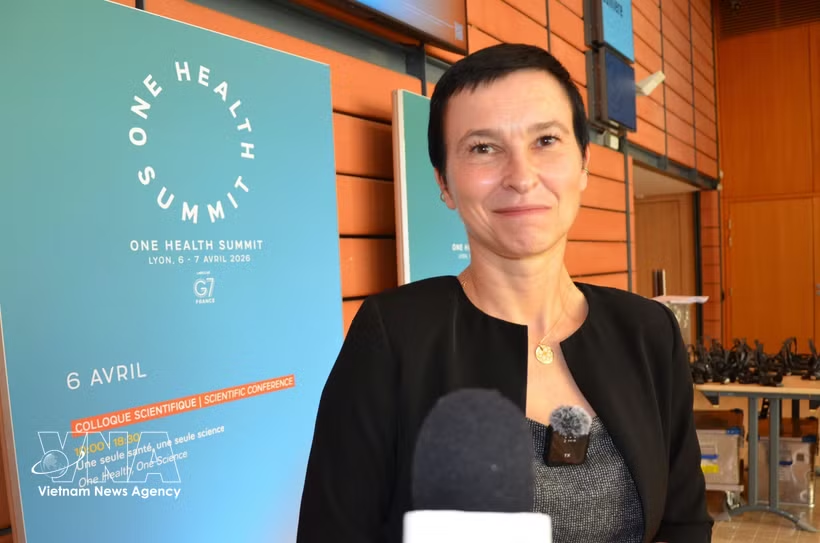
Talking to Vietnam News Agency correspondents in France, Flavie Goutard, a veterinary epidemiologist at the French Agricultural Research Centre for International Development (CIRAD), said Vietnam launched its inter-ministerial “One Health Partnership” over 15 years ago in response to the avian influenza outbreak. The mechanism connects key ministries like the Ministry of Health and the Ministry of Agriculture and Environment to tackle a wide range of issues, from emerging infectious diseases and antimicrobial resistance to zoonoses, food safety, and challenges linked to wildlife and the environment.
Goutard highlighted the model’s inclusive and multi-stakeholder structure, bringing together government agencies, research institutes, universities and global organisations such as the Food and Agriculture Organisation (FAO), World Health Organisation (WHO) and World Organisation for Animal Health (WOAH), alongside research bodies like CIRAD and the International Livestock Research Institute (ILRI). She described it as a notable and distinctive platform with strong potential for replication elsewhere.
She noted that the One Health framework fosters cross-sector collaboration to enhance health outcomes across humans, animals, plants and ecosystems, reflecting their deep interconnection. While the concept has been around for years, it has gained fresh urgency following the COVID-19 pandemic, which exposed the risks of zoonotic spillover. Strengthened coordination across sectors and governance levels, she said, is essential to preventing future pandemic threats.
Despite progress, Goutard pointed to the need for more effective implementation, particularly through stronger financial backing. In the face of economic pressures, Vietnam should prioritise building domestic funding mechanisms rather than relying heavily on international donors. She also stressed the importance of embedding One Health priorities in ministries and sectors' agendas and enhancing coordination with finance and science authorities to ensure resources for implementation.
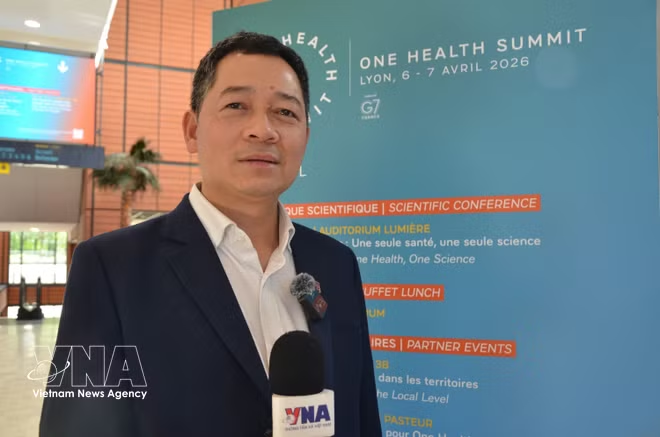
Sharing this perspective, ILRI Vietnam Director Nguyen Viet Hung said Vietnam ranks among the leading countries in operationalising the One Health approach, supported by the well-established coordination framework “One Health Partnership”, dating back to the early 2000s.
He underscored that Vietnam has contributed actively to global initiatives, not just benefiting from them. Many international One Health projects have been carried out in the country in recent years, including the PREZODE programme initiated by the French President. These efforts are being rolled out in provinces such as Thai Nguyen and Dong Thap to curb zoonotic diseases and reduce the risk of new outbreaks.
Hung called for greater domestic investment in both funding and human resources, along with a stronger proactive role for Vietnam and other Global South countries in advancing One Health. He also emphasised the need to localise implementation and address gaps in areas such as wildlife and environmental health, while improving coordination mechanisms.
Only when good coordination, sufficient resources, and effective implementation at the grassroots level is ensured, can the "One Health" approach truly become a widely implemented method in society, helping prevent future disease outbreaks and sustainably protect human, animal, and environmental health.
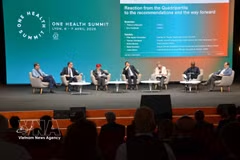
Held in Lyon from April 5 to 7, the summit is a flagship event under France’s presidency of the Group of Seven and marks the ninth edition of the One Planet Summit. Hosted by the French Government, it brings together representatives from over 20 countries, including leaders, international organisations, scientists and businesses, to advance the One Health agenda and translate commitments into concrete action on disease prevention, response capacity, antimicrobial resistance, sustainable food systems and environmental protection./.