Hanoi (VNA) – A growing number of recent articles and reports by international media outlets and economic forums suggest that Vietnam is entering a new phase of development, underpinned by a long-term vision and structural reforms that are laying the foundations for sustainable growth over the medium and long term.
According to assessments by The Economist and Business Times, the country was among Asia’s fastest-growing economies last year. Analyses of the country’s 8.02% economic growth highlight the resilience of the Vietnamese economy amid a slowdown in global trade and rising geopolitical tensions.
One area drawing particular attention from international media is the strong performance of Vietnam’s financial markets. The Economist noted that the Vietnamese stock market rose by around 37% in USD terms in 2025, reflecting growing confidence among foreign investors. The decision by index provider FTSE Russell last October to upgrade Vietnam to secondary emerging market status is expected to unlock new capital inflows from international investment funds, further enhancing the country’s position on the global financial map.
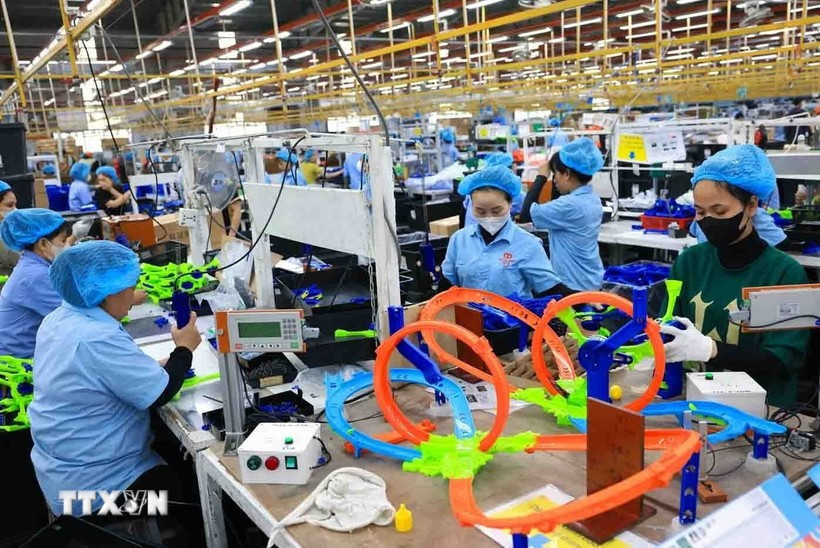
According to the Bangkok Post, Vietnam continues to stand out as a key destination for foreign direct investment (FDI), supported by political stability, a young workforce and an extensive network of trade integration. The newspaper cited figures showing that the country attracted approximately 38 billion USD in FDI in 2024, a high level in the region. In 2025, FDI inflows continued to surpass the previous year, reaching an estimated 38.42 billion USD, according to consolidated data from the National Statistics Office as of December last year. Notably, disbursed FDI was estimated at 27.62 billion USD, the highest level in five years, underscoring the momentum of the manufacturing-export sector and the increasingly important role of FDI in economic growth and international integration.
International observers have also highlighted Vietnam’s advantage in implementing 17 free trade agreements (FTAs), which provide broad market access for domestic and foreign enterprises alike. The Bangkok Post described this as a key factor underpinning the country’s appeal at a time when global supply chains are being reconfigured and multinational corporations are seeking stable production bases with strong global connectivity.
The East Asia Forum website noted that Vietnam’s growth performance is closely linked to reform policies implemented consistently under the leadership of the Communist Party of Vietnam and the management of the Government. A recent article on the forum’s website drew particular attention to a series of major Politburo resolutions adopted during 2024–2025, including Resolution No. 57-NQ/TW dated December 22, 2024 on development breakthroughs in science, technology, innovation and national digital transformation; Resolution No. 59-NQ/TW dated January 24, 2025 on international integration in the new context; Resolution No. 66-NQ/TW on reforming law-making and law enforcement to meet national development requirements in the new era; and Resolution No. 68-NQ/TW dated May 4, 2025 on private economic sector development.
According to the forum, recognising the private sector as a key driver of the economy has sent positive signals to the business community and international investors. In parallel, administrative reform and streamlining of the state apparatus have been viewed by foreign media as steps to improve governance efficiency, enhance the business environment and reduce costs for enterprises.
Business Times reported that Vietnam is entering a phase of robust infrastructure investment, describing it as a lever for long-term growth. Accelerated implementation of major projects such as the North–South expressway system, Long Thanh International Airport and large-scale logistics hubs is expected to improve connectivity and strengthen the economy’s competitiveness.
At the same time, international commentary has noted Vietnam’s shift from a low-cost manufacturing model towards attracting investment in semiconductors, artificial intelligence, data centres and renewable energy. According to assessments cited by Business Times, Vietnam is increasingly distinguishing between projects that exploit short-term cost advantages and those that contribute to long-term capacity-building for the economy.
The East Asia Forum also underscored that Vietnam’s strategy of expanding partnerships with a wide range of countries while maintaining a balanced foreign policy has helped foster a stable and peaceful environment, widely regarded as a critical foundation for economic development.
It concluded that, amid growing global uncertainty, Vietnam is emerging as an economy with a clear strategic direction, supported by institutional reforms and consistent development policies./.
VNA