Jakarta (VNA) – As two major economies with important political and strategic positions in the region, Vietnam and Indonesia are not only key bilateral partners but also central drivers of ASEAN economic integration, according to an article published in a special edition of Indonesia’s Centre for Southeast Asian Studies (CSEAS).
According to the article entitled “Vietnam and Indonesia’s Contributions to the ASEAN Economic Community”, published in the Policy Brief Special Edition of CSEAS, both Indonesia and Vietnam are among ASEAN’s largest economies, contributing significantly to the bloc’s GDP while playing key roles in intra-bloc trade, investment attraction, and regional supply chain integration.
With the largest population in the Southeast Asia, Indonesia is seen as a consumption powerhouse and a strategic domestic market. Meanwhile, Vietnam has emerged as a dynamic manufacturing and export hub, deeply integrated into global value chains (GVCs), particularly in electronics, textiles, machinery, and processing industries.
This complementarity — one side being a large and resource-rich market and the other a highly competitive manufacturing hub — has created favorable conditions for realising core objectives of the ASEAN Economic Community (AEC), including the free flow of goods, services, investment, and skilled labourers within the region.
The article highlighted that both Vietnam and Indonesia have been proactive in fulfilling commitments to reduce tariffs and non-tariff barriers under the AEC roadmap.
Since joining the World Trade Organisation (WTO) and participating in a series of next-generation free trade agreements, such as the Comprehensive and Progressive Agreement for Trans-Pacific Partnership (CPTPP), the EU–Vietnam Free Trade Agreement (EVFTA), and the Regional Comprehensive Economic Partnership (RCEP), Vietnam has accelerated institutional reforms, improved its investment environment, and expanded connections with global markets.
Meanwhile, Indonesia has played a key role in shaping regional economic policies, particularly in discussions on strengthening ASEAN’s economic resilience and reducing dependence on external markets. As the largest economy in ASEAN, Indonesia not only joins but also wields significant influence in regional trade cooperation frameworks such as the ASEAN–China Free Trade Area (ACFTA) and the ASEAN–Australia–New Zealand Free Trade Area (AANZFTA).
The article stressed that Vietnam and Indonesia regularly coordinate their positions at ASEAN economic forums, promoting an open yet balanced integration model that taps globalisation opportunities while safeguarding the region’s long-term development interests.
It spotlighted the role played by Vietnam and Indonesia in strengthening the ASEAN Economic Community’s resilience against global crises, ranging from financial shocks and the COVID-19 pandemic to geopolitical tensions and supply chain disruptions.
Both Vietnam and Indonesia have implemented relatively flexible fiscal, monetary, and business support policies, while also promoting intra-ASEAN economic cooperation and supply chain diversification, the article said, adding that these efforts have helped ASEAN maintain stability and recover growth amid increasing global uncertainties.
It affirmed that contributions made by Vietnam and Indonesia to the AEC extend beyond purely economic significance, providing a solid foundation to elevate their bilateral relationship to a strategic partnership. Their shared vision for ASEAN’s development vision, along with strong commitments to multilateralism, regional integration, and international law, has positioned the two countries as natural partners within Southeast Asia’s economic and political framework.
Enhanced policy coordination between Vietnam and Indonesia will be crucial for the successful implementation of the e AEC Strategic Plan 2026–2030, toward building a deeply integrated, sustainable, and globally competitive ASEAN.
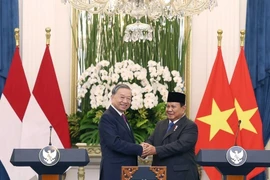
On the occasion of the 70th anniversary of Vietnam – Indonesia relations, the article not only reviews past achievements but also sets a forward-looking orientation, highlighting that close cooperation between these two pillar countries is key for ASEAN to become one of the world’s major economic hubs in the coming decades. It serves as a vivid testament to the depth and strategic significance, and enduring vitality of the Vietnam–Indonesia relationship in their shared journey accompanying ASEAN./.
See more
US provides 45 million USD to reinforce Thailand–Cambodia agreement
The US will allocate 15 million USD for border stabilisation to help communities recover and to support people displaced by the recent conflict, and 10 million USD for demining and clearing of unexploded ordnance.
Indonesia maintains fiscal stability in 2025, laying groundwork for development shift
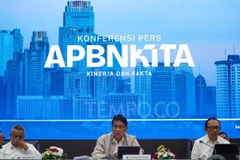
Speaking at a press conference, Indonesia's Finance Minister Purbaya Yudhi Sadewa said state revenue totaled 2,756.3 trillion IDR, while government spending reached 3,451.4 trillion IDR, resulting in a deficit equivalent to 2.92% of gross domestic product (GDP).
Indonesia spots four Sumatran tigers at national park
Camera traps installed in Bukit Tigapuluh National Park of Indonesia have recorded four individual Sumatran tigers (Panthera tigris sumatrae), providing strong evidence that the conservation area's ecosystem remains well preserved.
“Garbage mountain” collapses in Philippines, leaving one dead, dozens missing
Police confirmed that one female worker was killed, seven people were injured, and 27 others remain missing. Meanwhile, Cebu’s Mayor Nestor Archival said that 12 people had been rescued, while the number of those still unaccounted for could be as high as 38.
Thailand targets pet food, frozen poultry as key export drivers in 2026
Somchuan Ratanamungklanon, director-general of the DLD, noted that the upward trajectory for Thailand's agricultural exports is bolstered by a rigorous government mandate to elevate safety and quality standards.
Agricultural envoys ordered to boost Thai crop exports
Deputy Prime Minister and Agriculture Minister of Thailand Thammanat Prompao said that the ministry is prioritising a “market-led, innovation-supported, higher income” strategy, built on three key pillars: strengthening confidence in core, established markets to protect Thailand’s market share; targeting high-potential products to open new opportunities, including dried seahorses, dried geckos, live crocodiles for consumption, and breeding crocodile parent stock for farming; and expanding networks by deepening cooperation with key trading partners, including China, and widening sales channels, such as digital platforms, so Thai products can reach consumers more directly.
Malaysia poised for stronger economic growth in 2026
UOB projected Malaysia's real GDP growth at 4.5% in 2026, at the upper end of the government's 4-4.5 % target.
Indonesia eyes rice export after achieving self-sufficiency
President Prabowo Subianto said sustained self-sufficiency will demonstrate Indonesia’s capacity to overcome long-standing doubts about its food security.
Thailand maps out national semiconductor strategy
Under the strategy, Thailand will prioritise power, sensor, photonics, discrete and analog semiconductors, which are closely linked to the country’s established electronics manufacturing base and supply chains serving the automotive, energy, data centre and industrial sectors.
Malaysia’s digital exports surge
Malaysia's digital exports recorded 6.8 billion RM (1.67 billion USD) between 2024 and the first half of 2025, marking a milestone in the country’s development journey of digital economy.
Malaysia seeks to translate economic policies into practice
Malaysia enters the preparatory phase for the 13MP on the back of encouraging economic indicators in 2025. Gross domestic product (GDP) expanded by 5.2% in the third quarter of 2025, bringing average growth for the first nine months of the year to 4.7%.
Philippines pledges to promote regional peace, prosperity during ASEAN chairmanship
The Philippines will host a total of 208 cluster meetings, or over 650 meetings this year, 104 of which are working group level while 24 are ministerial. Security will be tightened at all ASEAN meetings, especially the leaders’ summits in May and November.
Nearly 1,000 families in Philippines evacuated as Mayon volcano erupts
The National Disaster Risk Reduction and Management Office said on January 8 that about 963 families with 3,516 people from 13 villages at the volcano's foot are currently staying in government-run evacuation centres across the province.
12th National Congress of Lao People’s Revolutionary Party concludes
Earlier on the same day, the first plenary meeting of the 12th Party Central Committee elected key leadership positions of the Party. Thongloun Sisoulith was re-elected as General Secretary of the LPRP Central Committee for the 2026–2030 term.
Laos sets six major goals in five-year development plan
Among its goals, Laos aims to develop an independent and self-reliant economy by capitalising on the country’s potential and advantages, thus ensuring stable, sustainable, and quality economic growth.
Laos steps up drive to move beyond least developed country status
The Lao Government will also work to foster strong development momentum by mobilising public participation, encouraging self-reliance among citizens and businesses, and improving the quality of human resources, while building an independent and self-reliant economy capable of deeper regional and global integration.
Malaysia boosts bio-economy, targets high revenue in 2026
MOSTI Minister Chang Lih Kang said the Bioeconomy Corporation, the ministry’s lead development agency for Malaysia’s biotechnology industry, will drive this growth and steer the country’s bioeconomy toward greater global competitiveness.
Indonesia’s popular tourist island faces threat from undersea faults
Based on the location of the epicentre and the depth of the hypocenter, Cahyo Nugroho, Head of BMKG Region III in Denpasar, said the series of earthquakes was triggered by active fault activity on the sea floor.
Lao youth ready to contribute to national socio-economic development goals
Secretary of the Central Committee of the Lao People’s Revolutionary Youth Union (LPRYU) Thongly Sisoulith said that the Youth and Adolescents Development Strategy, which is integrated into the 10th five-year socio-economic development plan, is a key component reflecting the Party and State’s clear orientation toward human resources development in service of the country’s sustainable development in the future.
Indonesia allocates billions of USD for disaster response
The Indonesian government has prepared a budget of between 53–60 trillion IDR (3.4–3.85 billion USD) for disaster emergency response under the 2026 State Budget (APBN).