Vietnam issues new control procedures to tackle IUU fishing

Under Decision No. 1111/QD-BNNMT issued by the Ministry of Agriculture and Environment, the new process regulates the inspection and supervision of foreign vessels engaged in fishing, transport or transhipment of seafood when calling at Vietnamese ports for import, temporary import for re-export, transit or transhipment activities.

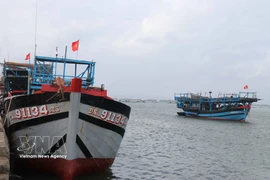
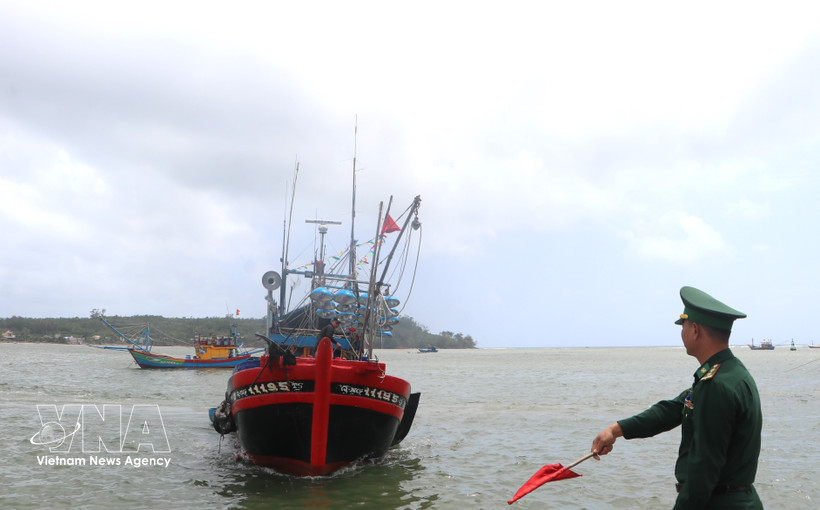
A border guard requests a fishing vessel to dock for verification of its entry and exit logs (Photo: VNA)

Hanoi (VNA) – Vietnam has introduced a new set of procedures to tighten control over foreign fishing vessels entering its ports.

Under Decision No. 1111/QD-BNNMT issued by the Ministry of Agriculture and Environment, the new process regulates the inspection and supervision of foreign vessels engaged in fishing, transport or transhipment of seafood when calling at Vietnamese ports for import, temporary import for re-export, transit or transhipment activities.

The regulation aligns with the FAO’s Agreement on Port State Measures (PSMA), which seeks to prevent illegally caught seafood from entering global supply chains.

A key feature of the new framework is a nine-step inspection and verification process designed to strengthen monitoring from pre-arrival to post-inspection reporting.

Under the rules, vessel owners or operators must submit advance notification at least 72 hours before arrival to the Directorate of Fisheries and Fisheries Surveillance. Required documents include vessel registration, fishing or transhipment licences, voyage reports, cargo hold layout and relevant permits such as CITES certificates, provided in Vietnamese or English.

Within 72 hours of receiving complete documentation, authorities will conduct a thorough review, including checks against IUU fishing blacklists, verification of vessel specifications and ownership, and validation of routes using vessel monitoring systems (VMS) or automatic identification systems (AIS).

Vessels suspected of violations may be denied entry, with notifications sent to ship owners, port authorities, the flag state, relevant regional fisheries organisations and the FAO. Compliant vessels will be granted permission to dock.

Upon arrival, an inspection team will be established to conduct onboard checks. Inspectors will verify documentation, examine fishing gear, and compare declared cargo with actual volumes unloaded.

Findings will be recorded in official reports signed by both inspectors and the vessel captain.

If no violations are found, vessels will be allowed to unload cargo in accordance with regulations. In cases of fishing breaches such as invalid licences, illegal fishing practices or exceeding quotas, authorities may refuse unloading and require vessels to leave Vietnamese waters, except in humanitarian situations.

Inspection results will be reported to national PSMA focal points and uploaded to the FAO’s Global Information Exchange System (GIES), while relevant information will be shared with flag states and international organisations.

The ministry emphasised that ship owners, captains and seafood importers must fully comply with inspection requirements and provide all necessary documentation to ensure transparency and traceability throughout the supply chain.

The new regulation, effective from March 31, 2026, replaces Decision 617/QĐ-BNNMT issued in February./.
VNA

See more

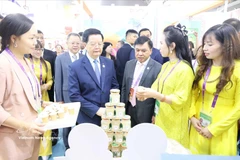
Deputy Prime Minister Mai Van Chinh visits a Vietnamese booth at the 22nd CAEXPO (Photo: VNA)

CAEXPO - effective channel for Vietnam-China cooperation

CAEXPO serves as an important gateway for Vietnamese businesses entering the Chinese market. Over 22 editions of CAEXPO, Vietnam has featured nearly 4,300 booths and around 2,200 enterprises. Numerous Vietnamese products, such as coffee, wood products, and footwear, have penetrated the Chinese market through CAEXPO, achieving rapid transitions from exhibition to product display.

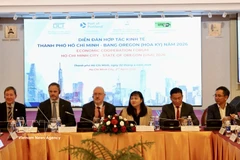
Leaders of the ITPC and the Oregon business delegation chair the forum (Photo: VNA)

Ho Chi Minh City promotes logistics supply chain cooperation with US state

According to Cao Thi Phi Van, Vice Director of ITPC, the forum took place amid steadily deepening Vietnam–US relations. The US remains Vietnam’s largest export market and a key economic partner, with 1,539 valid investment projects worth more than 12.5 billion USD nationwide. In Ho Chi Minh City alone, US investors operate 915 projects with total registered capital of 7.6 billion USD, ranking seventh among 136 foreign investors in the city.

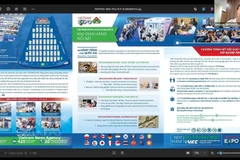
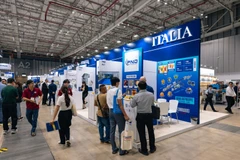
A Vietnamese representative introduces Vietnam Expo trade fairs (Photo: VNA)

Vietnam, India look to boost business connectivity through Vietnam Expo 2026

Addressing the opening session, Trade Counsellor of Vietnam in India Bui Trung Thuong highlighted the steady growth of bilateral economic relations, noting that two-way trade reached approximately 16.5 billion USD last year. However, he stressed that the figure remains modest compared to the substantial potential of the two economies, which are highly complementary in structure.

The first quarter's domestic revenue, estimated at 738.6 trillion VND, represented 33.6% of this year's target and rose 12.2% compared to the same period in 2025. (Illustrative photo: VNA)

State budget revenue up 10.2% in Q1

A range of fiscal support measures have been implemented to help stabilise the market and support businesses although they are expected to reduce budget revenue in the coming period.

Yaris Cross is Toyota’s top-selling model in March 2026. (Photo: Toyota)

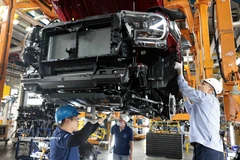
Toyota sales in Vietnam double in March

Of the total, domestically assembled completely-knocked-down (CKD) vehicles numbered 1,800 units while completely built-up (CBU) imports dominated with 6,343 units, signalling a clear rebound in the auto market after a period of subdued demand.

Workers at the Lien Ha Thai Industrial Park in the Thai Binh Economic Zone). (Photo: VNA)

Productivity criteria seen as catalyst for growth of businesses

As Vietnam is deepening its integration into the global economy, the gradual adoption of productivity criteria is increasingly viewed as a key driver enabling domestic enterprises to enhance competitiveness and meet rising demands for transparency, governance quality, social responsibility and sustainable development.

Delegates at the working session (Photo: VNA)

Can Tho looks to attract greater investment from RoK

Trade between Can Tho and the RoK has shown steady growth. In 2025, Can Tho’s exports to the country reached 53.11 million USD, mainly comprising seafood, processed agricultural products, garments and pharmaceuticals, while imports stood at 4.1 million USD, largely raw materials and chemicals.