Beijing (VNA) - The China–ASEAN Expo (CAEXPO) continues to foster exchanges and cooperation between China and Vietnam across multiple sectors, ranging from traditional exhibitions to artificial intelligence (AI), contributing to the strategic goal of building a China–Vietnam community with a shared future that carries strategic significance, the event's Secretariat announced on April 2.
Recently, the China–Vietnam Bilateral Cooperation Steering Committee held its 17th meeting in Hanoi. Both sides agreed to expand substantive cooperation, enhance railway connectivity, strengthen collaboration in key areas such as agriculture, electricity, finance, critical minerals, and technological innovation, and jointly safeguard the multilateral trade system.
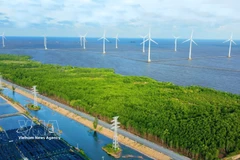
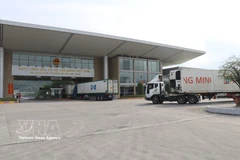
According to the CAEXPO Secretariat, in recent years, leveraging the CAEXPO platform, numerous projects have been signed and implemented, including the cross-border tourism cooperation zone between Detian Falls (China) and Ban Gioc (Vietnam), the Youyi Guan (China) – Huu Nghi (Vietnam) smart border gate, as well as wind power projects in several Vietnamese localities such as Kon Tum.
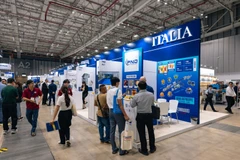
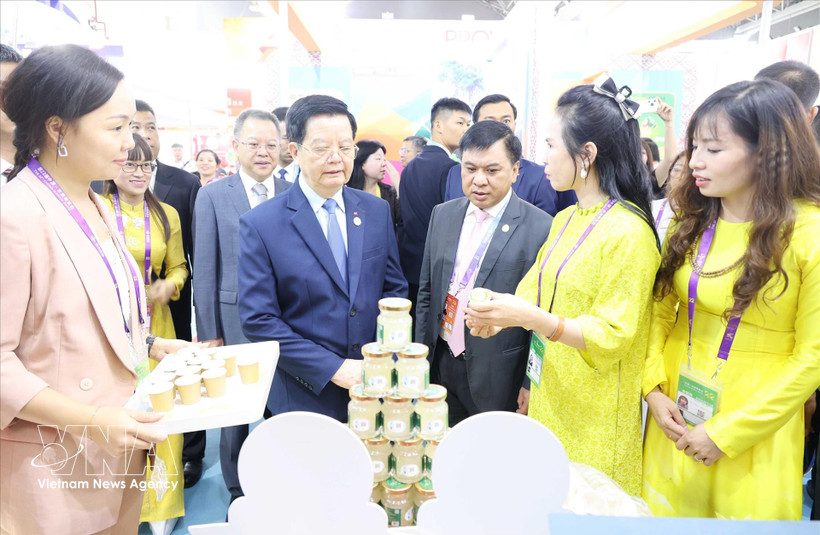
Some provinces and cities, including Hanoi and Ho Chi Minh City, have showcased their products in the “Charming Cities” exhibition area at CAEXPO, further strengthening economic, trade, and cultural exchanges between the two countries at the local level.
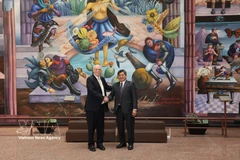
At the opening ceremony of the 22nd CAEXPO in September last year, Deputy Prime Minister Mai Van Chinh emphasised that CAEXPO has become a significant symbol of economic, trade, and investment cooperation between ASEAN and China, and affirmed that ASEAN countries, including Vietnam, highly value China’s contributions to regional cooperation and shared prosperity.
CAEXPO serves as an important gateway for Vietnamese businesses entering the Chinese market. Over 22 editions of CAEXPO, Vietnam has featured nearly 4,300 booths and around 2,200 enterprises. Numerous Vietnamese products, such as coffee, wood products, and footwear, have penetrated the Chinese market through CAEXPO, achieving rapid transitions from exhibition to product display.
Vietnam’s Trung Nguyen Group is leveraging the brand spillover effect of CAEXPO to expand its presence in China, with its first flagship store in Southwest China opening in Nanning in last December. A Vietnamese footwear distributor in China noted that CAEXPO precisely connects the Chinese and ASEAN markets, opening sales channels for products while helping enterprises better understand consumer preferences and market demand.
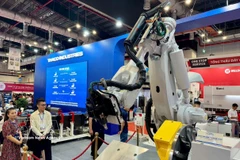
The CAEXPO Secretariat noted that in recent years, alongside traditional exhibitions, AI has emerged as a new theme in China–Vietnam trade relations. At the China–ASEAN Ministerial Roundtable on AI, held within the framework of the 22nd CAEXPO, Vietnamese Deputy Minister of Science and Technology Bui Hoang Phuong affirmed that AI is not only a technology but also a critical part of infrastructure, and Vietnam is ready to expand cooperation with all partners in areas such as AI talent training, scientific research, and academic exchange.
Vietnam’s Artificial Intelligence Law officially took effect in March 2026, providing legal assurances for the coordinated development of the digital economy. A series of AI application projects, such as the China–Vietnam AI Application Cooperation Centre at the Hanoi Exhibition Centre, have been implemented, transforming digital technology into a powerful driver of bilateral economic and trade development.
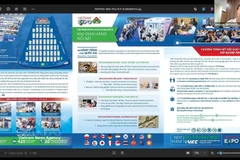
From basic products to AI, from market expansion to industrial integration, CAEXPO enables all parties to share development opportunities within the China–ASEAN Free Trade Area 3.0. According to the CAEXPO Secretariat, in April 2026, a delegation of enterprises will participate in the 35th Vietnam International Trade Fair with a dedicated exhibition area. During this period, the 23rd Global CAEXPO Roadshow (Vietnam stop) will be held to facilitate business connections between Chinese and Vietnamese enterprises./.
VNA