Input costs surge, manufacturing growth slows in March: report

Soaring oil prices drove up fuel, transportation and logistics expenses, with nearly half of surveyed firms reporting higher input costs – the sharpest increase since April 2022.

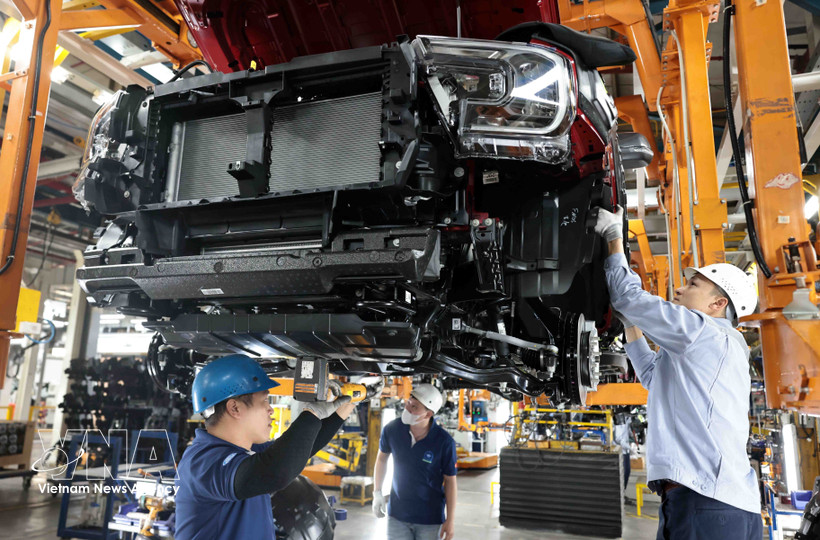
Welding line for passenger car frames at Ford Hai Duong Factory (Photo: VNA)

Ho Chi Minh City (VNA) – Vietnam’s manufacturing sector showed signs of slowing momentum in March as sharply rising input costs, largely driven by tensions in the Middle East, weighed on demand and production activity while pushing selling prices to their fastest pace in nearly 15 years.

According to the Purchasing Managers’ Index (PMI) report released by S&P Global, the manufacturing PMI stood at 51.2 in March, down markedly from 54.3 in February. Although remaining above the 50-point threshold that signals improved business conditions, the latest reading represented the weakest expansion since September 2025.

A key feature of the survey period was the impact of the Middle East geopolitical tensions on costs. Soaring oil prices drove up fuel, transportation and logistics expenses, with nearly half of surveyed firms reporting higher input costs – the sharpest increase since April 2022.

Amid mounting cost pressures, manufacturers passed part of the burden on to customers. Output prices consequently rose at the fastest pace since the survey began in 2011.

Higher prices directly affected market demand. Total new orders continued to grow but only marginally, marking the lowest increase in six months. Some firms reported that customers accelerated purchases to avoid anticipated price hikes.

External demand weakened more clearly as new export orders declined again following a stable performance in February. Manufacturing output extended its expansion streak to an 11th consecutive month though growth slowed significantly to the weakest level since mid-2025. Facing cost pressures and softer demand prospects, firms reduced purchases of raw materials for the first time in eight months, leading to lower input inventories.

Employment in the sector also fell for the first time in six months, with some companies citing difficulties in replacing departing workers and others cutting temporary jobs.

Rising fuel costs disrupted transportation, forcing suppliers to sharply lengthen delivery times – the most severe delays recorded in four years.

Material shortages and workforce reductions caused backlogs of work to increase again after four months of decline. In some cases, firms drew on finished goods inventories to meet orders, decreasing post-production stock levels.

Business confidence dropped to a six-month low as manufacturers expressed concern over the prolonged impact of Middle East tensions on prices, demand and raw material supply. Nevertheless, many firms still expect underlying demand to remain stable, supporting future gains in orders and output.

Commenting on the survey, Andrew Harker, Economics Director at S&P Global Market Intelligence, said the March PMI data clearly reflect the initial effects of geopolitical tensions on Vietnam’s manufacturing sector.

He noted that reliance on oil imports from the Middle East leaves businesses vulnerable to cost and supply chain shocks. Rapid increases in input prices have quickly translated into higher selling prices, highlighting the immediacy and scale of the impact.

Although output and new orders remained in expansion territory, growth momentum weakened notably from the previous month, partly due to customers bringing forward purchases ahead of expected price rises. In the short term, prospects remain subdued unless the conflict eases and disruptions along key shipping routes, particularly the Strait of Hormuz, are settled./.

VNA

See more

Delegates at the working session (Photo: VNA)

Can Tho looks to attract greater investment from RoK

Trade between Can Tho and the RoK has shown steady growth. In 2025, Can Tho’s exports to the country reached 53.11 million USD, mainly comprising seafood, processed agricultural products, garments and pharmaceuticals, while imports stood at 4.1 million USD, largely raw materials and chemicals.

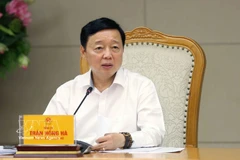
Prime Minister Pham Minh Chinh chairs the meeting on April 1. (Photo: VNA)

Prime Minister pushes construction of Nghi Son crude oil storage

PM Chinh directed the Vietnam National Industry - Energy Group (Petrovietnam) to work closely with relevant agencies and Thanh Hoa province to begin construction immediately, serving both the Nghi Son refinery and petrochemical plant and national reserves.

Industrial parks in Ho Chi Minh City attract over 772 million USD in Q1 2026. (Illustrative photo: VNA)

Ho Chi Minh City’s industrial parks draw over 772 million USD in Q1

As of late March 2026, the city’s industrial parks and export processing zones hosted 5,374 valid investment projects with combined registered capital of 78.74 billion USD. These included 3,209 foreign-invested projects worth 57.57 billion USD and 2,165 domestic projects with total registered capital exceeding 389.3 trillion VND.

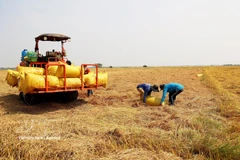
Farmers harvest rice in An Giang province. (Photo: VNA)

Vietnam seeks to expand rice export markets

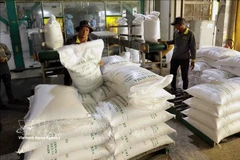
From the beginning of the year to mid-March, Vietnam exported approximately 1.74 million tonnes of rice worth 826.2 million USD, with an average export price of 477.6 USD per tonne, down 10.7% year-on-year.

Illustrative Image (Photo: VNA)

Vietnam promotes export of key commodities to Algeria

The ambassador highlighted growing interest among Vietnamese businesses in exploring partnership opportunities with Algerian counterparts across multiple sectors, particularly in agricultural and food processing.

Visitors at the Vietnam Elevator Expo 2025 in Ho Chi Minh City (Photo: VietnamPlus)

Vietnam Elevator Expo 2026 to take place in Hanoi

The organisers said incorporating art into elevator design is not merely experimental but a long-term direction to enhance industry value, turning elevators into aesthetic elements that reflect architectural identity and user experience.

Vietnam records more than 6 billion USD in newly registered FDI in the first two months of 2026. (Photo: VNA)

Malaysia appreciates Vietnam’s competitive edge in investment attraction

Speaking at the New Japan–Malaysia Industrial Cooperation Seminar, Nazir Razak, Chairman of the ASEAN Business Advisory Council (ASEAN-BAC) Malaysia, acknowledged growing competition from regional economies such as Vietnam, which benefits from political stability, an abundant labour force, and a larger domestic market.

The headquarters of Vietcombank in Hanoi (Photo: VNA)

State Bank moves to keep interest rates stable

Banks must continue publicly disclosing average lending rates, the spread between deposit and lending rates, and interest rates of credit schemes and packages on their websites, making it easier for individuals and firms to access capital.