PM greenlights programme to train 10,000 managing directors

By the end of the decade, the programme targets training and upgrading the skills of 10,000 managers and managing directors nationwide, with women accounting for at least 25% of participants.

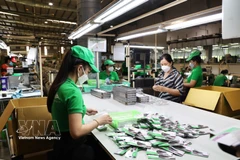
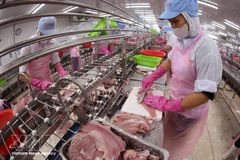
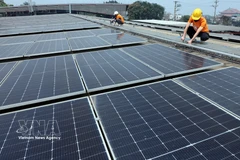
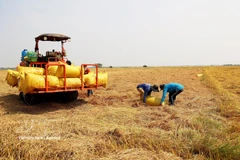
Prime Minister's Decision No. 525/QD-TTg seeks to develop a highly capable pool of private-sector managing directors equipped with modern governance expertise, strategic vision, and strong professional ethics. (Illustrative photo: iStock)

Hanoi (VNA) – A nationwide programme aimed at nurturing a new generation of business leaders capable of driving green transition and digital transformation has been approved, with plans to train 10,000 managing directors for Vietnam’s private sector by 2030.

Issued under the Prime Minister's Decision No. 525/QD-TTg, the initiative seeks to develop a highly capable pool of private-sector managing directors equipped with modern governance expertise, strategic vision, and strong professional ethics.

The programme focuses on cultivating dynamic, innovative, and forward-thinking business leaders who uphold corporate culture, respect the rule of law, and actively promote social responsibility.

Participants are expected to enhance their capacity to lead digitalisation and green transition efforts, helping enterprises achieve sustainable growth amid deepening global integration and the Fourth Industrial Revolution, while contributing to national socio-economic development.

By the end of the decade, the programme targets training and upgrading the skills of 10,000 managers and managing directors nationwide, with women accounting for at least 25% of participants. Graduates are expected to effectively apply modern management practices in business operations, lead transformation processes, strengthen risk management, and ensure regulatory compliance.

The initiative will also establish an executive alumni network, organise CEO forums, and expand cooperation with reputable executive training institutions both domestically and internationally.

Eligible beneficiaries include a wide range of private-sector leadership and management positions, such as chairpersons and members of members’ councils, company and board chairs, board members, general directors and deputy general directors, directors and deputy directors, specialised executives, private business owners, and heads or deputy heads of departments, divisions, and production teams, along with other managerial roles.

Participants will receive state budget support to attend training courses delivered in in-person, online, or hybrid formats aligned with the programme’s core curriculum. Upon completion, trainees will be granted certificates recognising their achievement.

Training modules will cover strategic leadership, executive management, specialised executive development, practical business administration programmes (Mini MBA), and next-generation leadership training (Next Gen CEO), with course durations ranging from 30 to 90 days depending on content and format.

CEO Forums will be organised to foster knowledge sharing, showcase best practices, and honour outstanding entrepreneurs and enterprises. A CEO Alumni network will also be developed to strengthen professional connections, encourage innovation, and support business growth.

The programme will actively cooperate with development partners and international organisations to mobilise technical assistance, financial resources, and expert support. Collaboration with leading international universities and training institutions will be expanded to facilitate technology transfer, joint training initiatives, short courses, and co-branded certification programmes. International executives, economists, and business leaders are expected to participate as lecturers, mentors, and advisors.

In parallel, training and capacity-building activities will be conducted for lecturers and consultants to enhance expertise in sustainable business practices, green growth, and emerging global business trends.

Funding for the programme will come from the state budget’s recurrent expenditures, supplemented by contributions and sponsorship from participants, enterprises, domestic and international organisations and individuals, as well as other lawful non-budget sources./.
VNA

See more

Inside Bach Dang shipbuilding factory (Photo: VNA)

Vietnam's industry spearheads transition to circular economy

The circular economy is no longer just a policy choice. It has become an inevitable trend for delivering sustainable and green growth, sharpening competitiveness at home and abroad, and meeting Vietnam’s net-zero emissions target by 2050. It is now a prerequisite to sustain long-term economic expansion, particularly in industrial production and supporting industries.

Algerian officials, representatives of foreign embassies, and numerous global oil and gas companies attend the Bid Round. (Photo: VNA)

Vietnam joins int'l bidding for oil and gas exploration in Algeria

Currently, PVEP is involved in oil exploitation at Blocks 433a and 416b of the Bir Seba field in the Hassi Messaoud area, Ouargla province, located more than 600 km south of Algiers. The project stands as one of Petrovietnam’s most successful overseas ventures, demonstrating the operational capacity and technical expertise of Vietnamese engineers on the global stage.

A customer is making payment via QR code at a coffee shop. The Ministry of Finance has proposed new regulations on taxable revenue thresholds for household businesses. (Photo: VNA)

Finance ministry eyes flexible tax thresholds

In a draft law amending several articles of the laws on personal income tax, corporate income tax and value-added tax, Vietnam's finance ministry proposed scrapping the fixed revenue threshold of 500 million VND. Instead, it suggested the threshold be set by the Government based on prevailing economic conditions.

Part of the Vung Ang II Thermal Power Plant. (Photo: VNA)

Vung Ang II thermal power plant inaugurated in Ha Tinh

With a total investment of 2.2 billion USD, the Vung Ang II Thermal Power Plant is developed under a build-operate-transfer (BOT) model and has a designed capacity of 1,200 MW, comprising two turbines. The plant is expected to play a key role in ensuring stable electricity supply for the central region and neighbouring areas, thereby facilitating the development of industries, agriculture and services.

Aircraft at the Noi Bai International Airport in Hanoi. (Photo: VNA)

Vietnam seeks stable jet fuel supplies from China amid Middle East disruptions

On the basis of the long-standing friendship and cooperation between Vietnam and China, as well as close ties between their aviation authorities, the Civil Aviation Authority of Vietnam has asked the Civil Aviation Administration of China to direct relevant fuel suppliers to ensure sufficient and stable supplies for Vietnam.

Illustrative photo (Photo: Xinua/VNA)

Remittances to Ho Chi Minh City decline in Q1 amid global headwinds

Data from the State Bank of Vietnam (SBV)'s Region 2 branch showed that remittances transferred through credit institutions and economic organisations in Ho Chi Minh City exceeded 2 billion USD in the January–March period, down 15.6% from the previous quarter and 16.9% year-on-year.

The shipments are unloaded at the airport. (Photo: VNA broadcasts)

Nearly 100 tonnes of Vietnamese fruits, vegetables airlifted to UAE

Vietnamese fresh produce and processed foods are increasingly recognised for their quality, with items such as cashew nuts, coffee and spices gaining popularity among Middle East consumers. In 2025, Vietnam’s farm produce exports to the UAE exceeded 445 million USD, up nearly 24% year-on-year.

The World Coffee Heritage Forum officially opens at the World Coffee Museum in Dak Lak province, with eyes on UNESCO recognition for Vietnamese coffee culture. (Photo: VNA)

World Coffee Heritage Forum opens in Dak Lak

Dak Lak is known as the 'capital' of Vietnamese coffee, with rich, fertile basalt red soil ideal for agriculture. The coffee provides livelihoods for thousands of locals and has developed a unique cultural space, closely tied to the socioeconomic life, customs and identity of local communities.