Digital technology narrows gaps in governance, public services

From smart urban governance solutions to grassroots-level online public services, digital technologies are steadily narrowing the gap between authorities and enterprises.

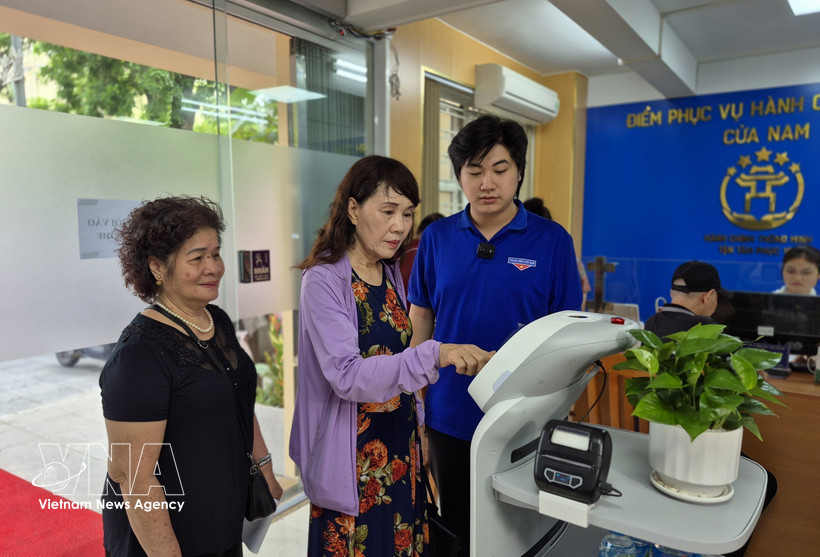
Citizens experience an AI-powered robot designed to assist with administrative procedures. (Photo: VNA)

Hanoi (VNA) – Digital transformation is becoming increasingly visible in everyday administrative transactions and interactions between citizens, businesses, and authorities, as Resolution No. 57-NQ/TW on breakthroughs in science and technology development, innovation, and national digital transformation is brought into practice.

From smart urban governance solutions to grassroots-level online public services, digital technologies are steadily narrowing the gap between authorities and enterprises.

From a renewed approach to governance

Party General Secretary To Lam has repeatedly emphasised the need to make science, technology, innovation, and digital transformation key drivers of a new growth model. He stressed that implementation must shift from merely “carrying out tasks” to delivering measurable, substantive outcomes, and from fragmented efforts to a more focused allocation of resources targeting strategic challenges.

The Party leader also called for the more decisive, systematic, and effective implementation of Resolution 57, with each task tied to concrete results. The year 2026 has been designated as a period of “breakthrough action and widespread impact,” requiring all levels and sectors to clearly define their responsibilities. These orientations are laying a critical foundation for digital transformation to move beyond policy and into real-life application.

A notable feature of Vietnam’s digital transformation process is the increasingly active role of technology enterprises in providing solutions for the public sector. The recognition of CTECh Technology JSC, a member of SGroup Vietnam, at the Sao Khue Awards 2025 highlights this trend. Its CGIS Urban platform, selected from more than 500 entries, was highly regarded in the category of digital government solutions.

The platform integrates spatial data and smart management tools, supporting planning, monitoring, and decision-making in modern urban governance. More than a technical solution, it reflects a shift in governance thinking, where data serves as a core foundation for timely, accurate, and transparent decisions.

However, according to Dr. Han Minh Cuong, Chairman of SGroup Vietnam, technology alone is not sufficient. He noted that governance mindset remains the decisive factor, emphasising the importance of placing users at the centre so that technology can simplify procedures, shorten processing time, and effectively support both officials and citizens.

This perspective aligns closely with the spirit of Resolution 57, which identifies digital transformation, science and technology, and innovation as key drivers for restructuring the growth model. In this context, technology is not only a management tool but also a means to improve service quality and generate tangible value for society.

Toward tangible progress in digital policy implementation

As Vietnam advances the implementation of a two-tier local administration model, workloads at commune and ward levels have increased significantly. In response, digital technology has become an essential support tool, helping to ease administrative burdens and improve efficiency.

Integration with the national population database and interconnected digital systems has significantly reduced processing times. Tasks that once required time-consuming manual verification can now be completed quickly in a digital environment.

At one-stop administrative service units, procedures have undergone notable transformation. Digitised records, continuously updated within the system, help minimise errors and enhance transparency. Citizens can track the progress of their applications online, reducing the need for repeated visits and long waiting times.

Businesses have also benefited from digitalisation. The adoption of electronic certification, for instance, has streamlined document storage and facilitated transactions, particularly in dealings with international partners.

At the grassroots level, public administrative service centres are demonstrating increasing effectiveness. Structured workflows, specialised staff allocation, and the application of digital tools have enabled faster processing of large volumes of applications while reducing backlogs.

Foreign residents in Vietnam have also noted these improvements. The widespread use of digital identification platforms and e-tickets in services such as air travel reflects broader progress in digital governance and public service delivery.

With clear policy direction under Resolution 57 and strong commitment across the political system, digital transformation is opening up new development space for a modern administrative system. By enhancing transparency, efficiency, and accessibility, digital technologies are helping bridge the gap between government, citizens, and businesses, contributing to a more responsive and service-oriented public administration./.

VNA
See more

By 2030, Vietnam targets ranking among the world’s top 15 countries in the Global Cybersecurity Index (Source: baochinhphu.vn)

Project aims to enhance capacity of national cybersecurity protection force

The project aims to strengthen overall capabilities and develop an elite and modern cybersecurity force able to proactively prevent and effectively respond to all cyber risks and threats, safeguarding national security, social order and safety, and the rights and lawful interests of organisations and individuals in cyberspace.

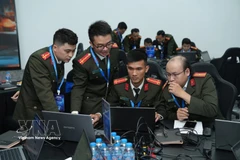
Delegates at the meeting (Photo: VNA)

Da Nang boosts hi-tech partnership with Germany’s Chemnitz City

Authorities in Da Nang hope Chemnitz and German partners will continue to accompany and support the city in accessing advanced technologies, connecting experts, integrating into innovation ecosystems, and attracting high-tech enterprises and supporting industries to explore investment and long-term cooperation opportunities.

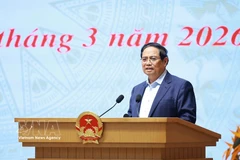
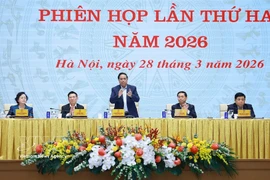
Prime Minister Pham Minh Chinh speaks at the meeting of the Government’s Steering Committee for science and technology, innovation, digital transformation, and Project 06 (Photo: VNA)

Strategic tech must address practical challenges: PM

Prime Minister Pham Minh Chinh called for the rollout of a strategic technology development programme, alongside the completion of incentive policies to attract tech giants and develop key tech products, particularly in semiconductors and AI.

Experience virtual reality technology at Nha Trang Center shopping mall (Khanh Hoa). (Photo: VNA)

Experts give ideas to build AI economy from data

Vietnam’s economic growth over past decades has largely relied on labour expansion, capital accumulation, export promotion and deep global trade integration, but as the country enters a higher development stage, this model is showing limitations.

VINASA Vice Chairwoman and Secretary General Nguyen Thi Thu Giang (right) and SEPC General Director Abhay Sinha sign the MoU on cooperation in New Delhi on March 25. (Photo: VNA)

Vietnam, India ink deal to step up IT cooperation

Under the terms of the MoU, the two sides will jointly push trade and investment in IT and services, arrange business delegations and business-to-business meetings, share market and policy information, and help companies access partnership opportunities and expand into new markets.

The Ninh Thuan 1 Nuclear Power Plant project is planned to be built in Khanh Hoa province (Photo: VNA)

Vietnam approves atomic energy development strategy, targeting civil applications

Tran Chi Thanh, Director of the Vietnam Atomic Energy Institute under the Ministry of Science and Technology, underscored that in the coming period, the institute and its affiliated units will continue promoting their strengths to promote the safe and secure application of atomic energy, contributing effectively to socio-economic development goals.

Students at FPT Ha Nam Inter-level High School practice their lessons directly by applying digital technology software (Photo: VNA)

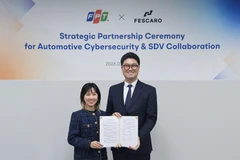
FPT joins top 35 global AI application development service providers

The recognition reflects FPT’s end-to-end AI capabilities, spanning strategic consulting, solution design, application development, and the integration and deployment of AI systems in real-world operations. Notably, the company has developed IvyHub, an integrated agentic AI platform that enables enterprises to design, deploy and manage AI agents at scale.

The High-Frequency Systems and Microchip Laboratory at Ho Chi Minh City University of Technology, Vietnam National University, Ho Chi Minh City. (Photo: VNA)

Ho Chi Minh City sets sights on becoming semiconductor hub

A central component of the plan is expanding cooperation with global technology leaders such as AMD, NVIDIA and Qualcomm. These partnerships are expected to support technology transfer, strengthen chip design capabilities and help the city move further up global semiconductor value chains.

The modern nanotechnology research laboratory of Vietnam National University, Ho Chi Minh City. (Photo: VNA)

Resolution 57 delivers tangible outcomes from local practice

In the course of implementing this resolution, the northern province of Quang Ninh has emerged as one of the early movers in translating strategic orientations into comprehensive development models linked to innovation and digital transformation.

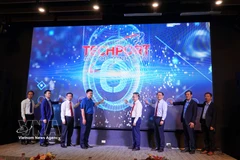
Delegates at the launch of the new version of Ho Chi Minh City technology exchange platform. (Photo: VNA)

Ho Chi Minh City launches upgraded technology exchange platform

The upgraded platform represents a comprehensive shift from a simple information-sharing model to a managed online technology trading system, enabling monitoring and measurement of real transaction outcomes. It is built on three pillars, namely new tradable technology products, a modern digital platform, and an improved operational model.

A Viettel 5G base station provides coverage at the April 16 Square area in Dong Hai ward, Khanh Hoa province. (Photo: VNA)

Conquering 6G networks helps Vietnamese businesses master strategic technologies

The global 6G alliance marks not only a technological milestone but also an opportunity for Vietnamese enterprises to strengthen their position on the global technology landscape. With the involvement of FPT, Viettel and VNG, Vietnam is gradually emerging as an early mover in the development and application of 6G technology.