Vietnam’s international financial centre needs clearer operational foundations: Expert

Speaking at a socio-economic press briefing held by the Ho Chi Minh City People’s Committee on April 2, McClellan noted that in the newly released Global Financial Centres Index 2026 (GFCI 39) rankings, Ho Chi Minh City climbed 11 places to rank 84th among 120 global financial centres.

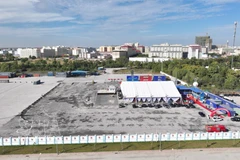
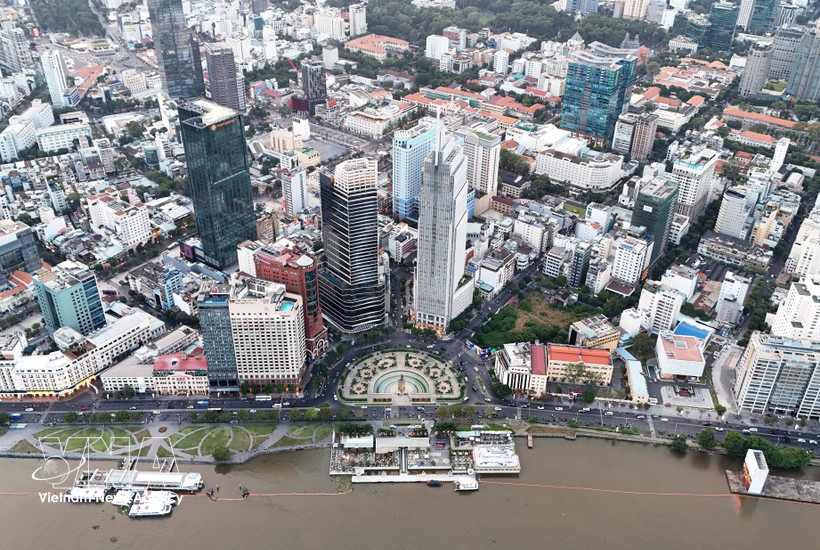
A view of the VIFC in Ho Chi Minh City (Photo: VNA)

Ho Chi Minh City (VNA) - Vietnam International Financial Centre (VIFC) requires clearer operational mechanisms to translate growing global recognition into substantive progress, according to Richard D. McClellan, CEO of the VIFC in Ho Chi Minh City.

Speaking at a socio-economic press briefing held by the Ho Chi Minh City People’s Committee on April 2, McClellan noted that in the newly released Global Financial Centres Index 2026 (GFCI 39) rankings, Ho Chi Minh City climbed 11 places to rank 84th among 120 global financial centres.

However, he emphasised that the improved ranking mainly reflects initial market recognition rather than the full operational capacity of an international financial hub.

McClellan said the improvement is not accidental but stems from tangible developments, particularly consistent policy direction at the national level. Clear commitments from the Politburo of the Communist Party of Vietnam and the National Assembly of Vietnam to develop an international financial centre have sent strong signals to both domestic and foreign investors that the initiative is a strategic priority.

The roadmap for institutional reforms is gradually taking shape, with clearer legal frameworks, governance structures and licensing mechanisms forming the basis for aligning with international standards. Vietnam has also stepped up dialogue with global financial institutions, investors and strategic partners, helping strengthen market confidence.

McClellan noted that the GFCI, compiled annually by Z/Yen Group, is widely used as a reference indicator by the global financial community. However, the index largely reflects market perception, measuring reputation and initial attractiveness rather than the depth of a financial system.

While the improved ranking shows growing international attention toward the financial centre initiative in Ho Chi Minh City, it does not yet fully reflect capital flows, market liquidity or the maturity of financial institutions.

According to McClellan, the project remains at an early stage, and the key task now is to convert growing recognition into concrete progress through three main priorities.

The first step is to strengthen the institutional and legal framework by creating clear, consistent regulations, streamlining licensing processes, and setting up dispute resolution systems aligned with international standards to boost investor confidence.

Second is promoting capital mobility and financial integration. Issues such as foreign exchange convertibility, capital repatriation and connectivity with international banking systems remain top concerns for investors and will determine whether large-scale capital flows enter the city’s financial market.

Third is developing a broader financial ecosystem, including capital markets, asset and private wealth management, as well as financial technology. While many initiatives are emerging, McClellan stressed that no single project can create a complete financial centre without an effective and integrated system.

He also noted that rankings such as the GFCI reflect outcomes rather than predictions, meaning short-term fluctuations are normal, particularly for emerging financial markets.

Ultimately, the goal of developing an international financial centre should not be to improve rankings in the short term, but to build a strong foundation so that, in the long run, Ho Chi Minh City becomes a destination actively chosen by global investors.

Experts say opportunities to develop Vietnam’s international financial centre are real, but success will depend largely on implementation capacity. Establishing a reliable institutional framework, ensuring strong connectivity with global markets and creating a transparent investment environment will be decisive factors going forward, they held./.

VNA
See more

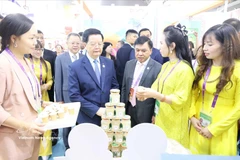
Deputy Prime Minister Mai Van Chinh visits a Vietnamese booth at the 22nd CAEXPO (Photo: VNA)

CAEXPO - effective channel for Vietnam-China cooperation

CAEXPO serves as an important gateway for Vietnamese businesses entering the Chinese market. Over 22 editions of CAEXPO, Vietnam has featured nearly 4,300 booths and around 2,200 enterprises. Numerous Vietnamese products, such as coffee, wood products, and footwear, have penetrated the Chinese market through CAEXPO, achieving rapid transitions from exhibition to product display.

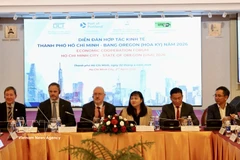
Leaders of the ITPC and the Oregon business delegation chair the forum (Photo: VNA)

Ho Chi Minh City promotes logistics supply chain cooperation with US state

According to Cao Thi Phi Van, Vice Director of ITPC, the forum took place amid steadily deepening Vietnam–US relations. The US remains Vietnam’s largest export market and a key economic partner, with 1,539 valid investment projects worth more than 12.5 billion USD nationwide. In Ho Chi Minh City alone, US investors operate 915 projects with total registered capital of 7.6 billion USD, ranking seventh among 136 foreign investors in the city.

A border guard requests a fishing vessel to dock for verification of its entry and exit logs (Photo: VNA)

Vietnam issues new control procedures to tackle IUU fishing

Under Decision No. 1111/QD-BNNMT issued by the Ministry of Agriculture and Environment, the new process regulates the inspection and supervision of foreign vessels engaged in fishing, transport or transhipment of seafood when calling at Vietnamese ports for import, temporary import for re-export, transit or transhipment activities.

A Vietnamese representative introduces Vietnam Expo trade fairs (Photo: VNA)

Vietnam, India look to boost business connectivity through Vietnam Expo 2026

Addressing the opening session, Trade Counsellor of Vietnam in India Bui Trung Thuong highlighted the steady growth of bilateral economic relations, noting that two-way trade reached approximately 16.5 billion USD last year. However, he stressed that the figure remains modest compared to the substantial potential of the two economies, which are highly complementary in structure.

The first quarter's domestic revenue, estimated at 738.6 trillion VND, represented 33.6% of this year's target and rose 12.2% compared to the same period in 2025. (Illustrative photo: VNA)

State budget revenue up 10.2% in Q1

A range of fiscal support measures have been implemented to help stabilise the market and support businesses although they are expected to reduce budget revenue in the coming period.

Yaris Cross is Toyota’s top-selling model in March 2026. (Photo: Toyota)

Toyota sales in Vietnam double in March

Of the total, domestically assembled completely-knocked-down (CKD) vehicles numbered 1,800 units while completely built-up (CBU) imports dominated with 6,343 units, signalling a clear rebound in the auto market after a period of subdued demand.

Workers at the Lien Ha Thai Industrial Park in the Thai Binh Economic Zone). (Photo: VNA)

Productivity criteria seen as catalyst for growth of businesses

As Vietnam is deepening its integration into the global economy, the gradual adoption of productivity criteria is increasingly viewed as a key driver enabling domestic enterprises to enhance competitiveness and meet rising demands for transparency, governance quality, social responsibility and sustainable development.

Delegates at the working session (Photo: VNA)

Can Tho looks to attract greater investment from RoK

Trade between Can Tho and the RoK has shown steady growth. In 2025, Can Tho’s exports to the country reached 53.11 million USD, mainly comprising seafood, processed agricultural products, garments and pharmaceuticals, while imports stood at 4.1 million USD, largely raw materials and chemicals.