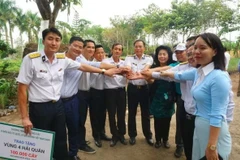
Delegates cut the ribbon to inaugurate the SATREPS laboratory at the National University of Civil Engineering (Photo courtesy of JICA)
 Hanoi (VNS/VNA) - Vietnam and Japan are working together to set upa construction waste management system to control pollution.
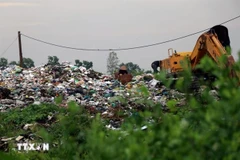
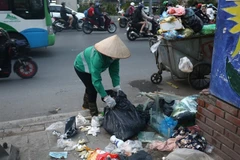
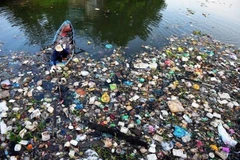
This is to combat the large volume of construction and demolition waste (CDW)produced from urban development which is rapidly increasing in Asian countriesincluding Vietnam.
The National University of Civil Engineering (NUCE) and the Saitama University(SU) on September 4 held a seminar to provide a platform for researchers andstudents to exchange ideas and discuss research finding and new advances insustainable development in East Asia.
This is the second joint workshop of the two universities for the SATREPSproject for the "Establishment of environmentally sound management ofconstruction and demolition waste and its wise utilisation for environmentalpollution control and for new recycled construction materials in Vietnam".
The project is expected to provide a platform for an environmentally soundwaste management and resource recycling system in Hanoi, applying technologiesand experiences from Japan, where the rate of construction and demolition wasterecycle reaches above 95 percent.
At the workshop, participants shared their experiences on sustainable andenvironmentally-friendly construction waste management activities.
On the same day, the two schools also held the opening ceremony of the SATREPSproject laboratory, which had been set up in NUCE’s laboratory building, withvarious testing and analytical equipment from Japan.
Major activities include the investigation of the generation status ofconstruction and demolition waste and environmental pollution status atdisposal sites of CDW, the development of standards for recycled materials, thedevelopment of various technologies utilising recycled materials, and themanufacturing and marketing of recycled materials on a trial basis.
Human resource development and capacity building for Vietnamese counterpartsthrough joint testing and research activities utilising laboratories is also animportant activity.
Speaking at the seminar, NUCE Rector Pham Duy Hoa said this was an opportunityfor experts and students of both universities to develop new technologies tosolve key issues of management and techniques in structure, materials andenvironment of Vietnam and developing countries.
“We are confident that this laboratory will become one of the region's leadingresearch centres for recycling and new technology development,” he said.
The project proposal was adopted by the SATREPS Programme in the fiscal year of2017, in response to NUCE's request for the implementation of internationaljoint research in the environmental and social infrastructure sector.
This five year-project was then launched in Hanoi and Hai Phong in February2018 with the aim of establishing a resource recycling system for CDW anddeveloping new technologies utilising CDW recycling materials, in order to promotesound management of CDW. - VNS/VNA
This is to combat the large volume of construction and demolition waste (CDW)produced from urban development which is rapidly increasing in Asian countriesincluding Vietnam.
The National University of Civil Engineering (NUCE) and the Saitama University(SU) on September 4 held a seminar to provide a platform for researchers andstudents to exchange ideas and discuss research finding and new advances insustainable development in East Asia.
This is the second joint workshop of the two universities for the SATREPSproject for the "Establishment of environmentally sound management ofconstruction and demolition waste and its wise utilisation for environmentalpollution control and for new recycled construction materials in Vietnam".
The project is expected to provide a platform for an environmentally soundwaste management and resource recycling system in Hanoi, applying technologiesand experiences from Japan, where the rate of construction and demolition wasterecycle reaches above 95 percent.
At the workshop, participants shared their experiences on sustainable andenvironmentally-friendly construction waste management activities.
On the same day, the two schools also held the opening ceremony of the SATREPSproject laboratory, which had been set up in NUCE’s laboratory building, withvarious testing and analytical equipment from Japan.
Major activities include the investigation of the generation status ofconstruction and demolition waste and environmental pollution status atdisposal sites of CDW, the development of standards for recycled materials, thedevelopment of various technologies utilising recycled materials, and themanufacturing and marketing of recycled materials on a trial basis.
Human resource development and capacity building for Vietnamese counterpartsthrough joint testing and research activities utilising laboratories is also animportant activity.
Speaking at the seminar, NUCE Rector Pham Duy Hoa said this was an opportunityfor experts and students of both universities to develop new technologies tosolve key issues of management and techniques in structure, materials andenvironment of Vietnam and developing countries.
“We are confident that this laboratory will become one of the region's leadingresearch centres for recycling and new technology development,” he said.
The project proposal was adopted by the SATREPS Programme in the fiscal year of2017, in response to NUCE's request for the implementation of internationaljoint research in the environmental and social infrastructure sector.
This five year-project was then launched in Hanoi and Hai Phong in February2018 with the aim of establishing a resource recycling system for CDW anddeveloping new technologies utilising CDW recycling materials, in order to promotesound management of CDW. - VNS/VNA
VNA