Vietnam moves forward with smart, secure, and sustainable digital infrastructure

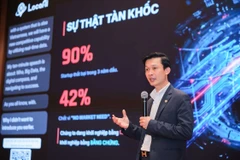
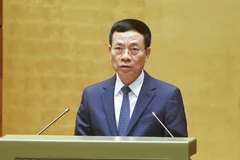
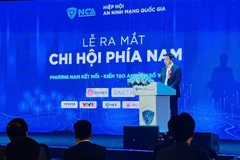
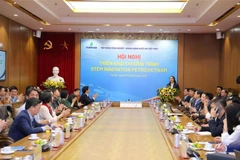
A modern, intelligent, and secure digital platform is essential to drive digital transformation in all key socio-economic fields, Vu Hoang Lien, Chairman of the Vietnam Internet Association, said at the Vietnam Digital Infrastructure Development Forum 2025 held in Hanoi on September 30.

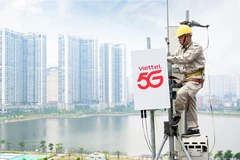
Hanoi (VNA) – As strategic technologies such as artificial intelligence (AI), the Internet of Things (IoT), blockchain, semiconductors, and next-generation networks like 5G and 6G are rapidly expanding, Vietnam has identified strong digital infrastructure as a prerequisite for mastering and effectively deploying these innovations.

This priority is clearly outlined in the Strategy for Digital Infrastructure Development to 2025, with a vision to 2030, as well as in the Politburo's Resolution No. 57/NQ-TW on breakthroughs in science and technology, innovation, and national digital transformation.

Accelerating digital transformation across sectors

A modern, intelligent, and secure digital platform is essential to drive digital transformation in all key socio-economic fields, Vu Hoang Lien, Chairman of the Vietnam Internet Association, said at the Vietnam Digital Infrastructure Development Forum 2025 held in Hanoi on September 30.

The forum, organised for the first time under the theme “Robust Digital Infrastructure for Mastering Strategic Technologies,” connected policymakers, businesses, and experts at home and abroad to promote the development of modern digital infrastructure as a platform for digital transformation in finance, industry, transport, energy, healthcare, education, agriculture, and public services.

Statistics released at the forum underscored Vietnam’s remarkable progress in digital infrastructure development. According to DataReportal, Vietnam had more than 80 million internet users as of 2025. Figures from APNIC Lab show that IPv6 deployment has surpassed 60%, ranking Vietnam second in ASEAN and ninth worldwide, with preparations underway for an IPv6-only phase from 2026–2030.

Vietnam’s cloud computing market reached nearly 19.37 trillion VND (775 million USD) in 2024, projected to rise to 1.24 billion USD in 2025 and double by 2029. Data centre capacity is also expanding rapidly, from 45 MW in 2024 to an estimated 525 MW in 2025 and is forecast to reach nearly 1,000 MW by 2030.

Lien noted that while these figures highlight Vietnam’s rapid progress, challenges remain, including limited investment resources, green standards, cybersecurity and data sovereignty requirements, and the need for stronger research and development capacity.

Prof. Ho Tu Bao of the Vietnam Institute for Advanced Study in Mathematics (VIASM) and member of the National Advisory Council on Science, Technology, Innovation and Digital Transformation, said building strong digital infrastructure requires a coordinated approach across three pillars: technical infrastructure, data infrastructure, and application infrastructure.

He also emphasised the need for a transparent legal framework to avoid overlaps and barriers, clear regulations on data architecture towards a national digital architecture, and resilience against natural disasters and cyberattacks, along with a highly skilled workforce capable of mastering technologies.

Data – new means of production in the digital age

Nguyen Thi Ngoc Dung, Chief of Office of the National Data Association, stressed that data has become not only the “new oil” but also the core means of production for every sector. The association is focusing on standardising national data architecture, developing Vietnamese-owned technology platforms, and building a high-quality workforce through the launch of the Global Data Experts Network.

At the forum, CMC Telecom introduced two flagship services. CMC Cloud, a Make in Vietnam platform designed and operated by Vietnamese engineers, stands out with its vision of digital sovereignty, safeguarding national data, reducing reliance on foreign infrastructure, and offering flexibility and optimisation for domestic businesses. Meanwhile, CMC Comprehensive Security Platform, an AI-powered cloud-based solution, provides real-time threat detection, enabling businesses to shift from “passive defence” to “active defence”./.

VNA

See more

Students practice microcontroller programming at the Viet - Han College of Technology in Bac Ninh province (Photo: VNA)

Vietnam steps up semiconductor talent training to meet market demand

Vietnam needs to step up semiconductor workforce training to meet growing market demand and enhance its capacity to participate in the global technology value chain, experts said, highlighting the importance of closely linking training with businesses, production and technological research.

Vietnam seeks to boost education and technology cooperation with France

Vietnam seeks to boost education and technology cooperation with France

Education and training, science and technology, and high-quality human resources are key areas of cooperation in Vietnam-France relations, said Politburo Member, Secretary of the Communist Party of Vietnam Central Committee, and Chairman of its Commission for Organisation Nguyen Duy Ngoc while visiting the Institut Polytechnique de Paris on September 11.

General Secretary of the Communist Party of Vietnam Central Committee and President To Lam witnesses the exchange of cooperation agreements between the two countries. (Photo: VNA)

Vietnam, France deepen cooperation in science, technology, workforce training

The University of Science and Technology of Hanoi (USTH), under the Vietnam Academy of Science and Technology (VAST), and the French Alternative Energies and Atomic Energy Commission (CEA) exchanged two cooperation agreements in Paris on September 11, in the presence of General Secretary of the Communist Party of Vietnam Central Committee and President To Lam.

A display area for unmanned aerial vehicles (UAVs) at a workshop in Da Nang city on June 12, 2026. (Photo: VNA)

Vietnam eyes UAV industry as key driver of low-altitude economy

For Vietnam, the opportunity presented by unmanned aerial vehicles (UAVs) lies not only in expanding their applications but, more importantly, in gradually building industrial capacity, mastering technologies and engaging more deeply in global value chains.

A semiconductor chip by TSMC (Photo: VCG)

Vietnam seeks deeper integration into global semiconductor value chains

Nguyen Anh Tuan, Director of the National Centre for Pilot Semiconductor Chip Manufacturing Support under the Ministry of Science and Technology, said that amid increasingly intense global technological competition, the semiconductor industry is not only a high-value-added economic sector but also a foundation for technological self-reliance, national security and economic competitiveness.

Demonstration of an autonomous electric street sweeper. (Photo: VNA)

Hanoi approves controlled pilot of two technology projects

The two projects involve an intelligent autonomous transportation system developed by Phenikaa-X JSC and a technology for producing mixed rare-earth oxides with a purity of over 95% on a semi-industrial scale developed by the Mining Technology and Construction Consultancy JSC.

Prof. Dr. Tran Hong Thai, President of the Vietnam Academy of Science and Technology (VAST), has a working session with leaders of Russia’s State Atomic Energy Corporation Rosatom. (Photo: VNA)

Vietnam, Russia develop quantum technology cooperation roadmap

Quantum technology is an emerging field undergoing rapid breakthroughs and requiring enormous investment resources. Learning from the experience of pioneering countries such as Russia will enable Vietnam to significantly shorten the time needed to build its workforce and develop endogenous capabilities.

Senior Vice-President of Latin America and Asia at Thales Group Guy Bonassi (L) at a meeting with Vietnamese Ambassador to France Trinh Duc Hai (Photo published by VNA)

Vietnam, France should expand cooperation in strategic fields: business leader

General Secretary of the Communist Party of Vietnam Central Committee and President To Lam’s visit to France, Guy Bonassi, Senior Vice-President of Latin America and Asia at Thales Group, said the upgrade of bilateral ties to a Comprehensive Strategic Partnership reflects their shared desire to deepen and broaden cooperation, with technological autonomy, resilience and human resources development assuming increasingly important roles.

The Vietnamese delegation led by Deputy Prime Minister Ho Quoc Dung visits the Korea Institute of Science and Technology (KIST). (Photo: VNA)

Vietnam, RoK promote strategic technological cooperation

Deputy Prime Minister Ho Quoc Dung proposed expanding joint research programmes, particularly in strategic areas where Vietnam has development needs, and KIST has strengths, including semiconductor integrated circuits, AI, batteries and energy storage, and biotechnology.

Digital transformation brings economic benefits closer to businesses

Digital transformation brings economic benefits closer to businesses

In addition to streamlining processes and reducing the time required to complete administrative procedures, digital models are creating more opportunities for businesses, household enterprises and small traders to access information, adopt new payment methods, connect with partners and expand their markets.