Vietnam moves to reduce wastewater from industrial parks

Wastewater treatment is an urgent issue of public concern, especially in the face of climate change and development of industrial parks and industrial clusters, authorities have said.
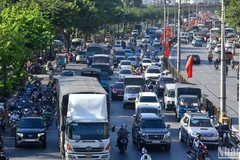
Vietnam moves to reduce wastewater from industrial parks ảnh 1Illustrative image (Source: VINACHEM)

Hanoi (VNA) – Wastewatertreatment is an urgent issue of public concern, especially in the face ofclimate change and development of industrial parks and industrial clusters, authoritieshave said.

This year, the United Nationschose the theme of “Wastewater” for World Water Day (March 22), calling for areduction in wastewater and reuse of water in a bid to ensure that everyone hasaccess to safe water by 2030.

According to the Ministry ofNatural Resources and Environment, the country is currently home to nearly 300industrial parks and 615 industrial clusters. Some 70 percent of the industrialparks and 5 percent of the industrial clusters have already built concentratedwastewater treatment systems.

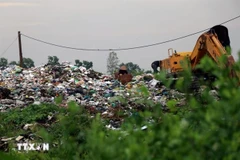
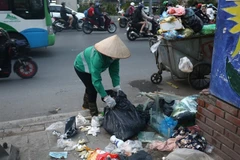
More than 23 million tonnes of householdgarbage, 7 million tonnes of industrial solid waste and 630,000 tonnes ofhazardous waste are discharged into the environment each year. However, withonly 458 landfills, 337 of which are unhygienic and lack collection and wastetreatment systems. Over 100 small-scale incinerators are likely to emit toxicgas such as dioxin and furan.

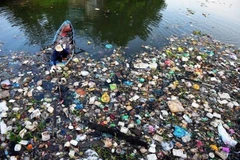
The total volume of wastewaterdischarged from industrial parks nationwide exceeds 3 million cu.m per day, 70percent of them are untreated and directly discharged into the nature, causingserious consequences.

Last year, the Prime Minister agreedupon a plan on adjusting orientations for the development of water drainagesystems in urban and industrial areas until 2025 with a vision to 2050. Theplan points out the need to build safe and sustainable water drainage systems, improveretreatment of wastewater and rainwater and treatment technology, upgrade andrepair of eco-friendly and energy-saving pipeline systems, among others.

In the near future, Statemanagement agencies need to raise public awareness of environmental protectionas well as social responsibility of citizens and businesses in this field.

They are also required tostrengthen inspection and monitoring of environmental issues while workingclosely with concerned units to promptly discover and deal with polluters. Atthe same time, they must improve the capacity of their staff and provide themwith modern technical equipment for the effort.

The plan also suggests thebuilding of long-term environment management projects and application oftechnological advances in monitoring the environment.

In industrial parks, it is a mustfor infrastructure developers to construct concentrated wastewater collectionand treatment systems before being authorized to operate.

Master plans and investmentprojects will be publicized, making it easier for individuals and organisationsto give feedback on their impacts on the environment.

The government and industrialparks have to pioneer in overseeing, adjusting and implementing policies tominimise hazardous waste.-VNA
VNA
See more

At a ceremony to donate 100,000 trees to the Naval Region 4 (Photo: HANE)

Tree planting programme spreads green momentum in islands

The Ho Chi Minh City Association for Conservation of Nature and Environment (HANE) on January 11 announced 10 outstanding green programmes and activities carried out in 2025, including a programme to plant 1 million trees in Vietnam’s island areas.

Lam Dong releases hundreds of wild animals into the wild. (Photo: VNA)

Lam Dong releases hundreds of wild animals back into the wild

According to the Ta Dung National Park Management Board, the park has for years served as a trusted destination for authorities and residents to hand over and release wildlife. Such actions not only contribute to biodiversity conservation but also help reduce illegal hunting and captivity of wild animals.

According to the Hanoi Department of Agriculture and Environment, air quality index (AQI) readings have at times reached poor and very poor levels. (Photo: VNA)

Hanoi targets 20% reduction in PM2.5 levels

Hanoi has affirmed its commitment not to trade environmental protection for economic growth. The city is moving to establish low-emission zones (LEZs) as a core measure to control emissions and promote green, sustainable urban development.

A waste collection area. (Photo: VNA)

Ca Mau approves investment policy for waste-to-energy plant

The waste-to-energy plant is planned for construction in Dat Moi commune, covering a total area of about 20 hectares. It will have a waste treatment capacity of approximately 600 tonnes of household waste per day and a power generation capacity of 6MW.

Ice coats the summit of Fansipan in the northern province of Lao Cai in the early morning of December 25. (Photo: Published by VNA)

Peak Fansipan blanketed in ice on Christmas Day

With temperatures hovering between 1 and 3 degrees Celsius, frost and ice covered the summit area, creating an ideal condition for tourists eager to admire icy scenery, clouds and experience a Christmas atmosphere amid a sea of cold mist.

Illustrative image (Photo: nhandan.vn)

20 trailblazing companies in national green ESG rankings honoured

In 2025-2026, the “For a Green National Environment” programme will pivot around six tasks that merge expertise with broad social outreach, including targeted communications, "Journey to Net Zero" conferences and trainings, ESG surveys and announcements, a "National Green Ambassador" contest, a "Green Fashion" design competition, and the rollout of "National Green Station" models focused on zero-waste living.

Air pollution in Hanoi. (Photo: VNA)

Hanoi to launch 5,000 public electric bicycles

In a move to reduce air pollution and promote green mobility, Hanoi has approved a plan to deploy 5,000 public electric bicycles, alongside restrictions on petrol- and diesel-powered vehicles in the city’s central area.