Vietnam shaping new global standing with comprehensive foreign policy: Scholar

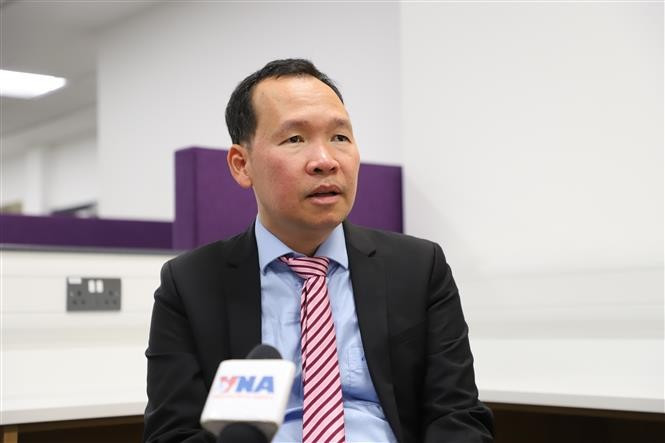
The draft documents for the 14th National Party Congress reflect a significant shift in Vietnam’s foreign policy, from a “proactive and positive” approach focused mainly on economic affairs to a more comprehensive strategy encompassing defence, security, and technology, in order to match the country’s historical, cultural, and geopolitical stature, according to Associate Professor Dr Luong Tuan Anh of the UK's De Montfort University.

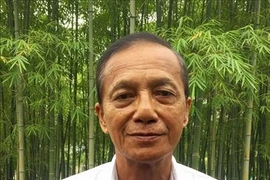
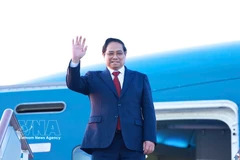
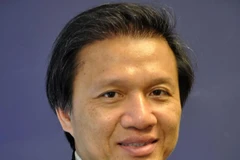
Associate Professor Dr. Luong Tuan Anh of the UK's De Montfort University (Photo: VNA)

Hanoi (VNA) - The draft documents for the 14th National Party Congress reflect a significant shift in Vietnam’s foreign policy, from a “proactive and positive” approach focused mainly on economic affairs to a more comprehensive strategy encompassing defence, security, and technology, in order to match the country’s historical, cultural, and geopolitical stature, according to Associate Professor Dr. Luong Tuan Anh of the UK's De Montfort University.

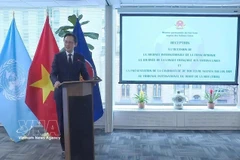
He cited the ceremonial opening for the signing of the UN Convention against Cybercrime held in Hanoi last month as a clear demonstration of this shift — where Vietnam has evolved from being a participant to becoming a contributor and leader in international issues.

The event, he said, signifies the country’s new standing and growing influence, reflecting its comprehensive progress across both economic and diplomatic fronts.

Regarding the private sector, identified in the draft documents as a key driver of national growth, Luong emphasised its strong potential in terms of resources, dynamism, and efficiency, which help ease the State’s investment burden.

However, he stressed the need for state regulation to ensure social stability, equity, and sustainable prosperity for all.

Commenting on the draft’s target of achieving average GDP growth of 10% annually during 2026–2030 and Vietnam’s ambition to become a high-income developed nation by 2045, Hw considered these goals attainable if the country carries out deep and comprehensive reforms.

He estimated that to sustain such growth, investment should reach 40–45% of GDP, savings over 40%, FDI 6–10%, exports up 15% annually, and labour productivity up 7–9%.

Achieving this, he added, will require decisive measures, including expanding credit for businesses and developing infrastructure for transport, energy, education, and digital connectivity — a key pillar in the age of artificial intelligence.

He further underscored the need for broad and fundamental reforms in line with the vision of an area of the nation’s rise outlined by Party General Secretary To Lam, mobilising all domestic and international resources to modernise infrastructure, unlock growth potential, and seize opportunities arising from global shifts in technology, climate, and geopolitics.

Touching upon the overseas Vietnamese community, Luong highlighted that the country’s six million expatriates represent a valuable source of expertise, talent, and financial capital.

He called for more flexible mechanisms enabling overseas Vietnamese to contribute under diverse conditions, including through policies related to work arrangements, housing, education, and health care.

The expert also proposed expanding successful models of attracting eminent scientists to work in Vietnam. Luong expressed his hope that Vietnam will become an attractive destination for global talent./.

VNA
See more

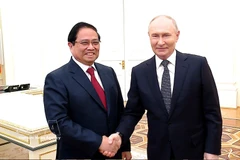
Prime Minister Pham Minh Chinh visits the operational system of the Nhon Trach 3 and 4 power plants (Photo: VNA)

Nhon Trach 3 and 4 thermal power plants reflect Vietnam’s determination, expertise: PM

The Nhon Trach 3 and 4 power thermal plants, invested by Petrovietnam Power Corporation, have a total investment of around 1.4 billion USD. With a combined capacity of 1,624 MW, the plants are expected to supply over 9 billion kWh annually once fully operational, adding substantial baseload power to the system, particularly in the southern region.

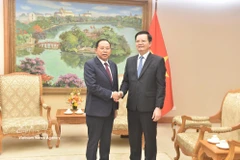
Minister of Foreign Affairs Le Hoai Trung receives Non-Resident Ambassador of Nepal to Vietnam Dhan Bahadur Oli in Hanoi on December 13, 2025. Photo courtesy of the Ministry of Foreign Affairs.

Vietnam, Nepal seek to promote deeper, substantive cooperation

Nepalese leaders attach great importance to relations with Vietnam and wish to learn from its experience and development models in socio-economic development and international integration, said Non-Resident Ambassador of Nepal to Vietnam Dhan Bahadur Oli.

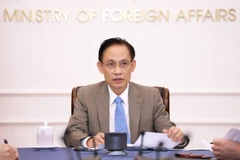
Vietnamese Minister of Foreign Affairs Le Hoai Trung (Photo: VNA)

Vietnamese, Lao foreign ministers hold online talks

The two ministers agreed to maintain close coordination in the time ahead and to expand cooperation under the new framework and orientation, underscoring the significance of the two countries’ “great friendship, special solidarity, comprehensive cooperation, strategic cohesion”.

State President Luong Cuong (fourth from left, first row) and newly-appointed foreign ambassadors in Hanoi on December 12, 2025. (Photo: VNA)

State President receives newly-appointed foreign ambassadors

Receiving Egyptian Ambassador Hany Mostafa Mohamed Mostafa Hassan, President Cuong affirmed that Vietnam highly evaluates Egypt’s role, position, and contributions to regional peace and stability. He also congratulated the African country on its achievements in implementing the 2030 Vision.

An overview of the seminar on the Party’s leadership in ensuring macroeconomic stability, renewing the growth model, restructuring the economy and promoting international integration (Photo: VNA)

Vietnam, Cuba exchange theoretical views on Party’s leadership in macroeconomic stability

The two sides explored in depth the Party’s role in leadership, orientation, oversight and strategic coordination in economic management; approaches to implementing economic restructuring programmes alongside the renewal of the growth model; measures to respond to global economic volatility, inflationary pressures and shifts in global trade; and the building of effective strategic advisory bodies to ensure the Party’s comprehensive leadership in a changing context.

Vietnam’s Ambassador to Australia Pham Hung Tam (Photo: VNA)

Australia–Vietnam Policy Institute serves as bridge for bilateral relations

Established in 2022, AVPI serves as a forum for exchanging ideas among businesses, government agencies, non-profits, universities, and scholars in Australia on Vietnam. The institute acts as a platform for policy dialogue, focusing on research and insights on strategic relations and bilateral economic ties.