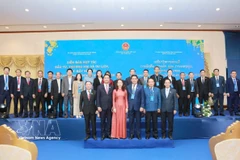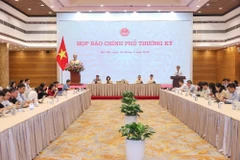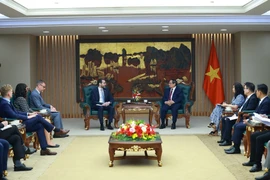
Hanoi (VNA) – Vietnam is poised to remain one of Asia’s fastest-growing economies in the coming years, second only to India, according to S&P Global Ratings at a recent conference in Hanoi.
The agency projects Vietnam’s GDP growth to average around 6.7% annually during 2026–2028, driven by exports and infrastructure investment, despite mounting risks in the global environment.
Notably, this assessment comes at a time when the global economy is grappling with overlapping challenges, including geopolitical tensions in the Middle East, supply chain disruptions, and rising energy costs. Against such headwinds, Vietnam’s ability to sustain robust growth underscores significant improvements in its macroeconomic fundamentals and overall economic resilience.
International financial institutions have broadly maintained a positive outlook, albeit with varying projections. Cushman & Wakefield estimates Vietnam’s GDP growth at around 6.3% in 2026, placing it among the highest in Southeast Asia. Meanwhile, UOB offers a more optimistic scenario, forecasting growth of approximately 7.5%, supported by a rebound in manufacturing and exports, as well as spillover effects from economic support measures implemented in 2025 and early 2026.
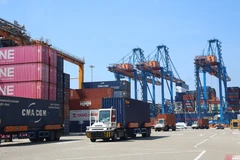
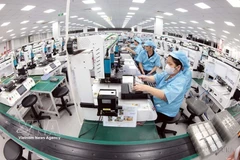
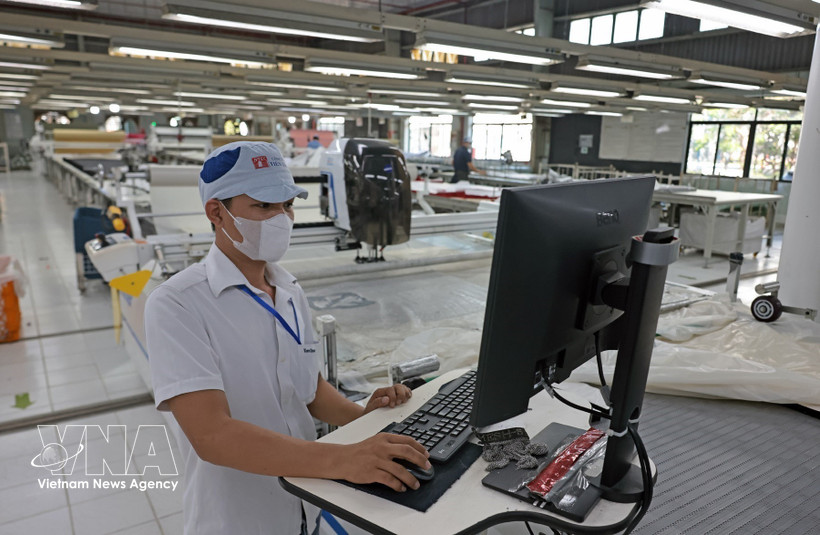
A common thread across these assessments is the increasingly prominent role of industrial production and high-tech exports. Vietnam is benefiting from the ongoing restructuring of global supply chains, as multinational companies relocate production to diversify risks. This shift has accelerated the transition in the country’s export structure toward higher-value products such as electronics and technology equipment, enhancing both value-added and competitiveness.
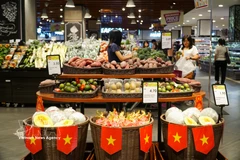
Beyond exports, domestic growth drivers are becoming more balanced. The services sector is recovering strongly, particularly in tourism, retail, and financial-technology services, reinforcing the foundation of domestic consumption. This trend is critical in reducing the economy’s reliance on external demand amid persistent global trade uncertainties.
According to HSBC, Vietnam’s advantages extend beyond competitive costs to its deep integration into regional supply chains, especially in semiconductors and electronics. Strengthening its position in global value chains, while proactively preparing for trade-related risks, will be key to sustaining growth momentum over the medium term.
Another notable aspect is the ongoing improvement in the quality of growth, as the economy is increasingly driven by productivity, innovation, and higher value-added activities. This is reflected in a more selective approach to attracting foreign direct investment, with a focus on high-tech industries, clean energy, and smart manufacturing, rather than traditional labour-intensive sectors. If sustained, this trend will help Vietnam gradually reduce its dependence on low-cost advantages and enhance resilience to external shocks.
At the same time, infrastructure development, particularly in transport, logistics, and energy, is being accelerated and is widely seen as a critical lever for medium- and long-term growth. Improved connectivity, lower transportation costs, and more reliable energy systems not only boost business efficiency but also strengthen investor confidence.
In an increasingly competitive global race for capital, such structural improvements will play a decisive role in maintaining Vietnam’s attractiveness as an investment destination. The country’s growth outlook is no longer anchored solely in traditional drivers but is increasingly underpinned by structural factors, providing a basis for continued positive assessments from international institutions, even amid global uncertainty.
However, experts caution that this outlook does not render Vietnam immune to external shocks. Prolonged tensions in the Middle East since early 2026, along with potential disruptions in the Strait of Hormuz, have pushed up oil prices and transportation costs, adding pressure on inflation and production expenses. The Asian Development Bank (ADB) has warned that growth in developing Southeast Asian economies, including Vietnam, could decline by 0.6 to 2.3 percentage points in the event of an escalation.
Domestically, factors such as slowing population growth, a slight uptick in interest rates toward the year-end, and pressures in the real estate market may weigh on short-term consumption. These challenges call for more flexible policy responses while maintaining a balance between growth objectives and macroeconomic stability.
Nevertheless, many international organisations highlight that Vietnam still retains considerable policy space. The Government continues to refine institutions toward a more development-oriented framework, accelerate public investment disbursement to crowd in private investment, and promote new growth drivers such as digital transformation, innovation, and the green economy.
Flexible coordination between fiscal and monetary policies will be crucial in maintaining stability amid volatility. Containing inflation, ensuring exchange rate stability, and directing credit flows toward production-business sectors will form the foundation for reinforcing market and investor confidence.
In the longer term, Vietnam stands at a critical juncture to transition toward a more sustainable growth model. From an economy once heavily reliant on low-cost labour, Vietnam is steadily moving up the global value chain through technology, innovation, and human capital development. If current opportunities are effectively leveraged, Vietnam can transform short-term challenges into momentum for a more resilient and sustainable development cycle in the years ahead./.
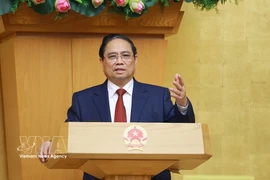
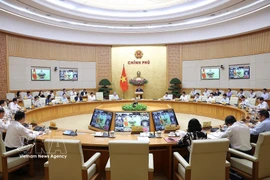
PM urges timely, flexible policy response to secure double-digit growth
The PM asked each ministry, sector, and locality to identify breakthrough impetuses, devise concrete measures, and assign clear responsibilities in order to achieve double-digit expansion.