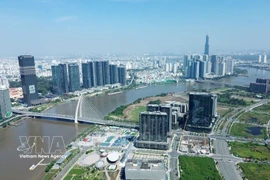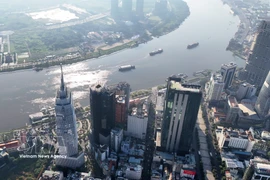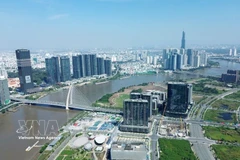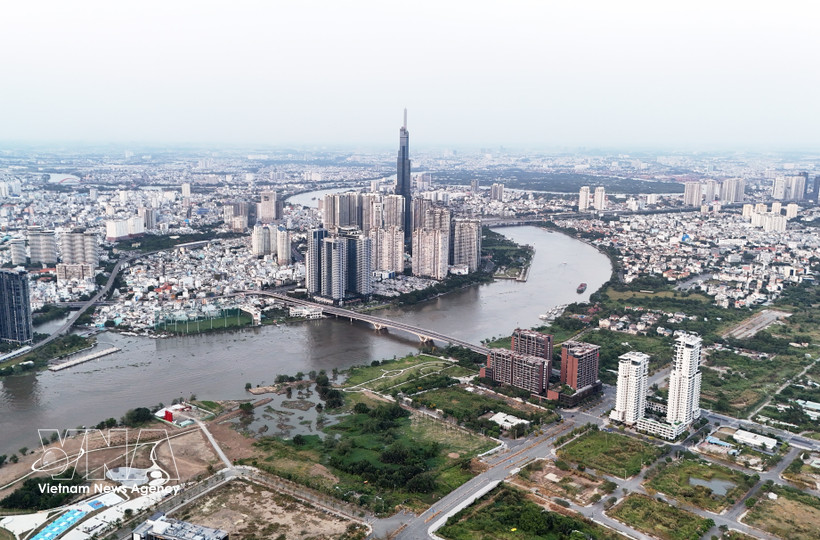
Ho Chi Minh City (VNA) – Ho Chi Minh City is emerging as a new highlight on the global financial map, with rising rankings and strong fintech growth momentum. In this context, a regulatory sandbox is seen as a “policy laboratory”, providing a key foundation for accelerating the development of an international financial centre.
Momentum from rising rankings
According to the Global Financial Centres Index (GFCI 39), Ho Chi Minh City climbed 11 places to rank 84 globally and was identified among centres likely to expand influence within the next two to three years.
The improvement coincides with rapid fintech growth, with the city rising seven positions to 83rd globally. A 2025 StartupBlink report also marked the fourth consecutive year of improvement in its startup ecosystem ranking, with fintech emerging as a leading growth sector. The city now ranks among the world’s top 30 blockchain hubs and second in Southeast Asia.
These gains reflect not only improved positioning but also the opportunity to pursue a distinct development path. As a latecomer, Ho Chi Minh City can adopt emerging financial models more rapidly rather than following traditional trajectories of established financial centres.
In this strategy, the Vietnam International Financial Centre in Ho Chi Minh City (VIFC-HCMC) is being developed on the back of these trends. A core enabling mechanism is the regulatory sandbox, allowing organisations and enterprises to test new technologies, products and business models under controlled conditions where legal frameworks remain incomplete.
Associate Professor Nguyen Huu Huan, Vice Chairman of the VIFC-HCMC executive agency, noted that technology is advancing faster than regulation, with blockchain, artificial intelligence, digital assets and asset tokenisation reshaping global finance. Maintaining purely rule-based management risks widening the gap between innovation and regulation, potentially constraining innovation while weakening risk control.
The sandbox therefore enables controlled experimentation, limited risk-taking and the generation of empirical data to support policymaking, in line with Resolution 222/2025/QH15, which allows VIFC-HCMC to pioneer pilot initiatives contributing to national legal framework development.
International experience shows that successful financial centres such as Singapore, Dubai, the UK and Hong Kong have adopted sandbox mechanisms focused on intelligent, data-driven risk governance rather than deregulation.
According to prof. Huan, the sandbox functions simultaneously as a regulatory tool, an investment attraction mechanism and a driver of national competitiveness. For VIFC-HCMC, it will support strategic pillars including digital finance, digital assets, cross-border payments, real-world asset tokenisation, green finance and carbon markets.
Sandbox design and business expectations
Researchers from the University of Economics Ho Chi Minh City have proposed a sandbox model targeting high value-added sectors while maintaining strict risk controls.
Cross-border payments are prioritised to improve transaction speed and costs while ensuring compliance with foreign exchange management, anti-money laundering requirements and asset protection standards. Transactions must pass through sponsoring banks and meet full traceability requirements.
In digital assets, token-based liquidity mechanisms are cautiously designed for institutional and professional investors, incorporating real-time pricing, lending limits and automated margin controls to manage volatility risks.
Smart contracts are proposed for trade finance processes, particularly letters of credit, to enhance automation and transparency while maintaining final human oversight for legal accountability.
A digital asset banking model focusing on custody, wallet management and asset transfers for institutional clients is also proposed, featuring multi-layer security systems and separation from core banking operations to limit systemic risks.
Real-world asset tokenisation would allow digital representation of ownership rights tied to assets such as real estate, securities and commodities, improving liquidity and capital mobilisation while maintaining safeguards linking tokens to underlying assets.
All pilot models include clear safeguards ensuring supervision, traceability and intervention capability. The sandbox is not a legal exemption zone; regulations on data protection, cybersecurity, anti-money laundering, foreign exchange management and legal responsibility remain fully enforced.
This approach strengthens state governance by generating practical data to narrow the gap between technological innovation and regulation.
From a business perspective, the international financial centre is expected to expand opportunities beyond banking and investment, enabling technology firms to engage more deeply in digital financial services. However, success depends on a synchronised ecosystem where policy, technology and businesses operate in close coordination.
Tran Huy Vu, co-founder of the Kyber Network, emphasised that enterprises need a clear, transparent and consistent legal framework defining operational boundaries. Only with regulatory clarity, he said, can businesses fully leverage technology and contribute effectively to the emerging financial ecosystem at VIFC-HCMC./.
See more
Retail, service sectors show optimistic signals in Q1
The total retail sales of goods and consumer service revenue in the first three months of the year were estimated at 1.9 quadrillion VND (72.2 billion USD), a 10.9% increase compared to the same period last year. Excluding the price factor, growth remained steady at 7%.
Vietnamese goods find growing opportunities in Tunisia
The Vietnam Trade Office in Algeria said a working delegation is expected to visit Tunisia from June 5–11 to attend the African International Food Industry Exhibition and organise an online business networking conference linking Vietnamese and Tunisian enterprises, aiming to strengthen cooperation and boost bilateral trade.
Hai Phong strengthens vessel monitoring to step up fight against IUU fishing
As of March 8, Hai Phong managed 786 fishing vessels measuring 6m or longer. Authorities reported that fleet oversight has been fully standardised, with all vessels registered, inspected, licensed, and integrated into the national fisheries database (Vnfishbase).
Q1 growth lays firm foundation for Vietnam’s 2026 economic targets
The growth rate was higher than the 7.07% recorded in the same period last year, reflecting the economy’s resilience, enterprises’ adaptability and providing a solid foundation to achieve full-year growth targets, said Nguyen Thi Huong, director of the National Statistics Office (NSO) under the Ministry of Finance.
Vietnam sustains strong growth amid global headwinds
The agency projects Vietnam’s GDP growth to average around 6.7% annually during 2026–2028, driven by exports and infrastructure investment, despite mounting risks in the global environment.
Vietnamese businesswomen association debuts in Europe
Operating on principles of voluntariness, non-profit orientation, transparency and sustainable development, the association aims to facilitate experience sharing, mutual support, business cooperation, brand building, and the enhancement of Vietnamese women’s position in the modern era.
OVs encouraged to expand distribution channels for Vietnamese goods abroad
Overseas Vietnamese are expected to serve as a strategic on-site force in promoting and distributing Vietnamese goods, maintaining traditional markets and expanding access to reputable retail systems and global supply chains, particularly in countries with large Vietnamese communities.
Reference exchange rate drops slightly at week’s beginning
The State Bank of Vietnam set the daily reference exchange rate at 25,106 VND/USD on April 6, down just 1 VND from the last working day of the previous week.
Total social investment up nearly 11% in Q1
Total realised investment capital reached 744.7 trillion VND (28.26 billion USD) in the January–March period, up 10.7% year-on-year and higher than the 9.4% growth recorded in the same period of 2025.
Vietnamese online exporters rewrite the rules of the game
In addition of selling good products, Vietnamese exporters are implementing a value transformation strategy smartly and effectively to win export markets.
Hoa Phat partners with TÜV SÜD to certify railway rail quality
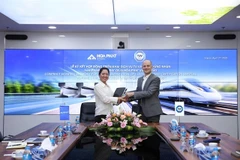
Vietnam’s leading steelmaker Hoa Phat Group has signed an agreement with TÜV SÜD Rail GmbH to provide testing, inspection and certification services for its railway rail products, marking a key step in its strategy to develop high-quality steel for modern rail systems.
Ministry proposes advance mechanism for fuel price stabilisation fund
Vietnam plans State-budget advances to its fuel price stabilisation fund, aiming to cushion domestic fuel price swings amid global market volatility and rising energy costs.
Kim Long Motor expands into Thailand's bus market
Under the agreement, Kijsetthi Mobility will serve as the authorised distributor of Kim Long Motor bus products in Thailand, establishing a nationwide sales and after-sales service network. The product portfolio includes both internal combustion engine and fully electric buses, catering to diverse transport needs and the growing demand for green mobility solutions.
Vietnam, Laos step up investment cooperation to advance East–West Economic Corridor connectivity
The forum served as an important platform to enhance connectivity and promote investment, trade and tourism ties along the EWEC, while supporting businesses in market exploration, product promotion and export expansion to Laos and Northeast Thailand.
Ministry works to ensure rice production, exports align with market developments
Accordingly, between January and March, rice output reached 3.64 million tonnes; livestock production attained 2.28 million tonnes of meat, up 4.9%; fisheries output reached 2.7 million tonnes, up 3.3%; and forestry production totalled 12 million cubic metres of timber, an increase of over 3%. The sector’s export turnover reached 16.69 billion USD, up 5.9%, with a trade surplus of 4.78 billion USD, up 12%.
SBV to keep interest rates stable: Deputy Governor
The monetary policy will remain proactive and flexible, closely coordinated with an appropriately expansionary fiscal policy to prioritise inflation control while supporting sustainable growth.
Vietnam ensures sufficient fuel supply through April amid global uncertainties
Importers brought in approximately 3.2 million cubic metres of fuel in March. Combined with current inventories of around 1.6–1.8 million cubic metres, this volume is expected to fully meet domestic demand until the end of April.
PM pushes for new growth drivers: Minister
Ministries, agencies and local authorities were urged to stick firmly to the growth target of at least 10% while maintaining macroeconomic stability, keeping inflation under control and ensuring major economic balances to build momentum for the rest of 2026.
CPI moves up 3.51% in Q1 on March high pressure
The March index gained 2.44% from December 2025 and posted a 4.65% year-on-year hike, the highest March reading in five years.
Foreign trade climbs 23% to nearly 250 billion USD in Q1
The sum consists of 122.93 billion USD in exports and 126.57 in imports, respectively increasing 19.1% and 27%.