Empowering businesses to achieve double-digit growth

Addressing these issues is critical. Chairman of the Vietnam Chamber of Commerce and Industry (VCCI) Ho Sy Hung urged the Government to strengthen its role as a facilitator of development, shifting from administrative control to proactive support for businesses. This includes ensuring a transparent, predictable and competitive business environment, eliminating legal inconsistencies and enabling fair access to resources.

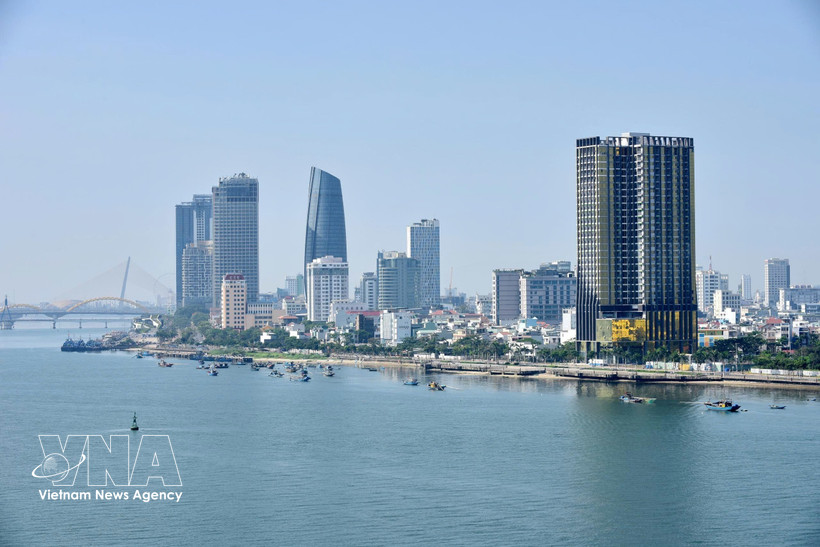
Many private enterprises have invested in the service and real estate sectors in Da Nang. (Photo: VNA)

Hanoi (VNA) - Amid increasingly complex and unpredictable global economic and political developments, Vietnam’s economy has been significantly affected by external shocks, including supply chain disruptions, market volatility, tariff risks and the rapid restructuring of global value chains, which pose considerable challenges for both the business community and the broader economy.

Nevertheless, under the comprehensive leadership of the Party, the support of the National Assembly and the Government’s decisive direction, businesses are receiving stronger backing to gradually overcome difficulties and sustain growth, thus laying an important foundation for the economy’s double-digit growth target this year.

Identifying, addressing bottlenecks


According to the Ministry of Finance, by the end of 2025, Vietnam had around one million active enterprises, up more than 25% compared to 2020. Following the Politburo’s issuance of Resolution No. 68-NQ/TW on private sector development in May 2025, entrepreneurial momentum has surged. Since then, an average of 18,000 new enterprises have been established each month. Nearly 300,000 businesses were newly established or resumed operations in 2025, marking a record high and reflecting growing confidence within the business community.

Beyond numerical growth, enterprises have played a vital role in mobilising resources for socio-economic development, with 564 projects launched or completed nationwide last year, totaling approximately 5.2 quadrillion VND (197.3 billion USD) in investment, nearly 75% of which came from the private sector. These contributions have helped maintain macroeconomic stability, control inflation and sustain GDP growth of over 8.02%.

However, challenges persist. Global shocks, from pandemics to geopolitical tensions and trade and financial volatility, have disrupted supply chains, increased input costs and reduced orders. Structural weaknesses remain evident, including weak linkages between enterprises and farmers in sectors such as food processing, heavy reliance on imported materials in key industries like textiles and footwear, and limited access to finance for small- and medium-sized enterprises. High logistics costs and insufficient investment in branding and high-value products also constrain deeper integration into global value chains.

Unlocking growth drivers

Institutional bottlenecks further hinder business development. Overlapping and inconsistent regulations, cumbersome administrative procedures and uneven policy implementation continue to raise compliance costs and dampen innovation. Access to land, credit, technology and market information remains a challenge, particularly for smaller firms, while rising global protectionism and stricter green standards add pressure on exporters.
vnanet-enterprises2.jpg
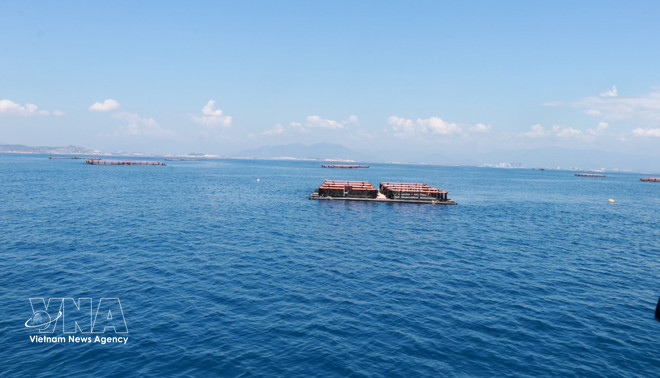
High-tech offshore fish cages operated by the Cam Ranh Marine Farming Cooperative represent an advanced model applying modern technologies. (Photo: VNA)

Addressing these issues is critical. Chairman of the Vietnam Chamber of Commerce and Industry (VCCI) Ho Sy Hung urged the Government to strengthen its role as a facilitator of development, shifting from administrative control to proactive support for businesses. This includes ensuring a transparent, predictable and competitive business environment, eliminating legal inconsistencies and enabling fair access to resources.

At the same time, enterprises themselves must enhance internal capacity by renewing traditional growth drivers and fostering new ones through science and technology, digital transformation and green transition. Greater investment in research and development, brand building and market diversification, alongside effective utilisation of free trade agreements, will be key to improving their position in global value chains.

Strengthening financial resilience, improving governance, developing high-quality human resources and enhancing linkages within value chains will also be essential. Only by doing so can Vietnamese enterprises truly serve as a driving force for rapid and sustainable economic growth in the years ahead./.

VNA

See more

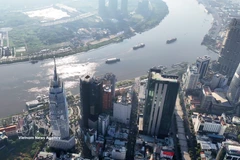
Financial buildings in central Ho Chi Minh City along the Saigon River, facing the Thu Thiem Peninsula in An Khanh ward. (Photo: VNA)

Vietnam’s international financial centre strengthens global foothold

According to the latest Global Financial Centres Index 2026 (GFCI 39), Ho Chi Minh City ranked 84th out of 120 financial centres worldwide, climbing 11 positions compared with 2025. Within ASEAN, the city now ranks third behind Singapore and Kuala Lumpur, overtaking Bangkok and Jakarta.

Farmers in An Giang use drones for pesticide spraying, helping save costs, labour and time. (Photo: VNA)

Beyond take-off: Vietnam’s push to climb the drone value chain

Momentum increased in October 2025 with the launch of the Vietnam Low-Altitude Economy Alliance (LAEP), co-founded by FPT CEO Nguyen Van Khoa and VinaCapital CEO Don Lam. The alliance brings together technology firms, investors, start-ups and industry experts with the goal of positioning Vietnam as a global drone hub.

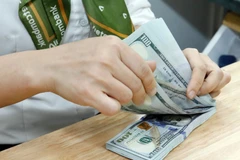
Reference rate steady on April 3 (Photo: VNA)

Reference rate steady on April 3

With the current trading band of +/- 5%, the ceiling rate applicable for commercial banks during the day is 26,362 VND/USD, and the floor rate 23,852 VND/USD.

Deputy Prime Minister Mai Van Chinh visits a Vietnamese booth at the 22nd CAEXPO (Photo: VNA)

CAEXPO - effective channel for Vietnam-China cooperation

CAEXPO serves as an important gateway for Vietnamese businesses entering the Chinese market. Over 22 editions of CAEXPO, Vietnam has featured nearly 4,300 booths and around 2,200 enterprises. Numerous Vietnamese products, such as coffee, wood products, and footwear, have penetrated the Chinese market through CAEXPO, achieving rapid transitions from exhibition to product display.

Leaders of the ITPC and the Oregon business delegation chair the forum (Photo: VNA)

Ho Chi Minh City promotes logistics supply chain cooperation with US state

According to Cao Thi Phi Van, Vice Director of ITPC, the forum took place amid steadily deepening Vietnam–US relations. The US remains Vietnam’s largest export market and a key economic partner, with 1,539 valid investment projects worth more than 12.5 billion USD nationwide. In Ho Chi Minh City alone, US investors operate 915 projects with total registered capital of 7.6 billion USD, ranking seventh among 136 foreign investors in the city.

A border guard requests a fishing vessel to dock for verification of its entry and exit logs (Photo: VNA)

Vietnam issues new control procedures to tackle IUU fishing

Under Decision No. 1111/QD-BNNMT issued by the Ministry of Agriculture and Environment, the new process regulates the inspection and supervision of foreign vessels engaged in fishing, transport or transhipment of seafood when calling at Vietnamese ports for import, temporary import for re-export, transit or transhipment activities.

A Vietnamese representative introduces Vietnam Expo trade fairs (Photo: VNA)

Vietnam, India look to boost business connectivity through Vietnam Expo 2026

Addressing the opening session, Trade Counsellor of Vietnam in India Bui Trung Thuong highlighted the steady growth of bilateral economic relations, noting that two-way trade reached approximately 16.5 billion USD last year. However, he stressed that the figure remains modest compared to the substantial potential of the two economies, which are highly complementary in structure.

The first quarter's domestic revenue, estimated at 738.6 trillion VND, represented 33.6% of this year's target and rose 12.2% compared to the same period in 2025. (Illustrative photo: VNA)

State budget revenue up 10.2% in Q1

A range of fiscal support measures have been implemented to help stabilise the market and support businesses although they are expected to reduce budget revenue in the coming period.

Yaris Cross is Toyota’s top-selling model in March 2026. (Photo: Toyota)

Toyota sales in Vietnam double in March

Of the total, domestically assembled completely-knocked-down (CKD) vehicles numbered 1,800 units while completely built-up (CBU) imports dominated with 6,343 units, signalling a clear rebound in the auto market after a period of subdued demand.

Workers at the Lien Ha Thai Industrial Park in the Thai Binh Economic Zone). (Photo: VNA)

Productivity criteria seen as catalyst for growth of businesses

As Vietnam is deepening its integration into the global economy, the gradual adoption of productivity criteria is increasingly viewed as a key driver enabling domestic enterprises to enhance competitiveness and meet rising demands for transparency, governance quality, social responsibility and sustainable development.