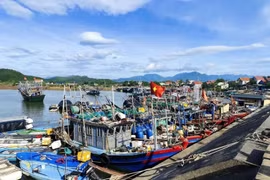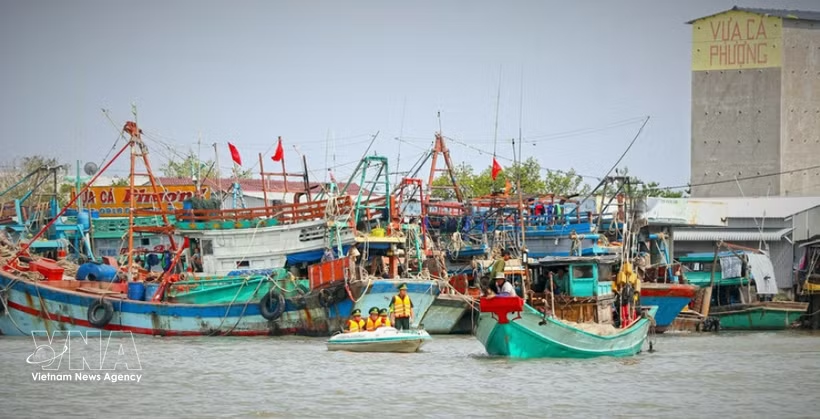
Quang Ninh (VNA) – The northern coastal province of Quang Ninh is stepping up coordinated and stringent measures to tightly control fishing activities, part of national efforts to have the European Commission (EC)’s “yellow card” warning against Vietnamese seafood removed and promote sustainable fisheries.
With more than 6,100 sq.km of water surface and over 250 km of coastline, the locality has been identifying the fight against illegal, unreported and unregulated (IUU) fishing as a central political task, laying a stepping stone for its ambition to become a modern marine economic hub with a sustainable fisheries sector.
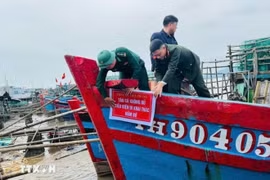
Since late February 2026, Vice Chairman of the provincial People’s Committee Nguyen Van Cong has directed relevant agencies to resolutely prevent unqualified vessels from heading to the sea, and thoroughly handle violations, particularly cases involving the disconnection of vessel monitoring system (VMS). Leaders of each locality must bear responsibility for any violation, and the entire political system must act strongly to enforce anti-IUU fishing regulations.
Currently, all 4,127 vessels measuring 6 metres or longer have been fully registered and updated in the national fisheries database (VNFishbase).
The locality has set a target of ensuring 100% of fishing vessels are managed with “accurate, clean, and live” data, preventing infringment of foreign waters, and completing support policies for the VMS installation.
So far, all eligible vessels have been granted fishing licenses, and more than 97% remain within valid inspection periods. Vessels losing VMS connectivity or operating without full eligibility have been strictly controlled.
At the same time, the monitoring of fishing vessels through electronic catch documentation and traceability systems (eCDT) continues to be expanded to enhance transparency. At fishing ports, 100% of vessels entering and leaving are inspected, and catch volumes are monitored in accordance with regulations.
Quang Ninh is accelerating digital transformation in management by expanding vessel monitoring via the electronic catch documentation and traceability system (eCDT) to enhance transparency. Digital data and electronic identification via the VNeID app is also used, enabling real-time monitoring of fishing activities.
Fishing port infrastructure in Van Don, Co To, and Mong Cai has continuously been upgraded to improve unloading capacity and prevent illegally caught products from entering the market.
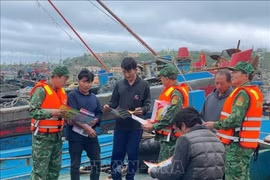
Communications activities have also been renewed, shifting from passive reminders to fostering voluntary compliance. Direct outreach at fishing ports, commitments made by vessel owners, and the establishment of “fishing self-management groups” have helped strengthen fishermen’s awareness and sense of responsibility.
In addition, Quang Ninh is proactively implementing a roadmap to reduce pressure on marine resources. During the 2026–2030 period, the province aims to reduce 862 fishing vessels, mainly in inshore areas, while encouraging fishermen to shift toward aquaculture and fisheries logistics services.
New marine economic models are also being developed effectively. In Van Don special zone, high-tech marine farming models such as floating HDPE cage systems combined with tourism activities are being deployed, helping protect marine ecosystems. Meanwhile, Co To special zone is promoting industrial-scale and high-tech aquaculture linked with environmental protection and higher value creation from marine resources.
With these comprehensive and systematic measures, Quang Ninh is working to contribute to nationwide efforts to have the EC’s “yellow card” lifted and steadily advance its vision of becoming a modern and sustainable marine economic hub./.