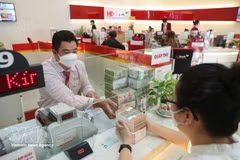
Hanoi (VNA) – Stimulating consumption and investment while maintaining a sustainable balance in the trade of goods are seen as critical solutions to bolster Vietnam’s economic growth, as the country strives toward ambitious expansion targets.
Experts say that alongside building a new growth model based on knowledge, science-technology and innovation, three traditional pillars – domestic consumption, investment and exports – continue to play a decisive role.
Economic performance in the first quarter of 2026 reflected strong growth despite geopolitical uncertainties and global supply chain disruptions, driven by the combined contributions of these pillars. The service sector remained a key engine, contributing more than 50% to overall growth.
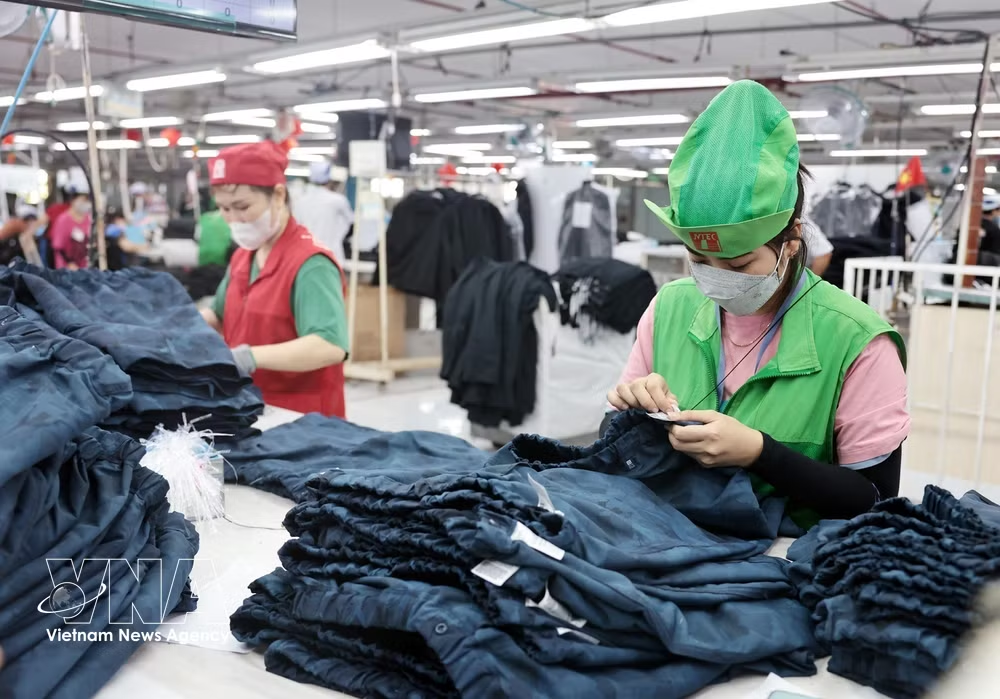
One highlight was the robust recovery of private investment, which rose by 9.8%, coupled with disbursed foreign direct investment reaching its highest level in five years. Meanwhile, exports posted strong gains, particularly in processing and manufacturing – a core sector accounting for over 32% of GDP growth.
Economists stressed that these “core” growth drivers require timely support with a long-term approach rather than short-term, fragmented measures.
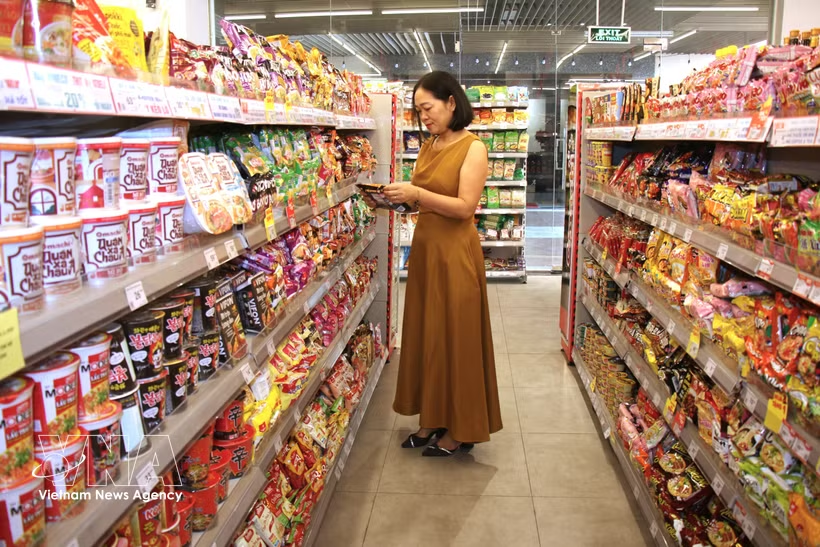
Regarding consumption, experts believe it is entering a more selective phase. If workers’ incomes continue to improve thanks to recovering production and exports, and monetary policy remains stable, consumption is likely to grow steadily, focusing on essential goods, healthcare and value-driven experiences.
However, prolonged cost-of-living pressures or disruptions in the labour market could reinforce defensive spending behaviour, with consumers narrowing their choices and prioritising trusted brands and reliable purchasing channels.
The National Statistics Office (NSO) under the Finance Ministry expects consumption trends to remain positive in 2026 if macroeconomic stability is maintained, production recovery is supported, and employment and incomes are sustained.
NSO Director General Nguyen Thi Huong emphasised that developing the domestic market, improving the quality of goods and services, tapping tourism potential, renewing products, and promoting e-commerce and the digital economy will help ensure domestic consumption remains a key growth pillar in 2026.
On investment, Vietnam needs to mobilise total social investment capital of about 38.5 quadrillion VND, equivalent to 40% of GDP, during 2026–2030 to achieve double-digit growth. Public investment, serving as “seed capital,” is expected to be a primary driver, especially for infrastructure development. Accelerating the disbursement of public funds is therefore crucial to creating a strong economic impetus.
For exports, the full-year growth target is set at 15–16%. To enhance value, experts recommend focusing on productivity and product quality in sectors with competitive advantages, driven by innovation.
Expanding trade promotion, leveraging digital platforms for distribution, and diversifying export markets are also key priorities. The Ministry of Industry and Trade is currently reviewing and revising the national export-import strategy, with completion expected in May.
Despite these positive drivers, challenges remain. According to Huong, sustaining growth momentum and achieving double-digit expansion in 2026 will require addressing three major bottlenecks, particularly in policy implementation and institutional frameworks.
These include simplifying administrative procedures, accelerating site clearance, and improving governance capacity to speed up public investment disbursement, as well as tackling constraints in capital access, labour quality and competitiveness. Inflationary pressures and rising borrowing costs also pose significant risks.
Can Van Luc, Chief Economist of the Bank for Investment and Development of Vietnam (BIDV), noted that many economic resources remain underutilised. With a savings rate of around 37% of GDP, there is ample room to mobilise domestic capital.
Other potential resources include remittances, international green finance, FDI inflows, trade surpluses, and assets held by the public such as gold and real estate. Emerging areas such as carbon markets, international financial centres and digital assets could also improve capital flows if properly developed.
Luc added that effective institutional reform could lift GDP growth by about 0.3 percentage points. Promoting green growth, climate resilience and stronger regional linkages – particularly in key economic hubs such as Ho Chi Minh City, Hanoi and Da Nang – will also be vital./.