Vietnam, Taiwan (China) promote cooperation in training semiconductor human resources

The forum focused on sharing experience and strategies for building a skilled semiconductor workforce, updating recruitment trends, and promoting university–industry cooperation to establish a sustainable talent ecosystem for Vietnam’s fast-growing semiconductor sector.

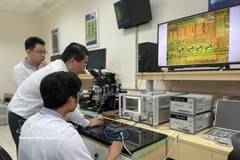
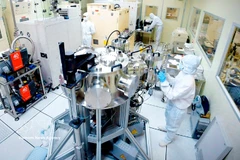
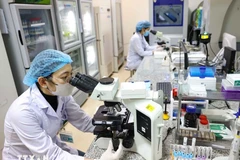
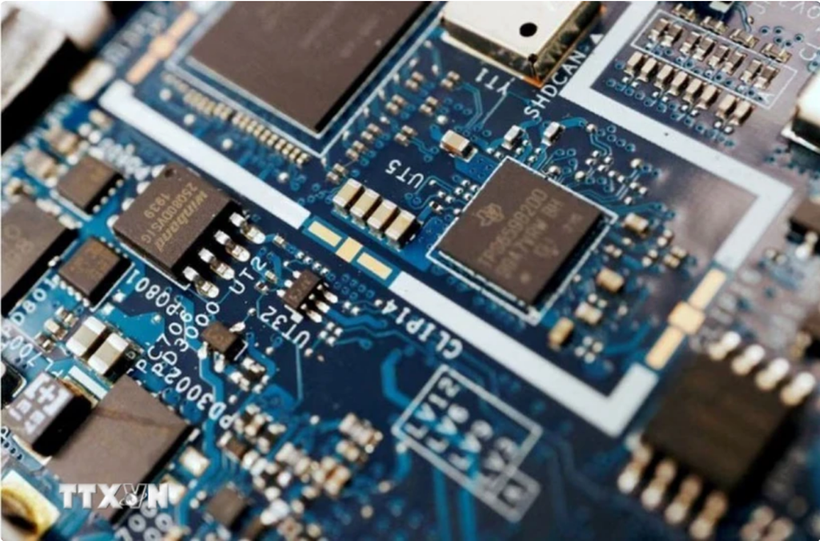
Illustrative photo (Photo: Reuters/VNA)

Hanoi (VNA) – Vietnam and Taiwan (China) are stepping up cooperation in training and developing human resources for the semiconductor industry.

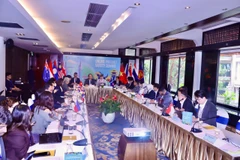
The National Innovation Centre (NIC) under the Ministry of Finance, in collaboration with the National Taiwan University of Science and Technology (NTUST), co-hosted the Vietnam – Taiwan (China) Semiconductor Talent Cultivation Forum in Hanoi on October 30. The event brought together experts, representatives from research institutes, and businesses of both sides to discuss strategies for developing high-quality semiconductor human resources.

The forum focused on sharing experience and strategies for building a skilled semiconductor workforce, updating recruitment trends, and promoting university–industry cooperation to establish a sustainable talent ecosystem for Vietnam’s fast-growing semiconductor sector.

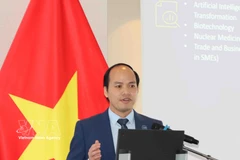
Opening the event, NIC Director Vu Quoc Huy said the centre will continue to act as a key connecter in Vietnam’s innovation ecosystem. NIC will strengthen links among policymakers, universities, and businesses to build a strong foundation for semiconductor talent development, helping Vietnam become a leading hub for technology and innovation in the region, he said.

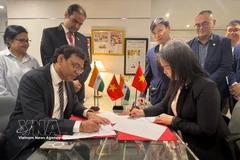
A highlight of the event was the signing of a Memorandum of Understanding between NIC and NTUST on implementing the INTENSE Scholarship programme in Vietnam. The initiative aims to connect leading Vietnamese universities with top Taiwanese institutions in training, research, and student–lecturer exchange in the semiconductor field.

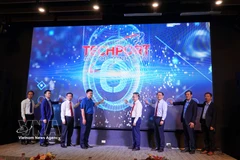
The forum also featured the launch of the INTENSE Scholarship Office in Vietnam, marking a major milestone in cooperation between the two sides. The office will serve as a hub for joint training programmes and scholarship management, strengthening long-term collaboration in semiconductor education and research.

At the same time, the INTENSE 2025 Scholarship Introduction Programme was held at the University of Science under Vietnam National University, Hanoi, with the participation of representatives from the Taipei Economic and Cultural Office in Vietnam, professors from more than 10 leading Taiwanese universities, and hundreds of Vietnamese students in STEM fields.

Lin Yi-Min, Deputy Representative of the Taipei Economic and Cultural Office in Vietnam, emphasised that Taiwan (China) regards educational cooperation as the cornerstone of the knowledge economy. It is hoped that more Vietnamese students will join high-tech fields, especially semiconductors, to become the driving force of future innovation, he said.

According to organisers, the two-day event attracted over 400 Vietnamese lecturers and students, including about 150 who were interviewed directly by Taiwanese professors for the INTENSE Scholarship. The academic exchanges and networking activities have opened up new learning, research, and career opportunities while deepening Vietnam–Taiwan cooperation in developing high-quality human resources for strategic technologies.

The INTENSE Scholarship Programme supports postgraduate students from Asian countries in engineering, science, semiconductors, high technology, and finance. Starting in 2025, the programme officially expands to Vietnam, aiming to nurture a new generation of semiconductor talents and strengthen Vietnam’s competitiveness in the global technology landscape./.

VNA

See more

Prime Minister Pham Minh Chinh chairs the fifth meeting of the Government’s Steering Committee for science, technology, innovation, digital transformation and Project 06 in Hanoi on November 15, 2025. Photo: VNA

PM pushes for reforms in sci-tech, innovation, digital transformation

Prime Minister Pham Minh Chinh asked participants to propose priority tasks and breakthrough measures ahead, including removing obstacles, accelerating capital disbursement, simplifying procedures, promoting data reuse to cut paperwork, and offering maximum support to citizens and enterprises.

Illustrative image (Photo: VNA)

Da Nang remains Vietnam’s fastest 5G city

The city has held the top spot since the start of this year. Its 5G performance is almost 1.5 times higher than runner-up Hai Phong (429.53 Mbps) and even the capital Hanoi (415.73 Mbps).

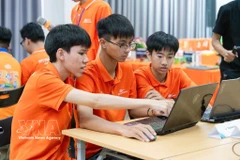
Participants in the Vietnam–India Innovation Gateway Bootcamp (Photo: VNA)

Vietnam, India boost innovation cooperation

Bui Trung Thuong, Trade Counsellor at the Vietnamese Embassy in India, highlighted the shift in Vietnam–India relations from traditional cooperation to partnerships based on innovation, technology, and digital transformation.

Illustrative photo (Photo: VNA)

Vietnam emerges as new hotspot for AI data centre investment

A wave of investment in artificial intelligence (AI) data centres is sweeping across Vietnam, with both domestic and international corporations announcing multi-billion-USD projects that are set to transform the country into a rising hub in the regional AI infrastructure map.

An overview of the international seminar, themed “Building resilience against online frauds and scams in Southeast Asia: Spotlight on Vietnam". (Photo: VNA)

Experts propose anti-scam solutions suited to Vietnam’s conditions

Vietnam’s digital transformation has achieved remarkable progress. However, similar to other countries in the region, online scams and fraud cases are on the rise. Last year, authorities recorded 10,000 online fraud cases, with estimated losses of nearly 759 million USD.

Minister of Science and Technology Nguyen Manh Hung speaks at the Vietnam Open Technology Forum 2025 in Hanoi on November 3. (Photo: VNA)

Vietnam looks to develop, master digital technology through open standards

Vietnam has chosen to pursue this direction — developing open technologies, open-source software, and open data — to enable individuals and enterprises to co-create new values. With this approach, it will become a technology-driven nation that both benefits from and contributes to global knowledge.

The seminar held in London on October 28 between Party General Secretary To Lam and leading strategists on AI and technology in the UK and the world. (Photo: VNA)

Vietnamese Party chief attends seminar on AI, technology in London

With its aspiration to become a pioneer in digital economy, Vietnam seeks to learn from the UK - the cradle of the Industrial Revolution and the homeland of great minds such as Isaac Newton, John Locke, Adam Smith, Alan Turing, William Shakespeare, and Charles Dickens - to build an innovative, human-centred, and sustainable technological ecosystem.

Int'l press conference highlights key outcomes of Hanoi Convention signing

Int'l press conference highlights key outcomes of Hanoi Convention signing

The Ministry of Public Security and the Ministry of Foreign Affairs jointly held an international press conference to announce the outcomes of the Signing Ceremony and High-Level Conference of the United Nations Convention against Cybercrime (also known as Hanoi Convention) in Hanoi on October 26.

Deputy Minister of Public Security Senior Lieutenant General Pham The Tung addresses the policy discussion in Hanoi on October 26. (Photo: VNA)

Hanoi Convention: Fostering global cooperation in combating cybercrime

A policy discussion focusing on promoting international cooperation in combating cybercrime, with national approaches to implementing the United Nations Convention against Cybercrime (the Hanoi Convention), took place in Hanoi on October 26 on the sidelines of the convention's signing ceremony.