Hanoi (VNA) - With an IPv6 adoption rate of 65%, Vietnam now ranks among the world’s top 10 countries in deploying next-generation Internet protocols.
This is a proud achievement, reflecting the commitment of the Vietnam Internet Network Information Centre (VNNIC) under the Ministry of Science and Technology and other organisations in building a modern and secure Internet system.
The VNNIC has reported that in about two years, the Asia-Pacific region will be the last area in the world to run out of IPv4 addresses, a key protocol for connecting to the Internet.
Amid the rapid development of new technologies such as artificial intelligence (AI), the Internet of Things (IoT), and 5G, ensuring the safety and sustainable development for Internet infrastructure has become a major challenge for the international community.
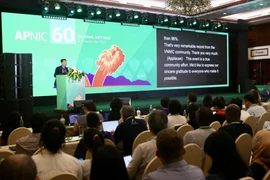
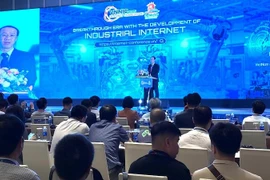
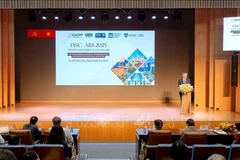
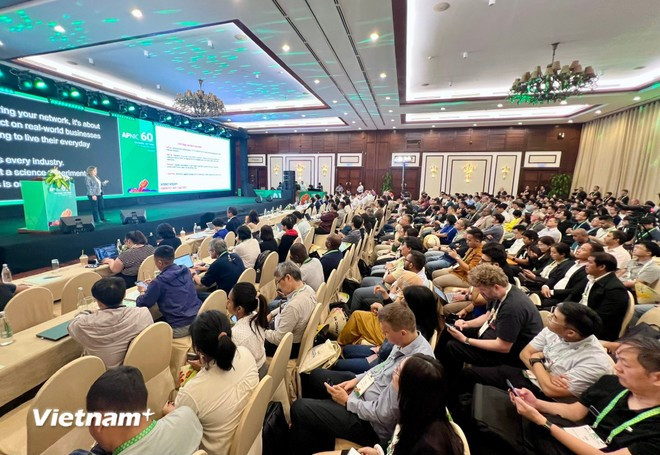
The 60th meeting of the Asia Pacific Network Information Centre (APNIC 60) held in the central city of Da Nang on September 9, focused on policies for Internet Protocol (IP) addresses and Autonomous System Numbers (ASN). The event also promotes the adoption of cutting-edge technologies such as quantum Internet, IPv6, AI, secure routing, and next-generation Internet infrastructure.
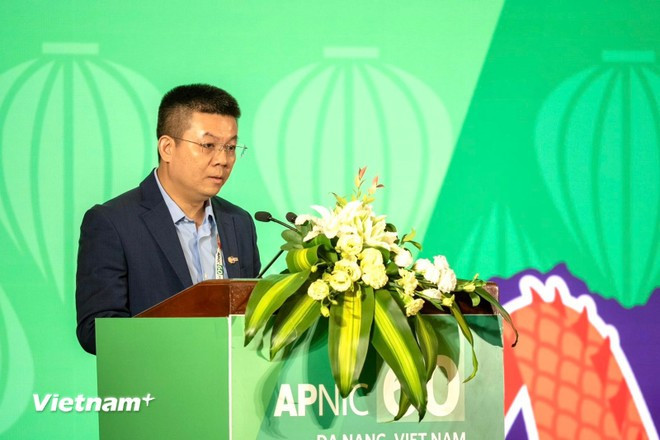
It offered an opportunity for countries, organisations, and businesses in the region to share solutions addressing urgent issues in developing the global Internet system.
Challenges in IPv6 deployment and network security
One of the main topics discussed at the meeting was the deployment of Internet Protocol version 6 (IPv6), a network protocol considered a crucial foundation for the future of the Internet.
The current protocol, Internet Protocol version 4 (IPv4), is nearly exhausted in terms of address space, making IPv6 the preferred replacement. However, despite strong efforts to promote IPv6 adoption, countries and organisations still face significant challenges in implementing the system uniformly, particularly regarding infrastructure and costs.
According to APNIC Director Jia Rong Low, IPv6 will serve as the foundation supporting all current technologies such as AI, IoT, and other Internet applications, but the transition from IPv4 to IPv6 remains a major challenge, especially concerning infrastructure and costs, as well as issues of security, governance, and network protection during the transition.
Network security and route protection
Network security was also highlighted as a key factor in ensuring the stability and safety of the global Internet. With cyberattacks becoming increasingly sophisticated, protecting Internet routing systems has become a top priority.
To achieve this, the adoption of routing security technologies such as Resource Public Key Infrastructure (RPKI) is crucial. RPKI helps safeguard routing information and prevents route hijacking attacks.
Vietnam currently boasts a high Route Origin Authorization (ROA) rate, with 96% of IPv4 routes validated, an impressive achievement. According to VNNIC Director Nguyen Hong Thang, along with expanding connectivity, it is necessary to ensure a safe Internet environment.
International cooperation: Strengthening connectivity and knowledge sharing
International cooperation remains a vital element in addressing challenges related to Internet security and sustainable development.
APNIC 60 featured bilateral meetings between the VNNIC and international partners such as the China Internet Network Information Centre (CNNIC), the Malaysian Communications and Multimedia Commission (MCMC), and the National Internet Exchange of India (NIXI). Discussions focused on strengthening cooperation in network connectivity, particularly the development of Internet Exchange (IX) points — a key factor in enhancing the stability and speed of global Internet connections.
Thang said Vietnam is committed to developing a modern, secure, and inclusive Internet infrastructure, working alongside domestic agencies and businesses to enhance their capacity and awareness of technical and technological issues related to Internet resources.
Vietnam: A pioneer in Internet infrastructure development
APNIC 60 is of particular significance as it marks the 25th anniversary of the VNNIC and more than 27 years since Vietnam’s first global Internet connection.
According to Thang, IoT is a major global trend and a key foundation for developing smart cities and factories, and more. Vietnam has achieved a 65% transition rate and is expected to accelerate toward an IPv6-only Internet in the next five years, fully adopting the new-generation address system. This is a crucial goal that VNNIC is determined to realise.
The APNIC 60 conference highlighted challenges to the security and development of the global Internet while also providing a platform for countries, organisations, and businesses to share experiences and seek solutions to cybersecurity threats and the deployment of emerging technologies.
As the host country, Vietnam has reaffirmed its position in the regional and global Internet community by effectively implementing the Politburo’s strategic directions, demonstrating its regional leadership role in policy development, next-generation Internet infrastructure, technical cooperation, and strengthening global Internet connectivity./.