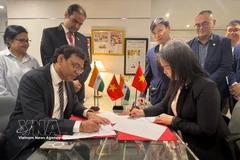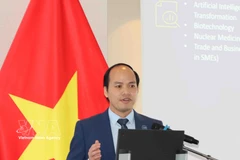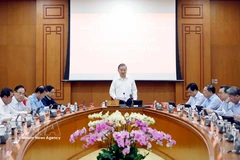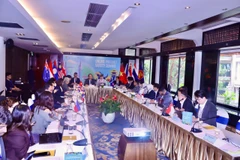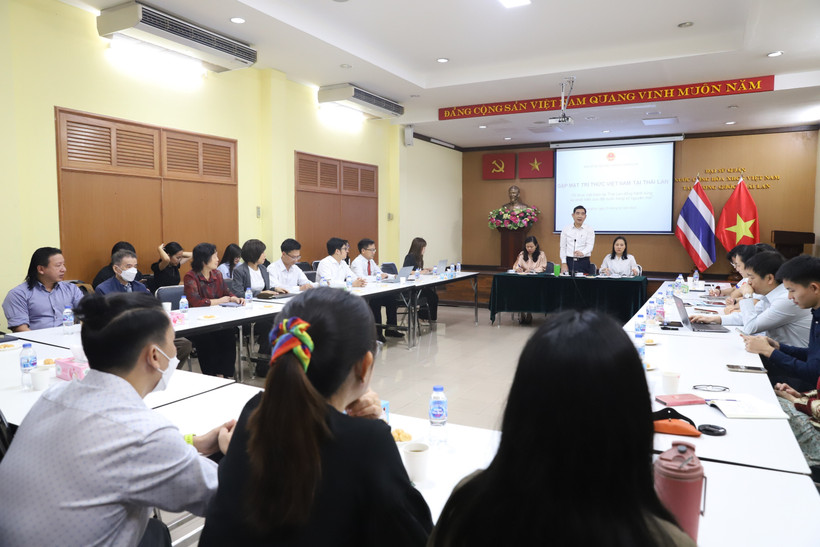
Bangkok (VNA) – The Vietnamese Embassy in Thailand on October 25 hosted a gathering of Vietnamese intellectuals in the country who exchanged views on the potential for bilateral scientific and technological cooperation and on policies to attract overseas Vietnamese talent to contribute to national development.
Ambassador Pham Viet Hung stressed that the Party and State of Vietnam regard the overseas Vietnamese intellectual community as a particularly crucial resource in the nation’s path towards a new era.
He recalled the message delivered by Party General Secretary To Lam at the 9th plenum of the 13th Party Central Committee, which emphasised the country’s strong aspiration for reform and integration. One of the core tasks, the Party leader noted, is to attract at least 100 leading overseas Vietnamese experts to return to work in the homeland during 2025–2027, accompanied by special incentive mechanisms to ensure they can contribute effectively and confidently.
Hung said the Vietnamese and Vietnamese-origin community in Thailand numbers around 100,000 people, who have formed an network of associations. Against the backdrop of the two countries’ recently established Comprehensive Strategic Partnership, he expressed his hope that the meeting would serve as an open forum for participants to connect, exchange ideas, and lay the groundwork for setting up a network of Vietnamese intellectuals in Thailand, toward strengthening sci-tech collaboration between the two nations and contributing back to the homeland.
Participants also discussed ways to connect the Vietnamese intellectual community in Thailand and offered feedback on the draft documents for the upcoming 14th National Congress of the Communist Party of Vietnam.
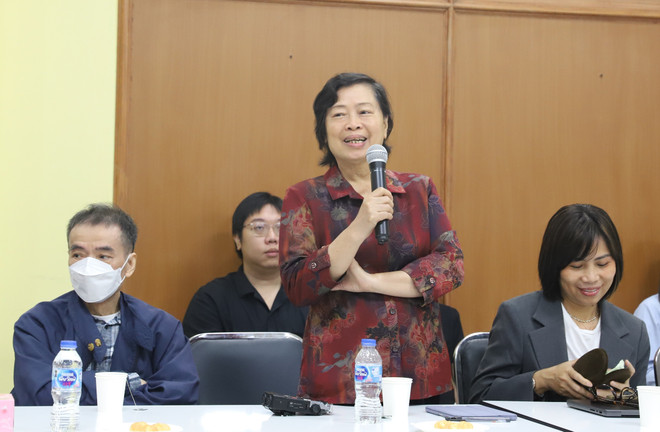
Professor Nguyen Thi Kim Oanh from the Asian Institute of Technology (AIT) said Vietnam and Thailand could share experiences in applying science and technology to tackle common challenges such as air pollution, traffic congestion, and urban flooding.
Dr Nguyen Viet Hung of Bangkok Hospital suggested that the Vietnamese Government devise continuous, consistent, and long-term policies to encourage overseas scientists to contribute part-time to Vietnam’s development. He recommended simplifying procedures for the recognition of foreign qualifications, building a specialised information platform to connect experts with domestic needs, and establishing a transnational academic and innovation fund to promote joint projects between the two countries.
Researcher Hoang Hung Manh from the AIT proposed creating contact groups under the coordination of the embassy to bring together academics, researchers, engineers, and professionals working in Thai enterprises, enabling them to share both scientific knowledge and practical technological applications.
Many participants also voiced support for the draft political report of the 13th Party Central Committee to be submitted to the 14th National Party Congress, particularly the contents on breakthroughs in science, technology, innovation, and digital transformation, as well as on sustainable social management, social progress and equality, and the wellbeing of the people./.