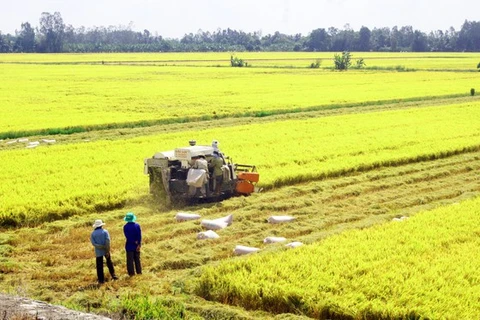
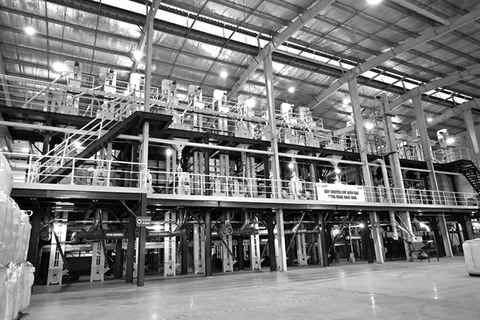
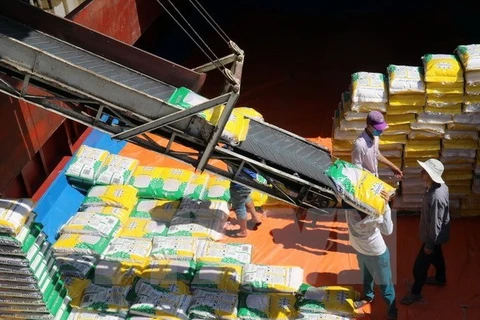
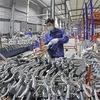
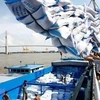
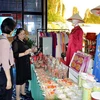
In July, Vinaseed – a member of The PAN Group, exported VJ Pearl Rice and RVT fragrant rice to the Netherlands and the Czech Republic (Photo courtesy of Vinaseed)
 Hanoi (VNS/VNA) - Vietnam’s rice exports have expanded during the pandemic to surpass rival Thailand in price for the first time in three decades, leading experts to suggest the sector should consolidate its position.
According to industry insiders, Thailand is expected to export 6.5 million tones of rice this year and drop from 3rd to 5th place on the list of global rice exporters in the next decade.
While other agricultural products suffered from a decline in exports due to the impacts of COVID-19, domestic rice export value reached 2.2 billion USD in the first eight months of 2020, up 10.4 percent over the same period in 2019.
According to the Vietnam Food Association (VFA), local rice export prices had continued to increase. Specifically, local 5 percent broken rice was of 20 USD per tonne higher than Thailand in August.
Earlier this year, Thailand's 5 percent broken white rice price was between 50 USD and 60 USD higher than the Vietnamese variety. By mid-August, local 5 percent broken white rice was trading at 493 USD to 497 USD per tonne, while the Thai variety stood at 473-477 USD, Pakistan was at 423-427 USD and India was down at 378-382 USD.
A VFA official told local media: “It is the first time Vietnamese rice export prices have risen above Thailand in 30 years."
With the the European Union – Vietnam Free Trade Agreement (EVFTA), effective last month, Vietnam has a quota of 80,000 tonnes of rice to export per year with a tax rate of zero percent, giving the country to the chance to assert its position in the EU market and also the world, said Le Thanh Hoa, deputy director of the Agro-Processing and Market Development Authority at the Ministry of Agriculture and Rural Development (MARD).
Hoa added that each year the EU consumes about 2.5 million tonnes of rice, but before the trade agreement Vietnam was only able to supply 20,000 tonnes due to the high import tax. In the past Vietnamese rice could not compete with rice from Thailand, the United States or Australia, which were allocated large quotas, or Laos, Cambodia and Myanmar which were tax exempt.
The MARD official said rice consumption in the EU was increasing significantly due to the popularity of Asian food, so there was still room for Vietnamese exporters, especially with zero tariffs.
According to the ministry, local rice exports reached 4.5 million tonnes worth 2.2 billion USD in the first eight month of 2020. Export volume decreased due to the pandemic but the value increased significantly thanks to higher prices, averaging 488 USD per tonne.
He detailed that white rice export value accounted for 38 percent of total turnover, of which low-quality white rice only accounts for two percent.
Trung An High-Tech Agriculture Joint Stock Company in Can Tho city is planning to export its first batch of rice to the EU after signing contracts to sell 3,000 tonnes to three customers in Germany.
According to the firm, in the first shipment, it will deliver 150 tonnes of ST20 at more than 1,000 USD per tonne, and jasmine at more than 600 USD per tonne.
In July, Vietnam Rice Company Limited (Vinarice) under Vinaseed – a member of The PAN Group, exported VJ Pearl Rice and RVT fragrant rice to the Netherlands and the Czech Republic at a price of 1,040 USD per tonne as the first Vietnamese branded rice products imported officially into those markets.
Despite a relatively low quota of 80,000 tonnes tax to the EU, local firms know the requirements they have to meet to take advantage.
CEO of Vinaseed Nguyen Quang Truong said: “To meet the demand, Vinaseed has focused on selecting varieties and investing in modern facilities and quality management systems that meet international standards for food hygiene and safety, while developing a sustainable supply and distribution network.”
Even though Vietnam was one of the top three rice exporting countries in the world, Truong noted that one of the major challenges was quality.
As CEO of the firm with more than 50 year of experience in the market, Truong said: “Vietnam has yet to nail down key varieties for export and instead exports many different varieties. This limits competitiveness and branding.”
“In other countries, they focus on highly competitive rice for export,” he said, recommending that rice producers should build sustainable production chains for safe, organic materials with clear traceability to attract customers from high-end markets.
Vietnamese rice exports needed to follow a strict chain from research and development to processing, packaging and marketing to establish a national brand in the future, he said.
“Building a good and consistent agricultural product with geographical indications and brand protection is a must in the branding process,” he added.
According to the MARD representative, the ministry is applying to register the brand “Vietnam Rice” under the Madrid System. After completing the registration, the ministry will then ask the Government to allow the VFA to manage and certify the Vietnamese rice trademark./.
VNA