Vietnam's economy 2025: Weathering the tariff storm and keeping prices stable

The challenges ahead demand strong efforts and determination from both government authorities and the business community to maintain macroeconomic stability and pave the way for sustainable growth in the coming quarters.

anh-1.jpg
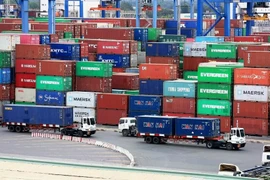
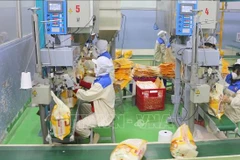
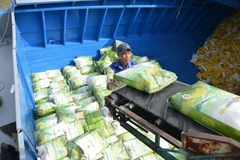
This policy poses a major challenge. If the US imposes a 46% reciprocal tariff on Vietnamese goods, the impact will be widespread across key economic sectors. (Photo: Vietnam+)

Hanoi (VNA) – The challenges ahead demand strong efforts and determination from both government authorities and the business community to maintain macroeconomic stability and pave the way for sustainable growth in the coming quarters.

In the near future, Vietnam’s economy will face a complex mix of challenges, ranging from the effects of the United States' retaliatory tariff policy to domestic inflationary pressures. This calls for a flexible and effective response.

To provide more insights, VietnamPlus spoke with Nguyen Thu Oanh, Head of the Service and Price Department under the General Statistics Office, Ministry of Finance.

Key Industries Under Pressure

  • What challenges is the US "retaliatory tariff on all countries" policy creating for Vietnam’s exports, especially considering the US is our largest export market?

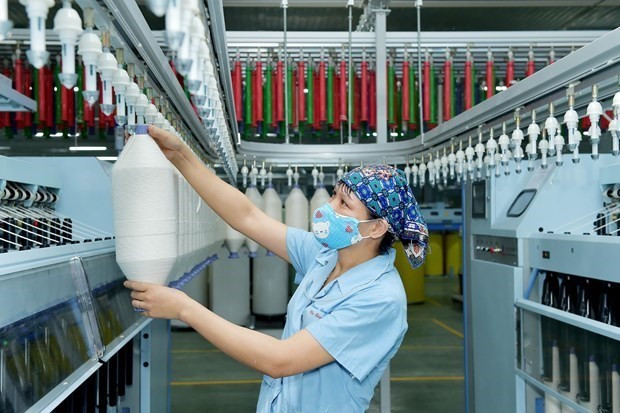
Nguyen Thu Oanh: This policy indeed poses a major challenge. If the US imposes a 46% retaliatory tariff on Vietnamese goods, the impact would spread across several key industries. According to 2024 statistics, six groups of goods — including computers, electronics and components; machinery, equipment, tools and spare parts; phones and components; textiles; footwear; and wood products — account for more than 74% of Vietnam’s total exports to the US.
anh-2.jpg
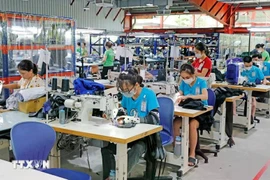
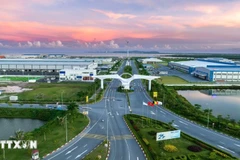
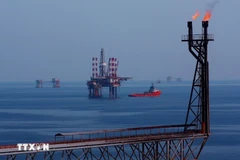
Vietnam needs to improve areas the United States considers protectionist or unfairly competitive. (Photo: Vietnam+)

Foreign direct investment (FDI) enterprises play a dominant role in exporting electronics, machinery, and phones. As a result, reciprocal tariffs could drive them to shift production to other countries, directly impacting Vietnam’s export turnover.

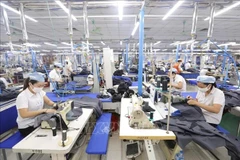
Meanwhile, sectors such as textiles, footwear, and wood products — where domestic companies have a stronger presence — could see their competitiveness eroded by higher tariffs. Finding alternative markets could become harder, leading to a risk of declining orders and reduced export volumes.

Furthermore, if the US imposes high tariffs on all countries, it could fuel global inflation, dampen consumer demand, and indirectly hurt Vietnam’s export prospects.

  • What solutions should Vietnam implement to minimize the negative impacts of this tariff policy?

Nguyen Thu Oanh: We need a proactive and comprehensive strategy to respond to this situation.
First, strengthen bilateral dialogue with the US to emphasize mutual trade benefits and affirm Vietnam as a fair and reliable partner.

Second, continue actively working to balance the trade relationship through various channels and measures.

Third, address concerns from the US regarding trade practices that they perceive as protectionist or unfair.

anh-3.jpg
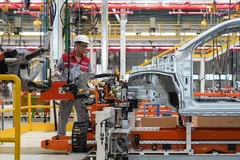
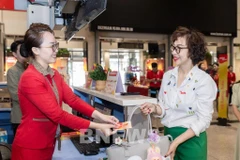
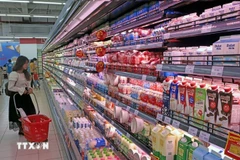
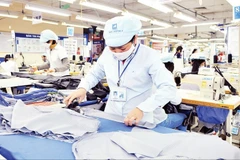
Ministries and local authorities must closely monitor price and inflation developments to ensure domestic supply and stability. (Photo: Vietnam+)

Fourth, diversify export markets and improve product quality to reduce dependence on the US market.

Finally, government agencies must promptly and transparently provide businesses with information on tariff policies, enabling them to prepare documentation and strategies to protect their interests in the US market. Authorities should also roll out concrete support measures to help manufacturers and exporters weather the tariff impacts.

Ensuring Smooth Domestic Market Operations

  • The National Assembly has raised the inflation ceiling to 4.5–5% to support the target of 8% economic growth, while the Government aims to keep inflation at 4.15%. In the context of persistently high pork prices and rising fees on e-commerce platforms, what measures are needed to achieve these goals?

Nguyen Thu Oanh: This is certainly no easy task and requires close, coordinated efforts across all levels.

First, the Government, ministries, and local authorities must closely monitor global price and inflation trends to promptly identify risks and implement appropriate measures, ensuring domestic supply and price stability.

In addition, it’s crucial to ensure smooth supply, circulation, and distribution of goods and services, especially strategic commodities that could be affected by global supply chain disruptions and geopolitical tensions.

Monitoring the prices of essential goods — including food, pork, fuel, and gas — is particularly important. Timely and appropriate interventions should be prepared for holidays and festive seasons to avoid sudden price spikes. Authorities must also strengthen price control and enforcement, strictly penalizing any violations or misinformation that could destabilize the market.

Furthermore, any adjustments to state-managed service prices must be carefully timed and calculated to avoid triggering cost-push inflation or inflationary expectations.

In financial markets, regulatory agencies should flexibly and consistently manage monetary policy tools to control inflation within target levels, while also supporting production, business activities, and people’s livelihoods.

Lastly, enhancing information dissemination is vital. Providing timely, transparent updates will foster public trust in the Government’s price management policies, helping stabilize consumer sentiment and inflation expectations.

  • Thank you very much!
See more

Vietnam is emerging as a preferred destination for many foreign enterprises (Photo: hanoimoi.vn)

Vietnam emerges as bright spot of growth, trusted and responsible partner

Despite a volatile global environment, Vietnam recorded solid gains in 2025. With flexible and proactive policies under the leadership of the Communist Party of Vietnam and the Government, all 15 key socio-economic targets were met or exceeded, while GDP expanded by about 8.02%, surpassing expectations.

An image of a Vietnamese game. CIS region has potential for gaming developers from Viet Nam. (Photo: Courtesy of cellphones.com.vn_

CIS: Opportunity for game developers in Vietnam

The CIS region, which includes Eastern Europe and Central Asia, has potential for gaming developers from Vietnam as this market displays user behaviour patterns that are highly favourable for mobile gaming growth, particularly around major holiday periods.

Banks, including MB Bank, have issued alerts about scams conducted via social media platforms such as Zalo and Facebook, where criminals impersonate acquaintances. (Photo: The Courtesy of MBBank)

Financial scams surge ahead of Tet

As the Lunar New Year (Tet) approaches, financial and banking scams in Vietnam are showing a sharp upward trend, prompting banks and law enforcement agencies to issue repeated warnings.

Hai Phong targets 4.3 billion USD in FDI in 2026 (Photo: VNA)

Hai Phong city targets 4.3 billion USD in FDI in 2026

Hai Phong’s investment appeal is underpinned by a rapidly expanding development space, including the Southern Coastal Economic Zone covering more than 20,000 hectares, a planned free trade zone, deep-water ports at Lach Huyen, and 12 industrial parks newly established in 2025.

The relocation of check-in counters aims to better meet the travel needs of residents and visitors. (Photo: VNA)

Vietjet shifts domestic check-in at Tan Son Nhat from January 13

During the recent New Year 2026 holiday peak, Vietjet added 380 flights, equivalent to nearly 78,000 additional seats, on many key domestic routes linking Hanoi and Ho Chi Minh City with destinations such as Vinh, Thanh Hoa, Hai Phong, Da Nang, Phu Quoc, Nha Trang and Da Lat.

Commercial banks are providing approximately 88% of total green credit outstanding in Vietnam. (Photo: nhandan.vn)

Capital sources expanded for sustainable growth

According to the State Bank of Vietnam (SBV), by the end of November 2025, outstanding green credit was estimated at around 750 trillion VND (28.55 billion USD), with an average growth rate exceeding that of overall credit in the economy.

Customers select goods at a supermarket. (Photo: VNA)

Retail market expands sharply, sustainability challenges persist

According to a report on recently released by the Ministry of Industry and Trade’s Agency for Domestic Market Surveillance and Development, the size of the market reached more than 7 quadrillion VND (about 266 billion USD) in 2025, up around 10% compared with 2024.

Oil rigs at the Bach Ho oil field. (Photo: VNA)

Resolution 79: State economy to lead growth

Resolution 79 is described as a “clear action declaration” by the Politburo, saying the state economy is not only responsible for maintaining macroeconomic stability, but must also become the force leading a new growth model that is green and sustainable.

Workers at Garment 10 Corporation produce apparel for export. (Photo: Nhan Dan)

Vietnam leverages export advantages within RCEP region

In 2025, seafood exports to China alone exceeded 2.2 billion USD, up about 33% compared to 2024. Shipments to Japan fetched nearly 1.7 billion USD, a year-on-year increase of 14.6%, while those to the Republic of Korea and Australia grew by 9.6% and 3.2%, respectively.

Certificates of membership in the Vietnam International Financial Centre in Da Nang are awarded at the conference on January 9. (Photo: VNA)

Da Nang continues targeted investment promotion approaches

According to Chairman of the Da Nang People’s Committee Pham Duc An, the city prioritises building sustainable economic ecosystems and focuses on key breakthrough sectors with strong spillover effects, including high technology and digital transformation, logistics, urban infrastructure, finance, processing and manufacturing industries, high-tech agriculture, and the pharmaceutical and medicinal herb industry.