Hanoi (VNA) - As analysts noted, the global economy in 2026 is expected to remain clouded with uncertainties, influenced by the US Federal Reserve’s monetary policy and ongoing geopolitical tensions. In this landscape, Vietnam stands out with its aspiration for rapid GDP expansion as it seeks to break free from the middle-income trap.
Yet the journey forward is far from straightforward. Beneath the country’s growth ambitions lie potential vulnerabilities, from real estate risks to the challenge of cooling rapid credit growth and maintaining policy stability.
A world in flux
The year 2025 draws to a close amid considerable turbulence, and as 2026 approaches, stability continues to elude the global political and economic environment.
Speaking at a seminar on the appeal of asset classes, organised by Tai Chinh -Dau Tu (Finance-Investment) newspaper on November 13, Dr Nguyen Tri Hieu, Director of the Institute for Global Financial and Real Estate Market Research and Development, suggested that the Fed’s interest-rate cuts and a weakening US dollar would be favourable for Vietnam. These trends, he noted, could ease pressure on the exchange rate and give the State Bank of Vietnam more room to lower domestic interest rates, thereby stimulating the economy.

Vu Duy Khanh, Director of the Analysis Centre at SmartInvest Securities, argued that when money supply expands (under loose monetary conditions), gold prices tend to rise. Gold is increasingly becoming the ultimate safe-haven asset absorbing excess liquidity. Accordingly, he expects gold to remain an attractive investment channel as money supply continues its upward trajectory.
Risks in the property market
Against a backdrop of global fragility, Vietnam has set ambitious growth objectives. With an optimistic outlook, Hieu projected that GDP growth in 2026 could reach as high as 10%, a striking figure by any measure.
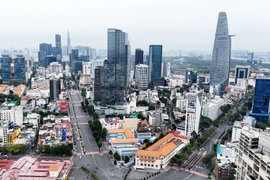
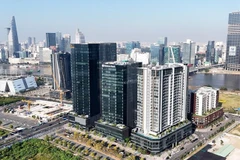
But he expressed concern over property prices, which he said have become alarmingly detached from income levels, reaching 24 to 30 times annual earnings in Hanoi. “The Government must introduce measures to bring real-estate prices down,” he urged.
Khanh agreed that strong growth targets are necessary to escape the middle-income trap. However, he warned that Vietnam’s real-estate credit as a share of GDP remains very high, at around 30%.

Digital assets and emerging legal framework
Amid unease surrounding traditional investment channels, a promising new frontier is taking shape: the market for digital assets. The year 2025 marked a significant turning point when the Government issued Resolution 05, officially recognising “digital assets” for the first time.
According to Nghiem Minh Hoang of the Vietnam Blockchain and Digital Assets Association, this strategic move provides a regulatory foundation for a market with annual transaction volumes exceeding 200 billion USD, while also helping attract foreign investment.
“With macroeconomic stability and strong governmental commitment, Vietnam is now seen as a rising star capable of drawing international capital in this field,” Hoang observed.

Giap Van Dai, CEO of Nami Foundation, described blockchain as the “second foundational layer after AI,” built upon transparency and capable of financialising everything, from physical assets to capital markets.
Lawyer Le Duong of PTN Legal offered deeper analysis of the new regulatory framework’s implications. He noted that the clarity brought by these rules is enhancing market transparency and efficiency.
“In the past, M&A activities involving property projects could take an entire year. Today, with asset tokenisation, investors can participate at any point, far more swiftly and with greater liquidity,” he explained.
Overall, Vietnam’s economy is entering a defining phase. Its bold growth ambitions can only be realised if accompanied by firm control of inherent risks. At the same time, the emergence of regulatory frameworks for new sectors such as digital assets are opening up opportunities unseen in previous decades./.