Vietnam’s packaging industry goes green amidst waste crisis

Green technology in packaging production, particularly within high-consumption industries like F&B, presents vast opportunities for Vietnamese businesses to enhance brand reputation, attract green investment, and gain global competitiveness through “green certification.”

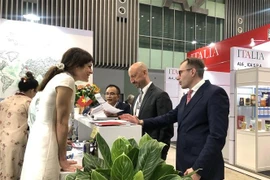
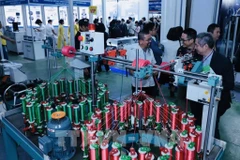
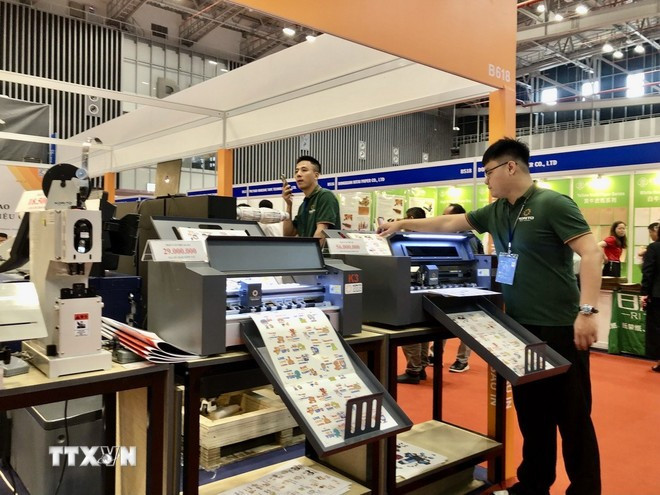
The latest innovations, technologies, and solutions in the printing and packaging industry are on display at the 23rd Vietnam International Printing & Packaging Industry Exhibition in Ho Chi Minh City. (Photo: VNA)

HCM City (VNA) – Packaging waste has emerged as one of the most formidable challenges to sustainable development in Vietnam, forcing a rapid shift toward green technologies in packaging production and recycling to advance the circular economy and protect the environment.

From green packaging…

Today, green transformation and the circular economy require urgent attention in the development strategy of every nation and enterprise. As Vietnam's industrial, commercial, and service sectors continue to develop while foreign investment, production, export, and consumption activities are surging, packaging use has inevitably surged, making it one of the most common waste sources, particularly in the food and beverage (F&B) industry.

According to experts, if companies continue down the path of difficult-to-recycle packaging, overusing plastic and non-biodegradable materials, the environmental damage from packaging waste will become uncontrollable. Manufacturers and importers need to strengthen their efforts to collect, recycle, or process waste from the products and packaging they generate.

Nguyen Thanh Yen, an official from the Ministry of Agriculture and Environment, said that the Extended Producer Responsibility (EPR) policy, a modern environmental management tool that ties manufacturers and importers to the life cycle of their packaging, is being implemented nationwide.

Under new regulations taking effect in 2025, packaging must meet mandatory recycling rates. Companies must declare and report data through the national EPR electronic system and will soon be able to choose between self-recycling and contributing financially to the Environmental Protection Fund, or combining both approaches.

EPR represents more than mere compliance, he said, stating it offers a strategic lens for companies to reshape packaging design, transform their perspective on waste, and build an ecosystem with more sustainable value.

At Saigon Beer-Alcohol-Beverage Corporation (SABECO), which currently operates 25 breweries, 11 commercial companies, and maintains a presence at over 200,000 retail points nationwide, the sustainable development strategy and comprehensive innovation process begin with packaging.

Deputy General Director of the firm, Larry Lee, said that all of SABECO’s primary and secondary packaging is reusable or recyclable.

The company has reduced the thickness of aluminium can lids from 0.245 mm to 0.240 mm, resulting in a 15% reduction in material use, saving energy during transport and lowering emissions. It also applies closed-loop recycling models for glass bottles, aluminium cans, and paper packaging, aiming for 100% circular packaging by 2040.
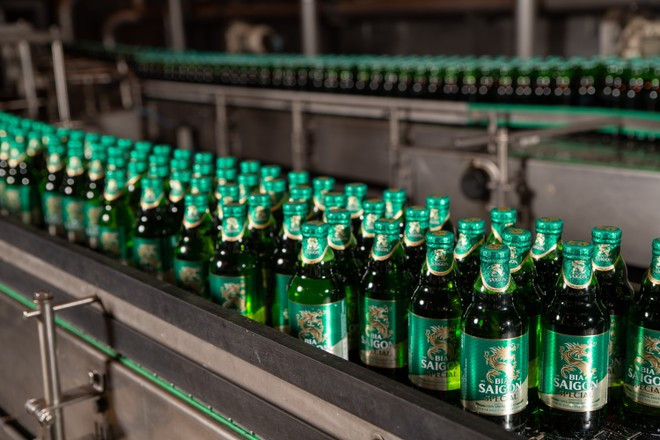
20191009-sabeco-corppr-00462-1.jpg
Sabeco's beer production chain. The company has applied a closed-loop recycling model for glass bottles. (Photo: VNA)

The message of packaging recycling has expanded across multiple sectors, including textiles and footwear. Many enterprises, particularly in the mid-market segment, are launching recycled and environmentally friendly designs, strengthening product sorting, reuse, and recycling.

Garment 10 Corporation now uses paper and PET packaging with shorter degradation times instead of conventional PE plastics. Biti’s, the Vietnamese footwear brand, has simplified its packaging design to reduce single-use plastics, gradually replacing plastic bags with recycled paper or reusable fabric bags at its stores and distribution centres.

…to the greening packaging industry

Green packaging represents one of the first steps in the transition to green production for many enterprises, industries, and manufacturing sectors. The printing and packaging industry plays a leading role in green transformation, helping create environmentally friendly packaging products such as biodegradable bags, cloth bags, recycled paper boxes, and plastic containers.

Vo Hong Son, Head of the Ministry of Industry and Trade’s Representative Office in the central and southern regions, said that the printing and packaging industries have an important role in the supply chain, not only helping improve the competitive edge of products, but also promoting sustainable development progress.

Green technology in packaging production, particularly within high-consumption industries like F&B, presents vast opportunities for Vietnamese businesses to enhance brand reputation, attract green investment, and gain global competitiveness through “green certification.” However, many firms still face challenges in meeting EPR obligations and navigating complex legal frameworks.

Bui Le Thanh Khiet, a researcher at the Institute for Circular Economy Development, suggested stronger coordination among the State, enterprises, and recyclers, and the establishment of industry-specific or regional EPR councils. He emphasised the need to link value chains across regions, enterprises, and localities and offer incentives for green material innovation and financing, while raising public awareness of green products and green packaging./.
VNA

See more

Workers handle the preliminary processing of sea grapes before production. (Photo: VNA)

Company brings Vietnamese sea grapes to the world

The Tri Tin Seaweed Company, founded by Le Ben, has pioneered a new path for the province’s aquaculture sector by establishing a fully integrated production chain, applying high-tech processes, and adhering strictly to international standards.

Prime Minister Pham Minh Chinh addresses the 21st meeting of the State steering committee for national key projects in the transport sector. (Photo: VNA)

Entire Cao Bang - Ca Mau expressway must be inaugurated on December 19: PM

PM Chinh, who is head of the steering committee, asked all parties involved to strive hard to achieve the goal of putting 3,000 kilometres of expressways and approximately 1,700 kilometres of coastal roads into operation in 2025, thus creating momentum to welcome the 14th National Party Congress and meeting the travel needs of the people during New Year 2026 and the Lunar New Year Festival.

Prime Minister Pham Minh Chinh (C) presides over the 21st meeting of the State steering committee for national key projects in the transport sector. (Photo: VNA)

Government leader presides over meeting on national key transport projects

Noting that there are less than two months left until December 19 - the date set for the simultaneous ground-breaking and inauguration ceremonies of major projects, the PM emphasised that this is a crucial period to accelerate progress and make breakthroughs in the implementation of key projects and works.

Harvesting cage-farmed tilapia (Photo: VNA)

Vietnam exports first shipment of tilapia to Brazil

This shipment is one of 32 containers, totalling 700 tonnes of tilapia, ordered and imported by JBS Group from Vietnam. The products will first be distributed through HORECA supermarket and distribution network, and showcased in JBS's product display centre in Brazil.

Road leading to VSIP Can Tho at the intersection with National Highway 80 (Photo: VNA)

Green industry lures more FDI to Mekong Delta

The Mekong Delta region, having earned the monikers of the rice bowl, fruit and seafood basket of the country, and following the restructuring of administrative units, is now standing at the threshold of becoming a modern, sustainable industrial centre.

The codification of Resolution 42 into the law, effective from mid this month, is an important step, marking a key milestone in completing Vietnam’s NPL resolution process. (Photo: thoibaonganhang.vn)

Bad debt settlement fully benefits from new policy from H2 2026

Resolution 42, enacted in 2017 to pilot bad debt settlement for credit institutions, was introduced in response to a sharp rise in non-performing loans (NPLs). It empowered credit institutions to seize and liquidate collateral assets, expediting debt recovery. After more than six years of implementation, the resolution delivered certain results but expired last year.

The total retail sales of goods and consumer service revenue were estimated at 5.7 quadrillion VND for the first 10 months of the year. (Photo: VNA)

Retail sales growth remains stable over 10 months

With the current recovery momentum, the trade and services sector is expected to continue being a bright spot in Q4, driving GDP growth and ensuring a balance between domestic consumption and exports amid ongoing global economic fluctuations.

Delegates at the event (Photo: Ministry of Finance)

ASEAN meeting to drive regional cooperation, growth by removing barriers

Running from November 5–11, CCS 111 focuses on advancing service liberalisation and facilitation in ASEAN by removing barriers, enhancing transparency, reducing policy risks, and simplifying administrative procedures to enable businesses and service providers to operate more efficiently.

Goods at Hai Phong Port in northern port city of Hai Phong. (Photo: VNA)

Vietnam determined to build transparent global trade system

The Government of Vietnam on November 6 updated the World Trade Organisation (WTO)’s Committee on Rules of Origin (CRO) on adjustments to the agencies and organisations authorised to issue certificates of origin (C/O), as well as on the application of QR codes in the C/O issuance process.

SemiExpo Vietnam 2025, themed “Powering Vietnam’s Semiconductor Ambition,” brings together around 5,000 delegates and feature 200 booths from major global technology corporations (Photo: VNA)

Vietnam opens largest int’l semiconductor exhibition

SemiExpo Vietnam 2025, themed “Powering Vietnam’s Semiconductor Ambition,” brings together around 5,000 delegates and feature 200 booths from major global technology corporations such as Lam Research, Coherent, Qorvo, Amkor, GlobalFoundries, Micron, Tokyo Electron, KLA, STMicroelectronics, Soitec, and Siemens.

Consumers learn about Hanoi's OCOP products. (Photo: VNA)

Hanoi launches digital booths to promote e-commerce

Hanoi will open an online store showcasing Hanoi's products on the e-commerce platform Shopee. It will introduce digital tools such as electronic signatures, e-contracts, e-invoices, and product traceability systems for local producers and businesses participating in the booth.