Vietnam’s telecom equipment achieves first global ‘gold standard’ recognition

Being featured in a report by Gartner, one of the world’s leading technology research and advisory firms, is more than an accolade. It is a global validation of a company’s innovation, competitiveness, and credibility, while opening new doors for cross-border cooperation in high-value markets.

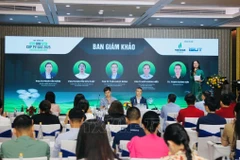
Viettel High Tech has been recognised by Gartner in its Magic Quadrant for CSP 5G RAN Infrastructure Solutions 2025, unveiled at the Open RAN Connect 2025 international event hosted by Viettel in Hanoi. (Photo: VietnamPlus)

Hanoi (VNA) – Viettel High Tech has become the only company from Southeast Asia to be recognised among the niche players in the Gartner Magic Quadrant, marking a historic milestone for Vietnam’s technology industry.

Being featured in a report by Gartner, one of the world’s leading technology research and advisory firms, is more than an accolade. It is a global validation of a company’s innovation, competitiveness, and credibility, while opening new doors for cross-border cooperation in high-value markets.

According to Forbes, Gartner’s Magic Quadrant (MQ) report is regarded as the “gold standard” for assessing the market position of a technology provider – from global giants to emerging startups.

Through its 5G ecosystem, Viettel High Tech, an arm of the Viettel Military Industry and Telecoms Group (Viettel), earned its place among the Niche Players, a category for vendors with distinctive strengths, focused expertise, and a pioneering role in the commercialisation of 5G Open RAN base stations.

This achievement serves as direct affirmation that when executed with the right strategy and vision, Vietnamese enterprises can secure a firm place on the global technology map.

From “Make in Vietnam” to global recognition

Just a decade ago, when global telecom infrastructure was still dominated by a handful of major players, the idea of a Vietnamese enterprise independently designing, manufacturing, and operating a 5G core network seemed far-fetched. Yet, Viettel chose the most challenging path of mastering the entire technology chain from hardware and software to chipset design, rather than relying on imports.

A major turning point came in 2019–2020, when Viettel initiated research into 5G technology with the goal of full autonomy. In 2022, three of its flagship products – the 5G gNodeB base station, vOCS 4.0 billing system, and 5G Core network infrastructure – were recognised on Gartner Peer Insights, a platform based on verified customer feedback.

Three years later, Viettel’s entry into the prestigious Magic Quadrant demonstrates not only the quality of its products but also its R&D capability and strategic vision. The company has evolved from a telecom service provider into a global technology manufacturer and innovator.

Leveraging its dual advantage as both a network operator and equipment producer, Viettel continues to build its comprehensive 5G ecosystem – “Make in Vietnam, Made by Viettel.”

This ecosystem now encompasses over 100 digital services and solutions across sectors such as manufacturing, transportation, health care, education, energy, and smart city building, helping integrate 5G power into daily life and advancing Vietnam’s national digital transformation.

Opening new path for Vietnamese enterprises

Gartner’s recognition extends beyond product quality. It evaluates companies holistically, particularly their technological vision and execution capability. Viettel earned its place because it excels in both.

First, Viettel has a clear technological vision. Early on, it recognised that technology is not merely a business tool but a foundation for digital national independence and sovereignty. Rather than following global trends, Viettel has focused on mastering core technologies of the future, including AI, cloud computing, chipsets, cybersecurity, and 5G based on Open RAN architecture. The goal is not only to deliver services but to build the digital infrastructure for Vietnam and the region.

Second, Viettel possesses strong execution capacity. In 2025, the company is deploying 2,500 5G Open RAN 32T32R base stations nationwide, powered by Qualcomm chipsets that are 24% more energy-efficient than conventional systems. Thanks to the open architecture of Open RAN, Viettel has cut product development time in half to 12 months instead of 24.

Pioneering the use of ASIC chipsets from Qualcomm in its 5G gNodeB products, Viettel has become one of Qualcomm’s earliest and fastest-developing partners, completing design and deployment ahead of most global peers.

According to Gartner analysts, recognised firms must meet three stringent criteria: genuine technological innovation, proven customer satisfaction, and a transparent, long-term strategy that delivers positive social and industrial impact. Viettel, with its blend of vision, capability, and impact, has successfully met all the three./.

VNA

See more

Participants in the ASEAN Plus Photonics Symposium in Gia Lai province on April 8 (Photo: baogialai.com.vn/)

Gia Lai province hosts ASEAN Plus Photonics Symposium

Participants presented and discussed a wide range of advanced topics shaping the future of photonics, including nanophotonics and metasurfaces; topological and non-Hermitian photonics; photonic crystals and optical lattices; light–matter interactions and polariton systems.

Vietnamese Ambassador to Brazil Bui Van Nghi (right) and Professor and quantum physicist Olival Freire Juniorin, President of Brazil's National Council for Scientific and Technological Development, at their meeting on April 7. (Photo: Vietnamese Embassy in Brazil)

Vietnam, Brazil to strengthen cooperation in science, technology

Ambassador Bui Van Nghi expressed Vietnam’s interest in strengthening cooperation with Brazil in areas such as renewable energy and environmental technologies, as well as high-tech sectors including artificial intelligence (AI), quantum technology, and the semiconductor industry.

Teachers guide students in experiencing the application of science (Photo: VNA)

Results become benchmark for science-technology governance

The transition to facilitative governance marks not only an operational reform but also a shift in development thinking. With expanded autonomy and controlled risk acceptance, science, technology, innovation and digital transformation are expected to become key drivers of rapid and sustainable growth in the years ahead.

Students experience robotic products (Photo: VNA)

AI powers sweeping overhaul of Vietnam’s education system

Nguyen Son Hai, Deputy Director General of the Department of Information and Communication Technology under the Ministry of Education and Training (MoET), said the sector has made rapid strides in digital transformation, from online classes during the COVID-19 pandemic to nationwide platforms covering the national education database, registration for high school graduation exam, and online university admissions.

Voters can access essential information about candidates on the VNeID app, enabling them to proactively learn and enhance their awareness when participating in elections. (Photo: VNA)

Digital transformation gathers pace nationwide

Adopted by the Politburo in late 2024, Resolution 57 positions science – technology development, innovation, and digital transformation as a top important breakthrough and strategic pillar for Vietnam’s development in the new era. Early implementation shows a clear shift toward data-driven governance and technology-enabled public services.

Can Tho city pledges to allocate at least 1% of total budget spending to science, technology and innovation (Illustrative image. Source: VNA)

Plan issued to implement Vietnam–France agreement on science-technology cooperation

Under the plan, the Ministry of Science and Technology will take the lead, in coordination with relevant ministries and agencies, in directing, guiding, monitoring and inspecting the implementation of the agreement. The ministry will also prepare reports on the signing and implementation progress for submission to the Ministry of Foreign Affairs for consolidation and reporting to competent authorities as required.

An overview of the provincial steering committee of Tay Ninh on implementing Resolution 57 on April 2 (Photo: VNA)

Tay Ninh moves to accelerate digital transformation

In science, technology and innovation, Tay Ninh has identified six major priorities: development of the digital economy, a carbon credit market, a Halal ecosystem, renewable energy, enterprise innovation support, and applications of artificial intelligence and big data.

Vietnam successfully held its first auction of national “.vn” domain names from March 18 to 20. (Photo: VNA)

Sci-tech revenue up 17% in March

The sci-tech sector contributed 133.5 trillion VND to the country’s gross domestic product (GDP) in March, a 28% increase from the same period last year.

By 2030, Vietnam targets ranking among the world’s top 15 countries in the Global Cybersecurity Index (Source: baochinhphu.vn)

Project aims to enhance capacity of national cybersecurity protection force

The project aims to strengthen overall capabilities and develop an elite and modern cybersecurity force able to proactively prevent and effectively respond to all cyber risks and threats, safeguarding national security, social order and safety, and the rights and lawful interests of organisations and individuals in cyberspace.

Delegates at the meeting (Photo: VNA)

Da Nang boosts hi-tech partnership with Germany’s Chemnitz City

Authorities in Da Nang hope Chemnitz and German partners will continue to accompany and support the city in accessing advanced technologies, connecting experts, integrating into innovation ecosystems, and attracting high-tech enterprises and supporting industries to explore investment and long-term cooperation opportunities.