Hanoi (NNT/VNA) – The World Bank’s new Country Climate and Development Report (CCDR) has suggested that Thailand can transform climate risks into opportunities for sustainable and inclusive growth through targeted investments that build resilience, reduce emissions, and expand green industries.
The CCDR outlines how climate-smart development can support Thailand’s goal of becoming a high-income economy while ensuring long-term environmental and economic stability.
Without stronger adaptation efforts, floods, heat stress, water shortages, and coastal erosion could reduce Thailand’s GDP by 7 to 14% from baseline levels by 2050. By contrast, measures to lower emissions could yield broad economic benefits, including reduced power and transportation costs, enhanced energy security, cleaner air, and improved competitiveness. The CCDR also indicates that carbon pricing combined with sustained investment could help Thailand achieve carbon neutrality by 2050 and net zero by 2065.
Thailand holds considerable potential to capitalise on the growing global demand for green technology. It is already a leading exporter of energy-efficient air conditioners, supplies around 4% of global solar photovoltaic exports, and is emerging as a key electric vehicle production base. However, green products currently account for less than 10% of total exports. Policy actions to reduce trade barriers, adjust tariffs, strengthen workforce skills, and promote innovation could raise green exports by 23% of GDP by 2030.
The report highlights that Thailand’s long-term competitiveness will depend on reducing the carbon intensity of its economy and transitioning to cleaner production. These efforts could help create new industries, generate high-quality employment, and make Thailand an attractive destination for global investors in a low-carbon economy. The CCDR also aligns with the World Bank’s “Building Thailand’s Future Today” programme ahead of the IMF–World Bank Annual Meetings in Bangkok in 2026.
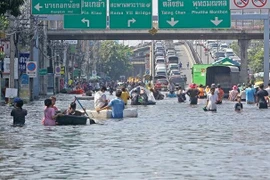
Thailand remains highly vulnerable to the impacts of climate change. The Chao Phraya Basin, which is home to 40% of the population and two-thirds of the country's GDP, faces growing risks of floods and water shortages. The Eastern Economic Corridor and key agricultural areas are projected to experience worsening droughts, while coastal erosion affecting nearly one-third of the national shoreline could cost the tourism sector up to 1 billion USD annually by the mid-2040s. Rising heat stress may also reduce labour productivity across several industries.
The CCDR estimates that Thailand will require approximately 219 billion USD in climate-related investments over the next 25 years, equivalent to roughly 2.4% of its cumulative GDP, to meet its adaptation and mitigation targets. The report concludes that these financing needs can be met through a combination of carbon pricing, fiscal reform, and private sector participation, laying the groundwork for a resilient and low-carbon economic transition./.

Thailand accelerates efforts to achieve net-zero emissions target
Under the new policy, Thailand is now aiming to reach net-zero emissions by 2050 instead of the previous target of 2065.