Bangkok (VNA) - Thailand risks losing between 7%-14% of its GDP by 2050 if it fails to adapt to climate change, according to a comprehensive World Bank (WB) report.
The report projects that by 2050, heat-related labour productivity losses will emerge as the most significant economic threat, affecting workers across all sectors nationwide.
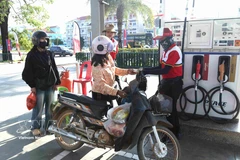
In Bangkok, each 1°C temperature rise could generate costs of 85-123 billion THB (2.62–3.79 billion USD) related to heat deaths, productivity losses, and increased energy consumption-equivalent to 1.6-2% of the capital's GDP.
Coastal erosion already affects 30% of Thailand's coastline and could cost the tourism sector 1 billion USD annually by the mid-2040s without intervention.
Meanwhile, water scarcity in key agricultural regions and industrial zones, including the Eastern Economic Corridor, will worsen significantly.
The report estimates that 219 billion USD in climate-related investments will be needed over the next 25 years—equivalent to 2.4% of cumulative GDP—but the returns substantially exceed the costs.
Investments in flood mitigation, water security, coastal protection, and cooling infrastructure could raise annual GDP by 2-3% by 2040 and 4-5% by 2050 compared with business-as-usual scenarios.
Thailand also faces transition risks if it fails to match the decarbonisation efforts of trading partners.
The report notes that 78% of multinational corporations plan to exclude high-carbon suppliers from their supply chains from 2025 onwards, whilst initiatives such as the EU's Carbon Border Adjustment Mechanism could increasingly affect Thai exports.
However, accelerated decarbonisation could raise Thailand's GDP by 2.5% by 2050 compared with baseline projections.
The electricity sector's reform is identified as a top priority, aimed at promoting competition in renewable energy, modernising the power grid, and enhancing regional integration. The shift to renewable energy could eventually reduce electricity costs while avoiding more than 15,000 premature deaths annually by 2050 through improved air quality.
This report was released by the World Bank one year ahead of Thailand hosting the IMF–World Bank Group Annual Meetings in October 2026.
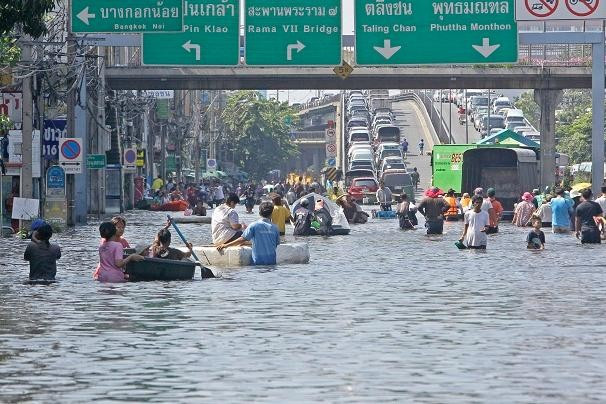
Thailand ranks among the ten most flood-prone countries globally, with the Chao Phraya river basin - home to 40% of the population and generating 66% of GDP - particularly vulnerable.
The devastating floods in 2011, which caused damage equivalent to 12.6% of the country's GDP, could recur with increasing frequency under climate change scenarios./.
See more
Indonesia: Households evacuated after Cilacap landslide
The landslide in Indonesia's Central Java has killed three persons while 20 people are still reported missing. The incident damaged eight houses, caused a two-meter-deep subsidence and left a 25-metre-long crack over an area of about 6.5 hectares, affecting 46 residents of 17 households.
Malaysia aims to become Southeast Asia’s AI, EV hub
Malaysia is shifting into high gear as it positions itself to become Southeast Asia’s leading hub for smart, sustainable mobility, powered by breakthroughs in electric vehicles (EVs), artificial intelligence (AI) and advanced manufacturing.
Indonesia to turn Bali into Asia’s next medical tourism hotspot
Indonesia is stepping up efforts to reduce the number of citizens seeking treatment abroad and turn Bali into Asia’s leading medical tourism hotspot.
Thailand launches tourism initiative to boost international confidence
TAT Governor Thapanee Kiatphaibool explained that recent negative news had affected Thailand’s image, especially among Chinese tourists. The 'Trusted Thailand' initiative aims to rebuild trust, emphasising Thailand's commitment to providing high-quality, safe travel experiences.
Singapore proposed guidelines to manage AI risks in financial sector
To enhance oversight and risk management, financial institutions will need to establish clear processes for identifying AI usage across the organisation, maintain accurate and up-to-date AI inventories, and conduct risk materiality assessments that consider impact, complexity and reliance, it said.
Thailand to slap import duties on low-cost imports to aid SMEs
Currently, imported goods with a value of 1,500 THB (46.29 USD) or less are exempt from import duties, while those of higher value are subject to different rates of tax based on the type of product.
Thailand hopes to resolve border dispute with Cambodia through diplomacy
Prime Minister Anwar Ibrahim of Malaysia, which holds the ASEAN chairmanship this year, held telephone conversations with his Cambodian and Thai counterparts, Hun Manet and Anutin Charnvirakul, to discuss recent developments along the two countries’ border.
Philippines resolutely handles those involved in ghost flood control projects
Dozens of individuals, including contractors, officials, and lawmakers, have been reportedly accused of embezzling state funds allocated for flood control projects and the upgrading of weak infrastructure in the Philippines.
Thailand moves to dismantle illegal telecommunications towers
Chiwaphap stated that removing these towers is key to disrupting cross-border scam networks, adding that previous enforcement efforts were incomplete.
Malaysia adopts AI to bolster national security ecosystem
Malaysia must embrace the technology to remain competitive. The move aligns with AI-based security direction to address modern threats such as cross-border crime, digital fraud, human trafficking, and increasingly complex cyberattacks
Australia, ASEAN strengthen educational connections, cooperation
Since its inception in 2016, nearly 10 schools of Vietnam have joined the ASEAN-Australia BRIDGE School Partnerships Programme.
Earthquakes rattle parts of Southeast Asia
A 4.9-magnitude quake struck near Kengpoun village in Viengxay district, Houaphanh province, at 23:26 on November 12. The epicentre, located close to the border with Vietnam, was about 10 kilometers deep. No significant damage or widespread impact has been reported so far.
Singapore promotes production of sustainable aviation fuel
Climate technology start-up Aether Fuels and Aster on November 11 signed a cooperation agreement to develop the Project Beacon facility which is expected to produce up to 50 barrels a day – or 2,000 tonnes of fuel annually – when completed in 2028.
Indonesia strives to restore its position as a major sugar exporter
The Indonesian government targets full self-sufficiency in consumer sugar within three to four years by increasing sugarcane productivity and modernising mills.
Ancient tower discovered deep in Laos forest
Surrounded by a dark red brick wall, it features an architectural style reminiscent of Southeast Asian relics dating back several centuries.
Laos gets ready for parade marking 50th National Day
The joint rehearsal featured multiple marching formations representing exemplary units from the Lao army and police, showcasing their discipline, determination, and readiness for the grand parade on the upcoming National Day.
Severe flooding reported in central Thailand
Using images from the Sentinel-1C satellite taken on November 11, GISTDA identified widespread inundation in low-lying and residential areas, with water levels reaching at least 50cm in many locations, severely disrupting transport and daily life.
Thailand launches initiative to raise quality of life
The Thai Ministry of Interior has recently launched an urgent initiative titled "Mahadthai Thum Thun Thee (Interior Ministry expedites now): Action 5", with an aim to deliver swift improvements to people’s living conditions through five key measures.
Indonesia strengthens maritime radar network to better early warnings
Fathani said that new radar installations are under construction in Central Kalimantan and North Sumatra provinces, Riau Islands, and Bali.
Indonesia targets 1 billion USD in carbon trade at COP30
Minister of Environment Hanif Faisol Nurofiq said the Indonesian delegation hopes to sell 90 million tonnes of carbon credits from both nature-based and technology-driven sectors.