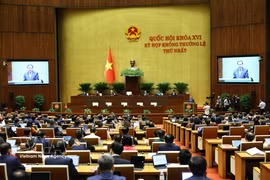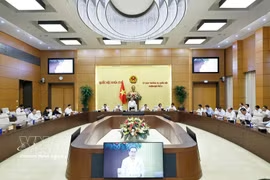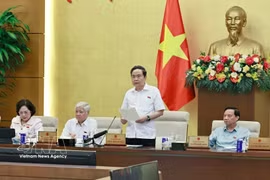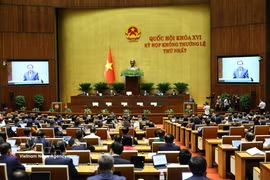
Hanoi (VNA) – The 16th National Assembly, on August 3, reviewed government proposals and verification reports on three draft laws and resolutions, covering special mechanisms for addressing legal violations in both the State and private sectors, along with applying science, technology, innovation, and digital transformation; and those to tackle challenges facing projects for the APEC Economic Leaders’ Week 2027 in the Phu Quoc special zone, An Giang province; and the revised Petroleum Law.
Protecting officials who think big and act bold for the common good
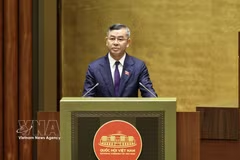
Presenting the Government’s proposal, Minister of Public Security Luong Tam Quang said the proposed resolution on special mechanisms for handling legal violations related to the State and private sectors and the application of science, technology, innovation and digital transformation aims to institutionalise Party policies and provide a legal basis to protect dynamic and innovative officials who dare to think and act for the common good, without corruption, wastefulness or wrongdoing.
The draft resolution comprises three chapters and 13 articles and is expected to remain effective for three years. If the period for suspending criminal prosecution to allow remediation of consequences extends beyond the resolution’s expiry, the suspension may continue for up to two additional years.
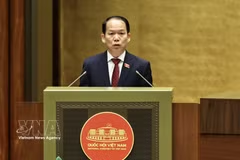
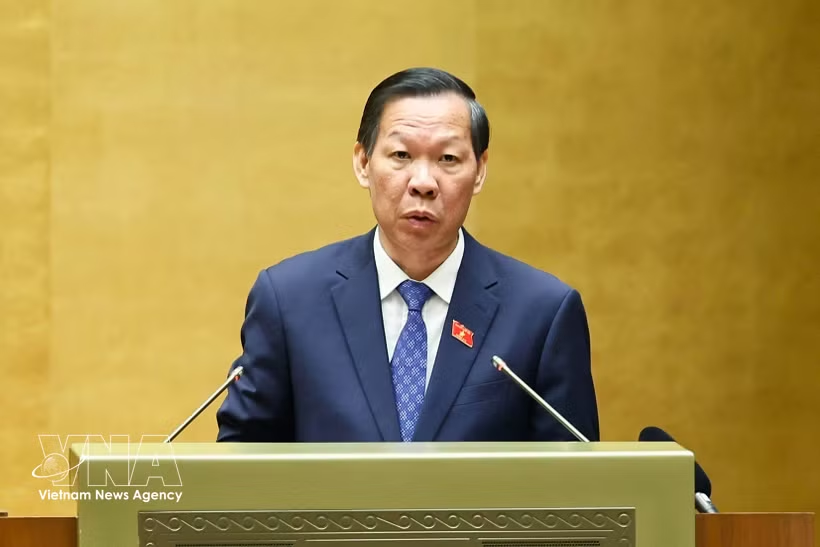
Phan Van Mai, Chairman of the NA’s Committee for Economic and Financial Affairs, said the committee agreed on the need for the resolution. He called for clearer criteria for classifying violations, conditions for applying leniency policies, and strict control and supervision mechanisms to prevent abuse, ensuring that there are no prohibited zones or exceptions.
Removing obstacles to APEC 2027 projects
The draft resolution on special mechanisms to address obstacles facing projects serving the APEC Economic Leaders’ Week 2027 covers planning, architecture, construction waste disposal, mineral extraction, public investment, public-private partnerships (PPP), business investment, land use, construction, acceptance, payment and project settlement.
Projects may continue construction while relevant procedures are being completed to meet the urgent APEC 2027 schedule. For those that started construction before completing all legal procedures, simplified procedures or special mechanisms would be applied to complete outstanding requirements.
For build-transfer (BT) projects, partial land allocation would be permitted, while the value of land used to settle payments to investors would be determined based on the specific land price at the time the project’s basic design dossier is approved.
The NA Committee for Economic and Financial Affairs emphasised that these mechanisms address not just administrative streamlining but also the quality and safety of construction. It urged the need for clear backup safeguards and for naming the agencies and individuals accountable for inspection, appraisal, supervision, and managing risks during both construction and operation.
Strengthening decentralisation in petroleum management
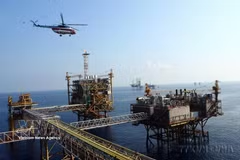
Presenting the Government’s proposal, Minister of Industry and Trade Le Manh Hung said the draft revised Petroleum Law aims to institutionalise Party policies, protect national interests, strengthen decentralisation, improve State management, ensure efficient use of resources, enhance energy security and safeguard national sovereignty.
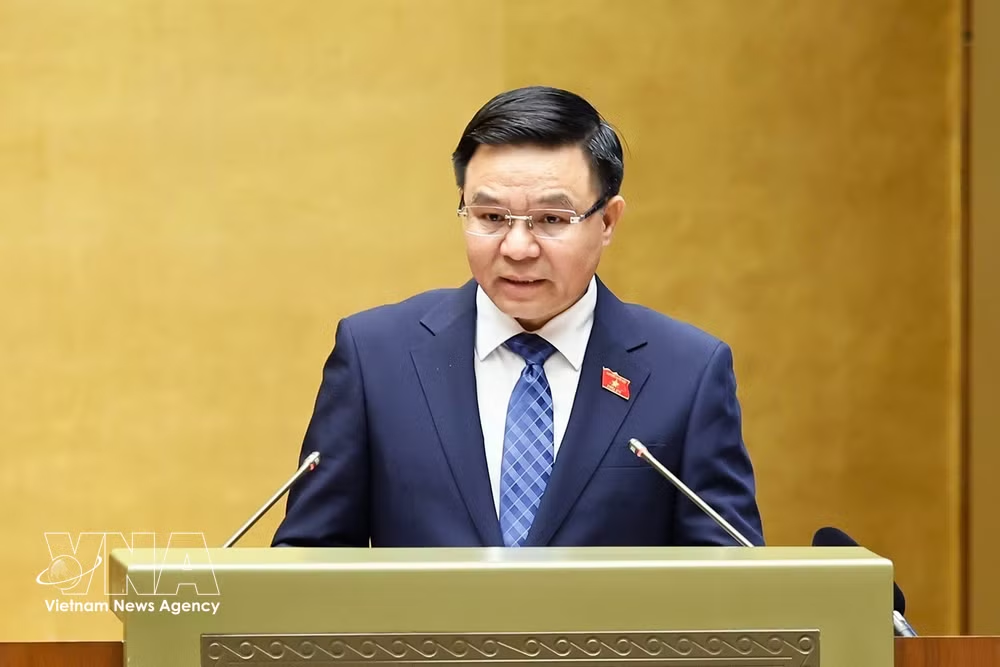
The 12-chapter, 62-article draft largely retains the 2022 Petroleum Law while revising provisions on basic petroleum surveys, contractor selection, petroleum contracts, petroleum operations, investment incentives, accounting, auditing and the rights and responsibilities of relevant entities.
It also introduces provisions on enhanced oil recovery, a legal framework for carbon capture and storage (CCS), high-tech petroleum services and offshore energy projects linked to oil and gas-related activities.
The NA Committee for Economic and Financial Affairs supported the draft law, while calling for a comprehensive, long-term legal framework for CCS and independent offshore energy projects./.