Kuala Lumpur (VNA) - The Association of Southeast Asian Nations (ASEAN) must accelerate the development of smart grid systems and digitalisation to enhance regional energy cooperation and position the bloc as a global green energy powerhouse, according to Malaysian Deputy Prime Minister Datuk Seri Fadillah Yusof.
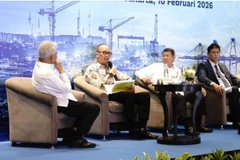
Speaking at a panel session of the ASEAN Climate Forum in Jakarta, he noted that stronger digitalisation would support cross-border electricity interconnections among member states and improve coordination in managing regional power systems.
He stressed that the deployment of smart grids would demonstrate ASEAN’s collective commitment to climate mitigation and green initiatives, adding that the bloc has the potential to become a major energy provider, or “battery”, for the world.
Fadillah, who is also Minister of Energy Transition and Water Transformation of Malaysia, said ASEAN has significant potential to become a key player in the green economy, but this can only be realised through close cooperation among member countries.
He added that Malaysia stands ready to support the Philippines, ASEAN Chair in 2026, in advancing green agendas, particularly the ASEAN Power Grid initiative, which has secured investment commitments worth 2 billion USD from the World Bank and the Asian Development Bank.
He stressed that blended finance mechanisms and investment mobilisation play a crucial role in helping ASEAN achieve regional grid connectivity goals. Malaysia is currently implementing several projects to enhance cross-border power links, including the Borneo Grid initiative connecting the Malaysian states of Sarawak and Sabah with Indonesia’s Kalimantan, Brunei and Peninsular Malaysia via subsea cables.
The development of smart grid systems, he noted, is not only a key lever to improve regional connectivity but also contributes to ensuring ASEAN’s energy security and gradually reinforcing its central role in the global clean energy transition./.

Malaysia’s manufacturing sector expected to sustain growth into 2026
RHB Investment Bank maintained an optimistic view on the sector’s prospects, forecasting IPI growth of 4.1% in 2026. Despite concerns over a global economic slowdown, higher tariffs and geopolitical volatility, industrial activity is expected to remain on a growth trajectory. For the whole of 2025, Malaysia’s IPI expanded by 3.6%, nearly matching the 3.7% increase recorded in 2024.