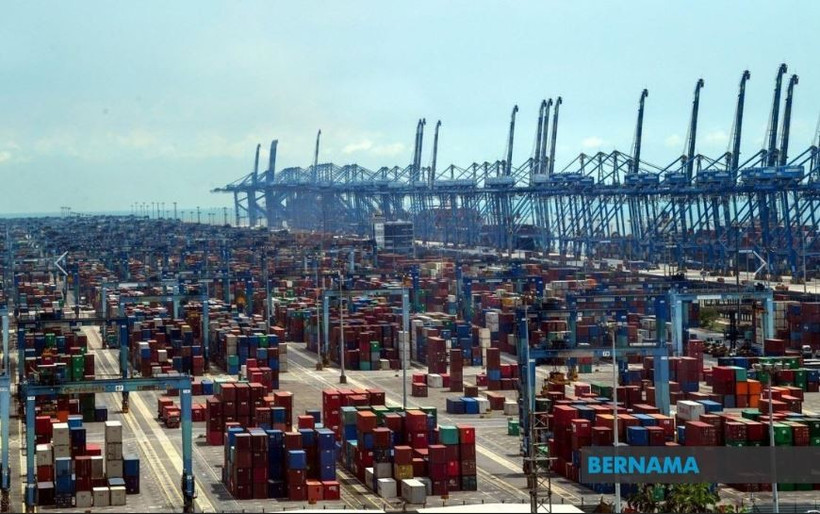
Hanoi (VNA) – ASEAN is set to assume a larger role in global trade as multinational corporations show increasing interest, according to a new Standard Chartered report.
Titled “Future of Trade: Resilience”, the report draws on insights from 1,200 C-suite executives and senior leaders at global corporates, who shared their views on global trade prospects and corporate strategies for the next three to five years.
It outlines the key destinations multinationals are considering for shifting their sourcing, manufacturing, and export operations, while also offering practical recommendations to guide decision-making.
The survey reveals that ASEAN will be a key region for corporates to realign their supply chains with Malaysia ranking second, after India, as the top market of choice for global corporates.
Notably, over half of corporates from Mainland China and the US have expressed interest to trade with and manufacture in the country.
Respondents from Thailand and Indonesia are exploring opportunities to source more from Malaysia, while the Philippines and Vietnam intend to expand their exports to this market.
Singapore corporates also plan to establish manufacturing facilities in Malaysia, attracted by compelling market advantages such as the Johor-Singapore Special Economic Zone that aims to streamline bilateral trade and investment in sectors that include manufacturing, logistics and technology.
Recent macroeconomic and geopolitical developments are significantly impacting costs, with 80% of respondents in Malaysia estimating a rise in the overall costs of goods by 10% to 19% in the medium term.
In response, 78% of Malaysia corporates are looking to increase digitalisation efforts while 70% and 64% plan to realign supply chain geographically and adjust treasury management strategies respectively.
Standard Chartered Malaysia CEO Mak Joon Nien said that the report reveals that 76% of corporates in Malaysia see geopolitical conflict as the top issue in shaping the future of trade, followed by trade tariffs (62%) and emerging technologies (58%). These findings paint a complex yet compelling future for trade as corporates navigate around the fact that the same trends that threaten to disrupt operations can also be opportunities in shaping global trade./.
ASEAN unveils Plan of Action for Energy Cooperation in next five years
The Asian Development Bank (ADB) committed 10 billion USD towards the APG to expedite cross-border connections, national grid projects, and renewable energy initiatives that will facilitate power trade. Meanwhile, the World Bank also allocated 2.5 billion USD to support ASEAN green energy projects.