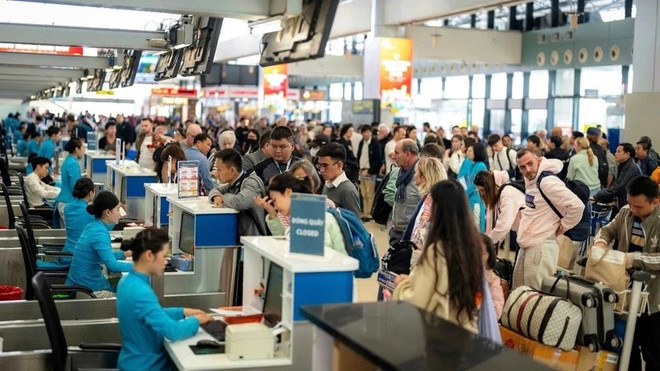
Hanoi (VNA) - During the Lunar New Year 2025, air passenger volumes witnessed robust growth thanks to meticulous preparations by aviation sector units.
Increased night flights and diverse fare options
According to a report from the Civil Aviation Authority of Vietnam (CAAV), during the Tet holidays (January 24 - February 2, 2025, equivalent to the 25th day of the 12th lunar month of the Year of the Dragon to the 5th day of the first lunar month of the Year of the Snake), the aviation sector served a total of 2.5 million passengers, marking a 17.8% increase. Of which, international passengers increased by 23% to reach 1.35 million, while the number of domestic passengers was 1.14 million, up 12% year-on-year.
Vietnamese airlines transported over 1.67 million passengers, up 12.8%, and nearly 7,000 tonnes of cargo, a 4% rise from the same period in 2024.
The figures included over 536,000 international passengers and more than 3,600 tonnes of cargo, reflecting 14% and 1.1% increases compared to the previous year.
Meanwhile, the number of domestic passengers and cargo were 1.1 million and 3,200 tonnes, respectively, representing 12% and 7.4% increases.
Passenger throughput at airports nationwide also saw a notable surge, reaching approximately 3.6, a 16% rise compared to 2024.
Notably, during the Lunar New Year holiday, Tan Son Nhat International Airport handled between 824 and 970 flights per day, with an average daily passenger throughput of 138,000.
The peak travel day was recorded on January 24 (the 25th day of the 12th lunar month, the last working day before the holiday), when Tan Son Nhat International Airport handled 1,002 flights (a 10% increase from 2024) and 152,000 passengers (a 13% rise compared to 2024).
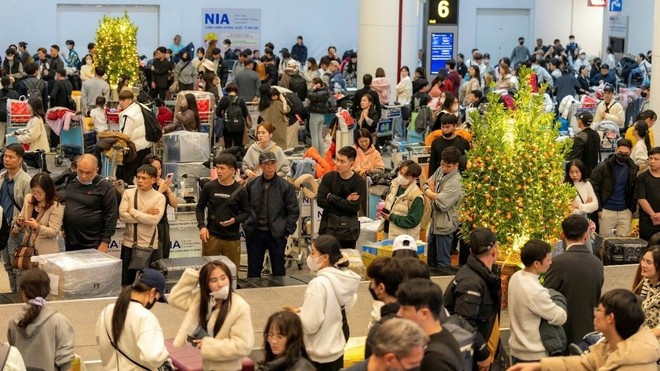
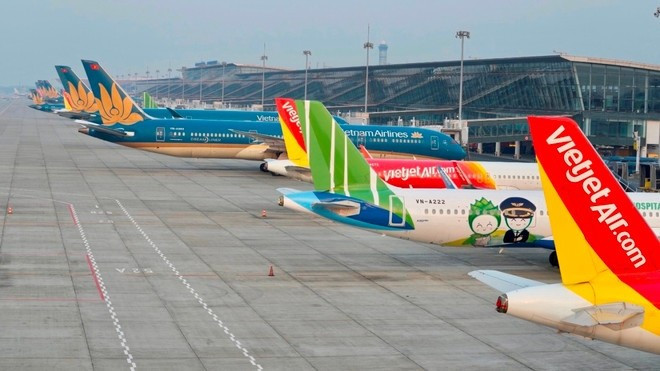
In addition to extending night-time operational hours at local airports, the CAAV directed airlines to optimise flight schedules and increase night flights. Vietnam Airlines scheduled 1,500 night flights, Vietjet operated 1,590, and Bamboo Airways added 260 night services.
There remain flight delays
Despite the overall efficiency in operations, the CAAV acknowledged that certain days during the peak holiday period still witnessed flight delays.
A major contributing factor was adverse weather conditions, including fog and low cloud cover at northern airports. These weather anomalies disrupted flight operations, leading to delayed departures, extended holding patterns, late arrivals, or even diversions to alternative airports.
Additionally, airport infrastructure overloads prolonged aircraft taxiing times to and from parking stands and runways, further exacerbating delays as airlines ramped up operations to meet passenger demand.
Upon identifying these issues, the CAAV promptly issued directives to relevant agencies and service providers, particularly air traffic management and meteorological units, to closely monitor weather conditions and respond proactively. Airlines were also instructed to rectify operational inefficiencies, minimise delays due to controllable factors, promptly inform passengers of schedule changes, and uphold their obligations towards affected travellers.
Furthermore, the CAAV urged industry stakeholders and enterprises to implement measures aimed at enhancing operational efficiency, improving service quality, and mitigating delays in passenger transport activities./.