Hanoi (VNA) - Cambodia and Laos on December 19 launched the second phase of cross-border QR code payments, which allow Lao travellers to shop in Cambodia by using their own currency.
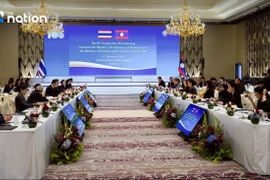
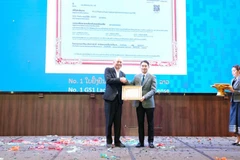
Chea Serey, governor of the National Bank of Cambodia, and Bounkham Vorachit, governor of the Bank of Laos, presided over the launching event held in Phnom Penh.
Addressing the event, Serey said that with the launch of this Phase 2, Lao citizens can now use their mobile banking applications to scan KHQR codes at around 4.5 million merchants across Cambodia.
She added that this initiative opened new opportunities for merchants in both countries to broaden their market reach while fostering trade, investment and tourism between the two neighboring nations.
Travellers will benefit from a seamless, fast, and secured cross-border payment experience, she stated.
Serey said the initiative served as a bridge connecting the culture, economies, and people of Cambodia and Laos.
It supports economic ties by facilitating secure digital transactions, enhances tourism by simplifying payment processes and promotes deeper regional integration within ASEAN," she said. This launch also amplifies our shared commitment to realise ASEAN's vision through an interconnected digital payment system.
Bounkham said the second phase or full launch of the cross-border QR code payments allowed the people of Cambodia and Laos to pay for goods in their own currencies by scanning QR codes.
She said from now on, Lao people, while traveling in Cambodia, can pay in Lao kip for buying goods by scanning the KHQR codes of Cambodia's Bakang app.
The second phase launch came after both countries successfully introduced the first phase of cross-border QR code payment connectivity in August 2023, which allowed consumers using Cambodia's Bakang app to scan Lao QR codes while visiting Laos./.
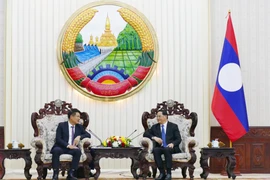
Vietnam–Laos step up cooperation in procuracy sector
They highly valued the effective and substantive cooperation results achieved by the Supreme People’s Procuracies of Vietnam and Laos in recent years, and called on both sides to continue enhancing coordination, stepping up exchanges of delegations at all levels, sharing professional and technical experience, and maintaining and expanding training and capacity-building programmes for officials.