Central Theory Council for 2026–2031 term holds first meeting

Political theory research in the new era must be grounded in clear political orientation while closely linked to practical realities and concrete actions. Social sciences and theoretical studies can no longer remain detached and wait for retrospective evaluations as in the past, but must accompany technological development in real time.
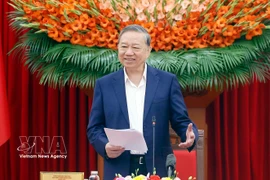
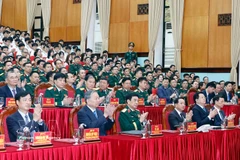
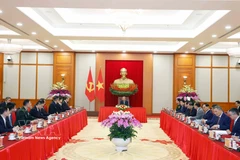
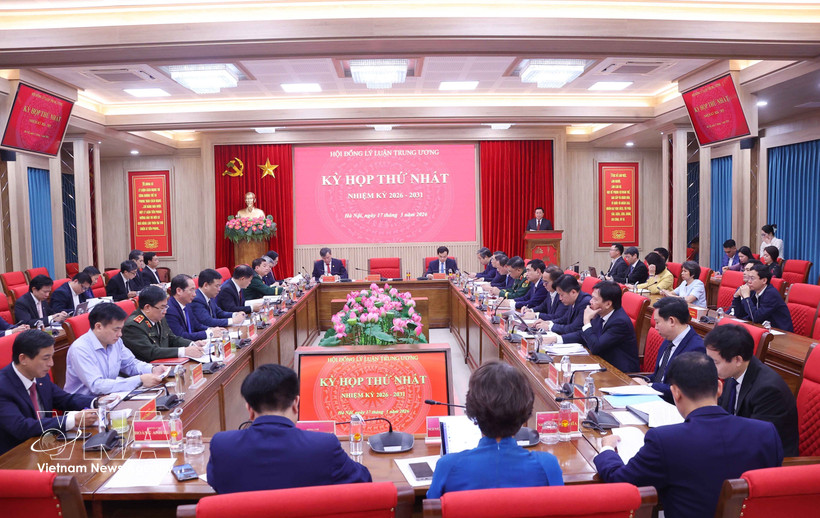
An overview of the first meeting of the Central Theory Council on March 17 (Photo: VNA)

Hanoi (VNA) – The Central Theory Council for the 2026–2031 term held its first meeting on March 17 at the Ho Chi Minh National Academy of Politics.

The event was co-chaired by Nguyen Xuan Thang, member of the 13th Party Central Committee's Politburo, Chairman of the council; Doan Minh Huan, member of the 14th Party Central Committee's Politburo, President of the Ho Chi Minh National Academy of Politics, Standing Vice Chairman of the council.

Addressing the event, Thang emphasised that as the country enters a new stage of development, the Party’s theoretical work must “go ahead and lead the way” by providing scientific arguments to guide national development.

The council should continue strengthening its role as a core intellectual institution and strategic think tank of the Party. In the coming period, it should focus on clarifying major theoretical issues, addressing pressing practical challenges and intensifying the review of real-world practices, he stated.

Contributing ideas on renewing the council’s working methods in the new context, Huan highlighted emerging challenges, noting that the rapid development of artificial intelligence (AI) is fundamentally transforming the way political science research is conducted. Theoretical knowledge today is no longer generated solely by humans but is increasingly influenced by algorithms, leading to a stronger overlap between theoretical sciences and technological sciences.

He emphasised that political theory research in the new era must be grounded in clear political orientation while closely linked to practical realities and concrete actions. Social sciences and theoretical studies can no longer remain detached and wait for retrospective evaluations as in the past, but must accompany technological development in real time.

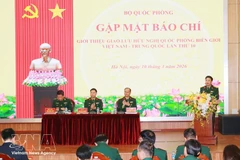
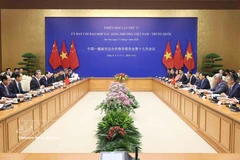
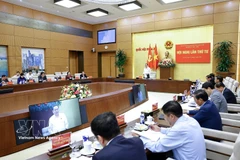
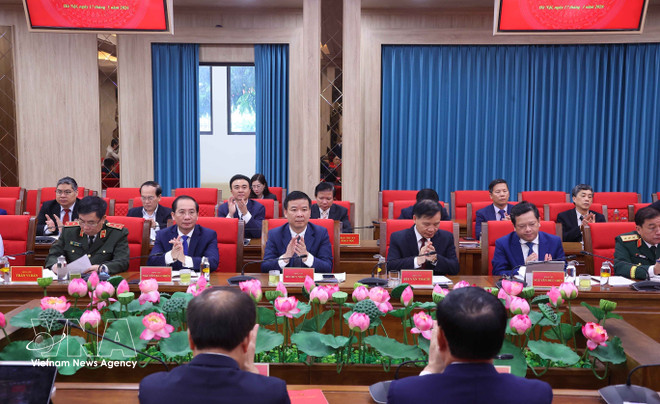
Delegates to the first meeting of the Central Theory Council (Photo: VNA)

Delegates to the first meeting of the Central Theory Council (Photo: VNA)

In particular, theory should be integrated into the design of technologies and algorithms to help establish ethical foundations, guide human behaviour and minimise negative impacts. To accomplish this task, stronger and more proactive coordination mechanisms are required between the council and specialised scientific research institutes.

According to him, whereas political theory previously focused mainly on viewpoints, guidelines and orientations, it now needs to be closely associated with concrete action programmes and practical implementation. Therefore, theoretical research must produce tangible outputs rather than remain at the level of general perspectives.

During the session, council members discussed and gave opinions on the draft working regulations of the council for the 2026–2031 term, the 2026 work programme and the overall work plan for the entire term.

The council also provided in-depth comments on two major proposals of historical significance: the draft outline for the report reviewing 100 years of the Communist Party of Vietnam’s leadership of the Vietnamese revolution (1930–2030) and outlining directions for national development over the next century (2030–2130), and the draft outline for the report reviewing 40 years of implementing the Platform for National Construction in the transitional period toward socialism./.
VNA

See more

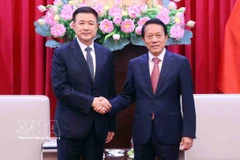
Vietnamese Minister of Public Security Gen. Luong Tam Quang (R) and his Chinese counterpart Wang Xiaohong at their meeting on March 17 (Photo: VNA)

Vietnamese, Chinese ministers co-chair ninth conference on crime prevention

Over the past two years, the Vietnamese and China public securities ministries have sustained regular high-level exchanges and effectively followed cooperation mechanisms between professional units and police forces in border and twinning localities. Annual department-level meetings and dialogues continued among criminal police, anti-drug units, and immigration management forces.

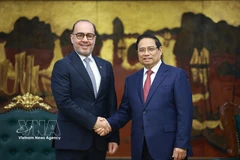
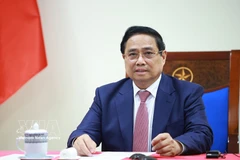
Prime Minister Pham Minh Chinh receives Qatari Ambassador Khalid Ali Abdullah Abel on March 17. (Photo: VNA)

PM urges Qatar to step up energy cooperation with Vietnam

Vietnam stands ready to work with Qatar and contribute to broader efforts to promote peace and stability, stressing the principles of solidarity to build strength, cooperation to mobilise resources and dialogue to foster trust.

Prime Minister Pham Minh Chinh receives UAE Ambassador to Vietnam Bader Abdullah Almatrooshi in Hanoi on March 17, 2026. Photo: VNA

PM pushes forward energy cooperation with UAE after high-level talks

Vietnam–UAE relations have continued to grow, with the UAE now Vietnam’s largest trading partner in the Middle East and a potential investor. For Vietnam, the UAE is not only an important economic partner but also a sincere and reliable friend sharing common values of peace, cooperation, and prosperity.

Prime Minister Pham Minh Chinh (right) receives Japanese Ambassador to Vietnam Ito Naoki on March 17. (Photo: VNA)

Prime Minister calls on Japan to support Vietnam’s energy security

The PM proposed that the ambassador raise voice to help facilitate Vietnam’s access, through appropriate forms, to part of the 80 million barrels of oil that Japan is considering releasing from its reserves to mitigate the impact of Middle East tensions on fuel prices.

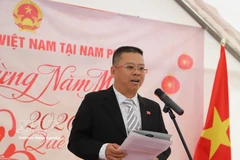
Le Hoai Nam, head of the liaison board of the Vietnamese community in South Africa (Photo: VNA)

Vietnamese community in South Africa confident in 16th NA’s leadership

Regarding the fact that this year’s election of deputies to the NA and People’s Councils at all levels for the 2026–2031 tenure is held two months earlier than usual, a representative of the Vietnamese community in South Africa said that as Vietnam enters a new stage of development with many major goals, organising the election earlier is a proactive and strategic move.

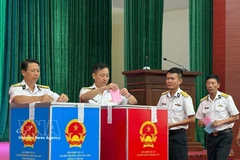
The atmosphere during voting for deputies to the 16th National Assembly and People’s Councils for the 2026–2031 term at Polling Station No. 20, Brigade 957, Naval Region 4, in Khanh Hoa. (Photo: VNA)

Final results of 16th NA election expected on March 22

Local authorities are currently compiling and verifying election data before submitting their reports to the council, which will meet on on March 22 to review the figures and announce the official election results, Tran Thanh Man, Chairman of the NA and President of the Vietnam National Election Council, said.

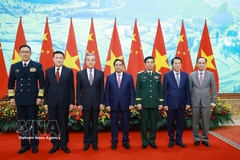
Prime Minister Pham Minh Chinh (centre) and the Vietnamese and Chinese ministers of foreign affairs, national defence and public security at the meeting in Hanoi on March 16. (Photo: VNA)

Vietnam places top priority on ties with China: PM

PM Pham Minh Chinh asked the foreign affairs, defence and public security ministries of both countries to play a more proactive role in unceasingly strengthening political trust and mutual understanding between the two Parties, countries and peoples, and in making full use of existing cooperation mechanisms, particularly the 3+3 strategic dialogue.

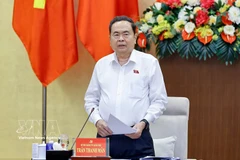
Chairman of the National Assembly (NA) Tran Thanh Man speaks at the fourth meeting of the NA Party Committee for the 2025–2030 term in Hanoi on March 16. (Photo: VNA)

Institutional, legal reform key strategic breakthrough for development: NA Chairman

Chairing the fourth meeting of the NA Party Committee for the 2025–2030 term in Hanoi on March 16, NA Chairman Tran Thanh Man, who is also Secretary of the NA Party Committee, said the legislature must play a pivotal role in building and perfecting development institutions as Vietnam enters a new stage of strong, comprehensive and sustainable development.

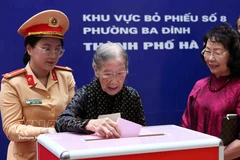
Doan Thi Thuan, a 101-year-old voter, casts her ballot at Polling Station No. 8 in Ba Dinh ward, Hanoi, on March 15. (Photo: VNA)

General election marks renewal in building modern Vietnamese state

The decision to hold the election two months earlier than usual represents not merely a technical adjustment but a historic and well-considered step, reflecting long-term vision in building, consolidating and operating the state apparatus, said Tran Thang, an aeronautical engineer and commentator in the US.