Conference reviews organisation of 14th National Party Congress

Based on organisational practice, the review report and participants’ assessments, it could be affirmed that the 14th National Party Congress had been highly successful in the three key areas of documents, personnel and organisational work.

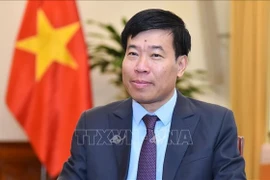
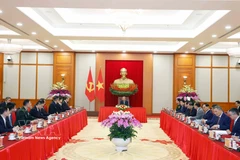
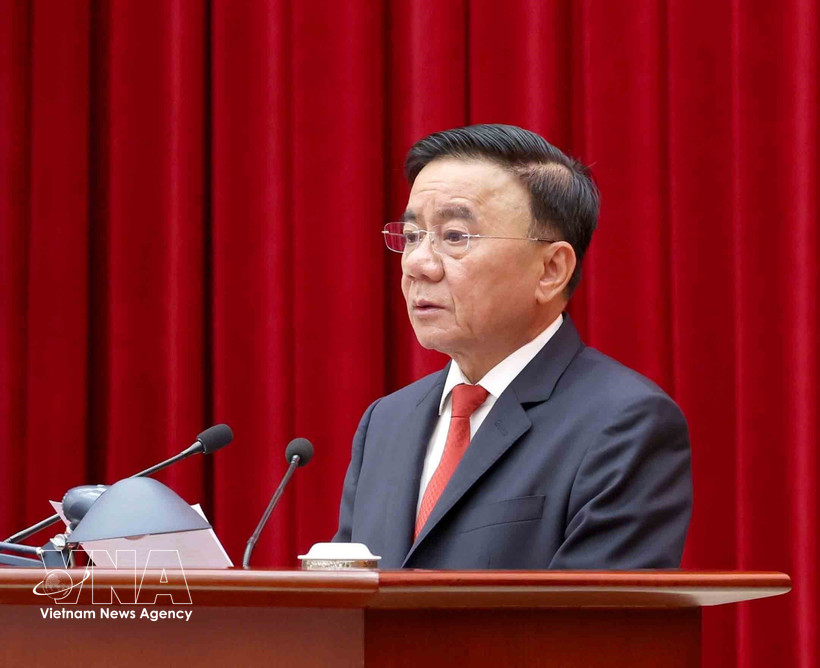
Politburo member and Permanent member of the Party Central Committee’s Secretariat Tran Cam Tu speaks at the conference on March 17. (Photo: VNA)

Hanoi (VNA) – Politburo member and Permanent member of the Party Central Committee’s Secretariat Tran Cam Tu on March 17 chaired a conference reviewing preparations, organisation and logistical support for the 14th National Congress of the Communist Party of Vietnam (CPV), which took place in January.

A report presented at the meeting highlighted the success and several new features of the congress. It did not merely reviewed the past term or set targets for the next five years, but shaped development thinking, identified a new growth model and laid the institutional foundation for the nation’s long-term trajectory towards the mid-21st century.

The congress introduced innovations in guiding viewpoints, objectives, methods, implementation approaches and outputs. A notable change was the consolidation of three major reports into a single political report, enhancing the document's strategic coherence, comprehensiveness and practicality while making it more concise, accessible and easier to implement. The congress’s resolution was also paired with an action plan to ensure swift and decisive execution.

Personnel work was reformed in both procedures and methodology, with clearer delineation of authority and responsibility for Party committees, organisations and leaders in evaluating, vetting and recommending candidates.

Communications efforts were conducted in a concerted and wide-ranging manner with numerous innovations, while the duration of the congress itself was shortened. Documents, speeches and presentations were more intellectually substantive yet concise. For the first time, presentations from Party organisations at the commune level were delivered, bringing grassroots perspectives directly into national discussions.

Digital transformation was also boosted, with tablet computers used to distribute materials instead of printed copies, not merely a technical upgrade but a step towards more modern and professional governance.

The report further pointed out lessons learned from the preparation and organisation process and offered recommendations for future congresses.
vnanet-delegate.jpg
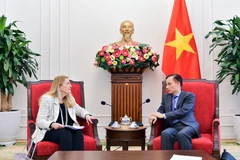
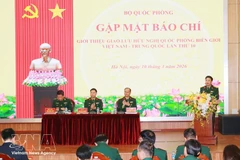
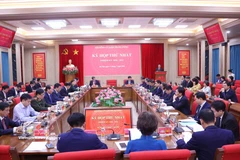
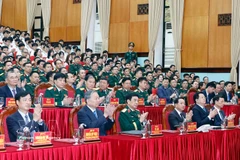
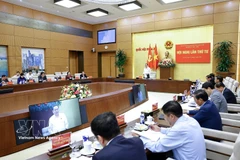
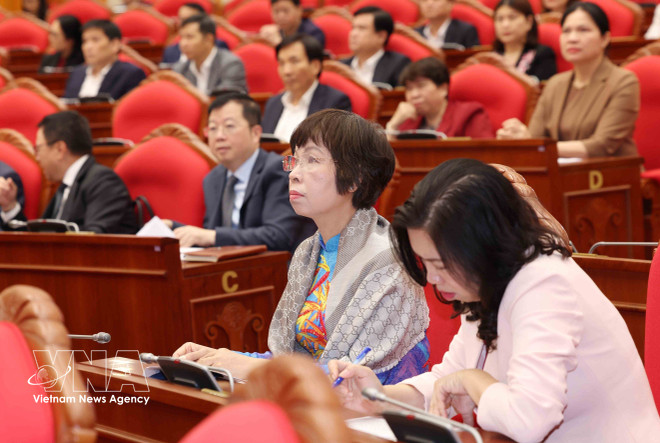
General Director of the Vietnam News Agency Vu Viet Trang and other officials attend the conference. (Photo: VNA)

In his remarks, Tu emphasised that the 14th Congress was a political event of special significance, opening a new phase of national development in the new era. He affirmed that based on organisational practice, the review report and participants’ assessments, it could be affirmed that the big event had been highly successful in the three key areas of documents, personnel and organisational work.

He noted that these achievements stemmed primarily from close, decisive and scientifically grounded leadership by the Party Central Committee, the Politburo and the Secretariat, headed by General Secretary To Lam.

Agreeing broadly with the report’s content, he urged the Party Central Committee’s Office to coordinate with relevant bodies to compile and archive documentation comprehensively for future reference in organising subsequent congresses and major national events. Relevant agencies were also asked to review and update themselves with Party regulations to ensure consistency in implementation.

The official asked competent authorities to commend and reward officials, soldiers and employees who contributed to the congress, including those in quiet and behind-the-scenes roles whose efforts were vital to its overall success.

In recognition of outstanding achievements in congress organisation, the Permanent member presented the first-class Labour Order from the State President to six bodies, namely the Party Central Committee's Organisation Commission, Commission for Information, Education and Mass Mobilisation, and Office; the Ministry of Public Security; the Ministry of Culture, Sports and Tourism; and the Party organisation, administration and people of Hanoi.

The second-class Labour Order was awarded to four agencies – the Party Central Committee's Inspection Commission, the Ministry of Foreign Affairs, the Vietnam News Agency, and the Vietnam Television.

The third-class Labour Order was presented to four agencies, namely the Ministry of Health, the Ministry of Finance, Nhan dan Newspaper, and Radio the Voice of Vietnam./.
VNA

See more

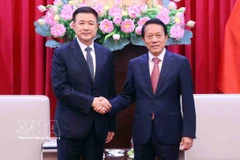
Vietnamese Minister of Public Security Gen. Luong Tam Quang (R) and his Chinese counterpart Wang Xiaohong at their meeting on March 17 (Photo: VNA)

Vietnamese, Chinese ministers co-chair ninth conference on crime prevention

Over the past two years, the Vietnamese and China public securities ministries have sustained regular high-level exchanges and effectively followed cooperation mechanisms between professional units and police forces in border and twinning localities. Annual department-level meetings and dialogues continued among criminal police, anti-drug units, and immigration management forces.

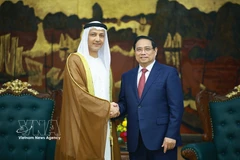
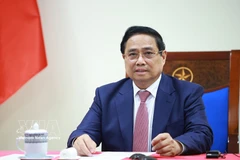
Prime Minister Pham Minh Chinh receives Qatari Ambassador Khalid Ali Abdullah Abel on March 17. (Photo: VNA)

PM urges Qatar to step up energy cooperation with Vietnam

Vietnam stands ready to work with Qatar and contribute to broader efforts to promote peace and stability, stressing the principles of solidarity to build strength, cooperation to mobilise resources and dialogue to foster trust.

An overview of the first meeting of the Central Theory Council on March 17 (Photo: VNA)

Central Theory Council for 2026–2031 term holds first meeting

Political theory research in the new era must be grounded in clear political orientation while closely linked to practical realities and concrete actions. Social sciences and theoretical studies can no longer remain detached and wait for retrospective evaluations as in the past, but must accompany technological development in real time.

Prime Minister Pham Minh Chinh receives UAE Ambassador to Vietnam Bader Abdullah Almatrooshi in Hanoi on March 17, 2026. Photo: VNA

PM pushes forward energy cooperation with UAE after high-level talks

Vietnam–UAE relations have continued to grow, with the UAE now Vietnam’s largest trading partner in the Middle East and a potential investor. For Vietnam, the UAE is not only an important economic partner but also a sincere and reliable friend sharing common values of peace, cooperation, and prosperity.

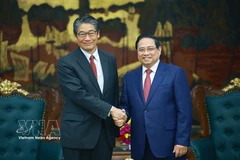
Prime Minister Pham Minh Chinh (right) receives Japanese Ambassador to Vietnam Ito Naoki on March 17. (Photo: VNA)

Prime Minister calls on Japan to support Vietnam’s energy security

The PM proposed that the ambassador raise voice to help facilitate Vietnam’s access, through appropriate forms, to part of the 80 million barrels of oil that Japan is considering releasing from its reserves to mitigate the impact of Middle East tensions on fuel prices.

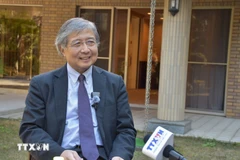
Le Hoai Nam, head of the liaison board of the Vietnamese community in South Africa (Photo: VNA)

Vietnamese community in South Africa confident in 16th NA’s leadership

Regarding the fact that this year’s election of deputies to the NA and People’s Councils at all levels for the 2026–2031 tenure is held two months earlier than usual, a representative of the Vietnamese community in South Africa said that as Vietnam enters a new stage of development with many major goals, organising the election earlier is a proactive and strategic move.

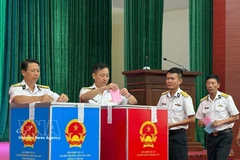
The atmosphere during voting for deputies to the 16th National Assembly and People’s Councils for the 2026–2031 term at Polling Station No. 20, Brigade 957, Naval Region 4, in Khanh Hoa. (Photo: VNA)

Final results of 16th NA election expected on March 22

Local authorities are currently compiling and verifying election data before submitting their reports to the council, which will meet on on March 22 to review the figures and announce the official election results, Tran Thanh Man, Chairman of the NA and President of the Vietnam National Election Council, said.

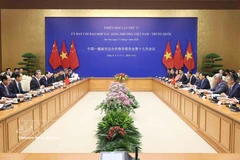
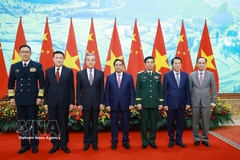
Prime Minister Pham Minh Chinh (centre) and the Vietnamese and Chinese ministers of foreign affairs, national defence and public security at the meeting in Hanoi on March 16. (Photo: VNA)

Vietnam places top priority on ties with China: PM

PM Pham Minh Chinh asked the foreign affairs, defence and public security ministries of both countries to play a more proactive role in unceasingly strengthening political trust and mutual understanding between the two Parties, countries and peoples, and in making full use of existing cooperation mechanisms, particularly the 3+3 strategic dialogue.

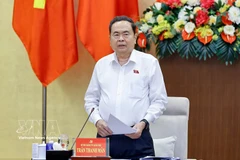
Chairman of the National Assembly (NA) Tran Thanh Man speaks at the fourth meeting of the NA Party Committee for the 2025–2030 term in Hanoi on March 16. (Photo: VNA)

Institutional, legal reform key strategic breakthrough for development: NA Chairman

Chairing the fourth meeting of the NA Party Committee for the 2025–2030 term in Hanoi on March 16, NA Chairman Tran Thanh Man, who is also Secretary of the NA Party Committee, said the legislature must play a pivotal role in building and perfecting development institutions as Vietnam enters a new stage of strong, comprehensive and sustainable development.