Con Dao developing sustainably by protecting its sea turtles

Conservation efforts here have become a model, helping to save millions of turtle hatchlings and promoting Con Dao as a member of the Indian Ocean-Southeast Asia Turtle Site Network.

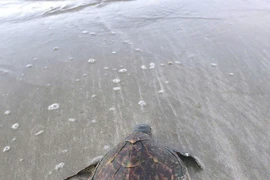
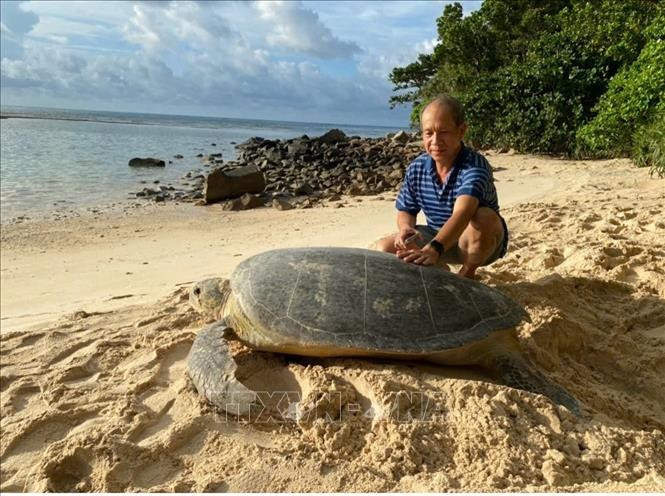
A mother turtle weighing nearly 150 kg comes to lay eggs at Cat Lon beach on Bay Canh Island, Con Dao National Park. (Photo: VNA)

HCM City (VNA) - Con Dao National Park, located in Ho Chi Minh City’s Con Dao Special Zone, has long been recognised as one of the most important nesting sites for sea turtles in Vietnam, accounting for up to 90% of the country's sea turtle nesting population.

Conservation efforts here have become a model, helping to save millions of turtle hatchlings and promoting Con Dao as a member of the Indian Ocean-Southeast Asia Turtle Site Network.

A "safe haven" for sea turtles

The importance of Con Dao in sea turtle conservation is highlighted by the large number of female turtles that return here each year. According to the Con Dao National Park Management Board, in the first half of 2025, they successfully rescued and relocated 553 turtle nests with a total of 54,212 eggs. Notably, for the first time, a hawksbill turtle was found nesting on Dat Doc beach, with 98 eggs seen. Additionally, the park rescued two sea turtles that had drifted ashore entangled in fishing nets.

Since 2019, Con Dao has run a dedicated rescue project to combat the impact of climate change on turtle populations. To date, over 13,600 nests have been protected, resulting in the release of nearly 949,000 baby turtles. More than 2,000 mother turtles were tagged, and nine stranded turtles were rescued. Rangers have also handled and preserved 65 dead endangered marine species, including dugongs and turtles, for education and research purposes.

Nguyen Van Tra, deputy head of the park’s Conservation and International Cooperation Division, said acknowledging the importance of protecting nesting habitats and hatchling incubation areas before releasing them back into the natural environment, the national park has focused on three pillars: in-site protection, scientific research and cooperation, and public awareness improvement.

Volunteer teams and officers continue 24/7 patrols during the peak nesting season from April to October across 18 beaches to ensure every nest is found and safely relocated to avoid tides and predators, he said.

Developing eco-tourism centred on turtle nesting

Alongside the conservation and protection efforts, in recent years, Con Dao National Park has worked closely with relevant authorities and travel companies to organise eco-tourism activities, such as turtle hatching observation experiences, with strict and safe protocols.
sea-turtles-2.jpg
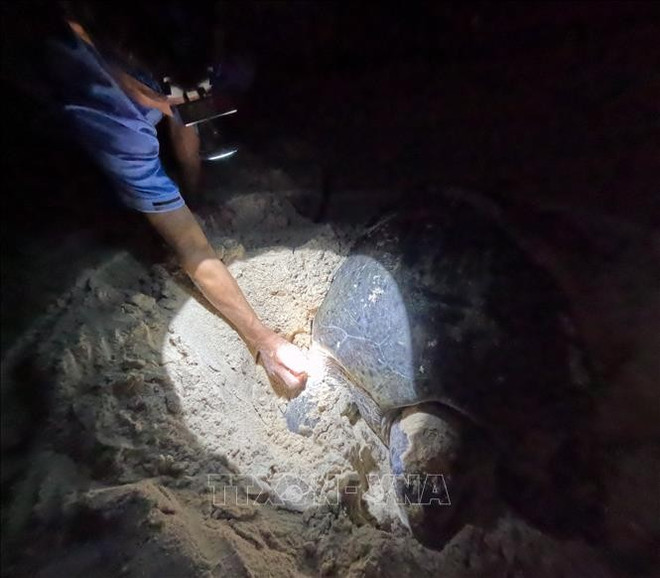
Staff of the Bay Canh Island Nature Management, Protection, and Conservation Station is checking the identification tag to determine the origin of the mother turtle. (Photo: VNA)

According to the park’s Eco-tourism and Environmental Protection Division, more than 22,000 visitors came to the park in the first half of 2025, with nearly 3,000 joining eco-tourism activities.

Eco-tourism centred on turtle nesting has become a popular and typical attraction in Con Dao. Tour group sizes are limited, flash photography is banned, and visitors must keep a respectful distance from nesting turtles.

According to experts, Con Dao is the first national park and one of the two earliest marine protected areas in Vietnam recognised on a global scale. The combination of conservation, ecotourism and infrastructure improvement will help Con Dao National Park in particular and Con Dao Special Zone in general become an attractive destination, both bearing profound historical significance and bringing unique experiences to visitors.

Nguyen Van Nga, head of the park’s Eco-tourism and Environmental Protection Division, said turtle nesting tours are a unique product that must be carefully managed to avoid disrupting turtles.

The park is expanding education on environmental protection at local schools across the Con Dao Special Zone, and its environmental education centre is being upgraded into an interactive hub showcasing sea turtles and the island’s biodiversity, he added./.
VNA

See more

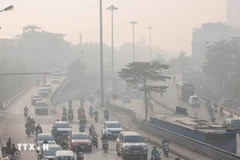
Air pollution in Hanoi. (Photo: VNA)

Hanoi to launch 5,000 public electric bicycles

In a move to reduce air pollution and promote green mobility, Hanoi has approved a plan to deploy 5,000 public electric bicycles, alongside restrictions on petrol- and diesel-powered vehicles in the city’s central area.

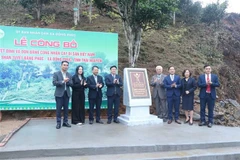
Official heritage plaque i sinstalled on the 12 recognised Shan Tuyet tea trees in Dong Phuc commune. (Photo: VNA)

Thai Nguyen: 12 ancient Shan Tuyet tea trees win national heritage status

The recognition honours the biological, cultural and historical values of these centuries-old Shan Tuyet tea trees – natural treasures deeply woven into the livelihoods, traditions and identity of local ethnic communities. The title affirms the community’s commitment to preserving and promoting the value of this iconic local tea variety.

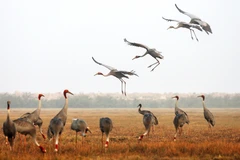
Sarus cranes at Tram Chim National Park (Photo: VNA)

Return of sarus cranes: Hope takes wing in Dong Thap wetland

Beneath the wide Mekong Delta sky, Tram Chim National Park is racing against time, pouring heart and science into a decade-long (2022–2032) plan to rescue the Eastern sarus crane – an elegant, scarlet-headed bird listed as endangered on the International Union for the Conservation of Nature (IUCN) Red List and a living emblem of both the park and all of Dong Thap province

French Ambassador Olivier Brochet speaks at the press conference in Hanoi on December 11 to mark the 10th anniversary of the Paris Agreement on climate change and highlighting the COP30 outcomes. (Photo: VNA)

International community ready to support Vietnam in energy transition, climate response

In a video message to the press conference, UN Resident Coordinator in Vietnam Pauline Tamesis said the UN is ready to support Vietnam in building a pipeline of projects capable of absorbing financing mobilised under the Political Declaration on establishing the Just Energy Transition Partnership (JETP), as well as from global climate finance sources, including the Green Climate Fund and the Loss and Damage Fund.

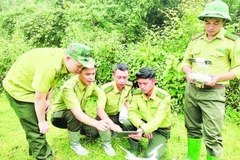
Forest rangers in Son La province apply technological devices and software to forest management, monitoring, and protection. (Photo: nhandan.vn)

Digital technology application enhances forest management, protection

With a total forest area of over 14 million hectares, including more than 10 million hectares of natural forests, forests exist in all 34 provinces and cities across the country. Given the large area and limited workforce, applying digital solutions in forest management and protection has become a top priority for the forestry sector.

Sunda pangolins (Manis javanica), also known as the Javan pangolin, are listed in Group IB – critically endangered and strictly protected from all commercial exploitation (Photo: VNA)

Quang Ngai releases rare pangolin back into nature

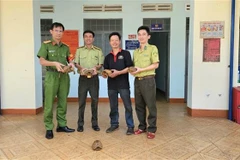
Initial verification showed that the animal weighed 3.7kg and measured over 60cm. It was identified as a Sunda pangolin (Manis javanica), also known as the Javan pangolin, listed in Group IB – critically endangered and strictly protected from all commercial exploitation.

Residents of Tuyen Quang province take part in the One Billion Trees Programme. (Photo: VNA)

Tree-planting programme exceeds one-billion-tree goal

The total comprises 573.9 million scattered trees and 865.2 million trees grown in concentrated plantations, equivalent to 429,125 hectares of forest. Provinces posting the strongest results include Phu Tho with 177.9 million trees, Lao Cai with 108.8 million, and An Giang with 98.5 million.

Construction activity is one of the causes of air pollution in Hanoi. (Photo: VNA)

Hanoi takes urgent measures to curb air pollution

The city requires the enhanced application of advanced technologies and remote monitoring systems, including satellite remote sensing, drones, and AI-integrated traffic cameras, to monitor, detect, and strictly address the illegal burning of garbage, straw, and agricultural by-products.