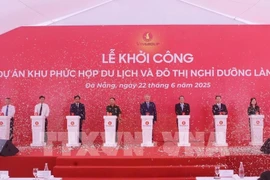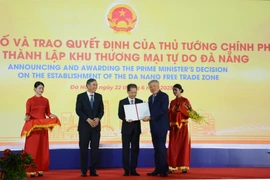
Da Nang (VNA) - Da Nang was on June 22 officially allowed to establish a Free Trade Zone to bring tremendous opportunity to the central city and help Vietnam enhance its position on the global economic map.
The Da Nang Free Trade Zone, covering an area of 1,881 hectares, is being developed across seven non-contiguous locations, with each area designated for different functions ranging from manufacturing, logistics, commerce, services, high-tech industry, innovation, to information technology.
In an interview granted to the Vietnam News Agency’s VietnamPlus e-newspaper, Vu Quang Hung, Head of the Da Nang Hi-Tech Park and Industrial Zones Authority, said that this is not merely a conventional economic zone but represents an entirely new development model, with its first distinguishing feature lying in its superior strategic vision.
Unlike traditional economic zones, the Da Nang Free Trade Zone is positioned not only as a centre for manufacturing and exports but also as a regional economic hub, serving as a strategic growth engine for Central Vietnam and the entire country.
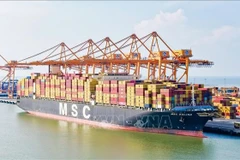
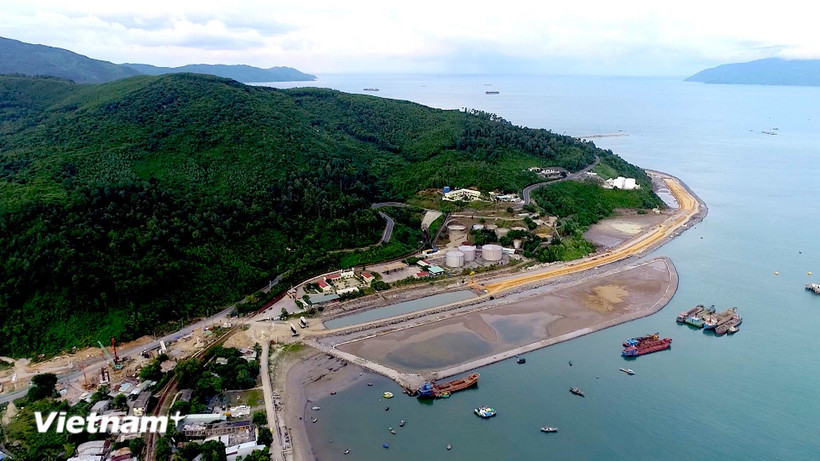
Its long-term goal is to transform Da Nang into a key link in the global supply chain, closely connected with Lien Chieu Port and Da Nang International Airport, Hung said.
Notably, the Da Nang Free Trade Zone will be developed with special mechanisms and policies designed to create favourable conditions for investors. One of its key highlights is a flexible legal framework that allows the creation and testing of new, advanced policies surpassing those of existing economic zone models.
Policies on taxation, customs, land use, and administrative procedures will be optimised to support investors, minimise bureaucratic processes, and create an open and business-friendly investment environment.
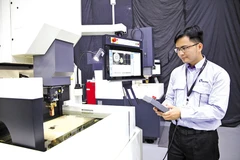
Priority will be given to developing high-tech industries and innovation, as sectors such as artificial intelligence (AI), semiconductors, big data, and blockchain will play a key role in creating high added value.
The development of these fields will not only help the free trade zone become a technology hub but also attract innovative enterprises, research and development (R&D) centres, and creative start-ups from around the world, Hung said.
Regarding opportunities and challenges facing Da Nang in implementing the free trade zone, the head of the Da Nang Hi-Tech Park and Industrial Zones Authority, said that the city’s strategic location, at the terminus of the East-West Economic Corridor, is a key factor.
Therefore, the zone will serve not only as a hub for international cargo transshipment, but as a major driver for development.
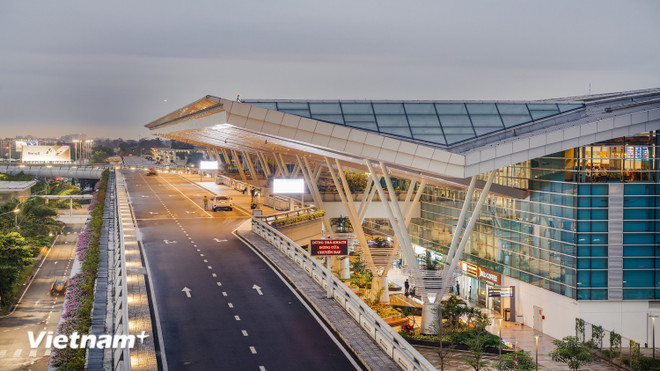
The city’s large-scale investment in its seaports and airport in recent years demonstrate its readiness and serious commitment to bring into full play this advantage. From policies to infrastructure, this represents a major opportunity granted by the central government to the city.
This is also true from the perspective of multinational corporations, as this can be considered a “golden moment” to invest in Vietnam, and specifically in Da Nang.
This special opportunity also means that the entire political system of Da Nang will face difficulties, challenges, and the pressure of leading as a “pioneer.”
Specifically, for the authority, the immediate challenge lies in the implementation of planning and land clearance.
Another challenge is the development of synchronised infrastructure, especially technical and digital infrastructure, to support high-tech industries, Hung pointed out.
However, he went on to say that the merger of Da Nang and Quang Nam province, effective from June 30 and officially operational from July 1 will continue to serve as a “catalyst” for the Da Nang Free Trade Zone to fully realise the potential of this special economic model.
This is also part of the strategic vision of the Party and State, preparing the “new” City of Da Nang to reach out to the global stage and become one of the major economic centres on the regional and global economic maps./.