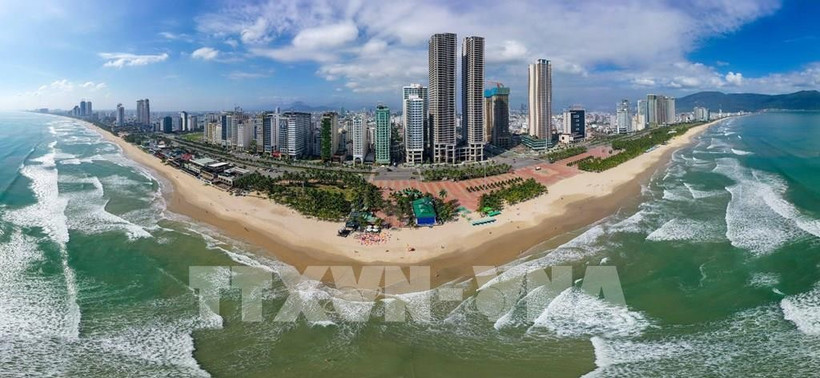
Da Nang (VNA) – Vietnam is on the right track with its strategy to develop an International Financial Centre (IFC). Experts both domestically and internationally have praised the decision to avoid concentrating the initiative in a single location, opting instead to create a coordinated financial ecosystem anchored by Ho Chi Minh City — the country’s economic powerhouse — and Da Nang — the innovation-driven hub of the central region.
This functional zoning model aims to capitalise on the unique strengths of each locality, promoting mutual support and balanced regional development.
Testing ground for financial innovation
Vietnam has long discussed the establishment of an IFC as part of its broader economic and financial development strategies. Under Decision No. 2097/QD-TTg issued in 2021, the Prime Minister approved a roadmap for developing Vietnam’s financial market through 2030, which included studying the establishment of an IFC in Ho Chi Minh City, eventually expanding into an inter-regional model.
In 2022, Ho Chi Minh City submitted a proposal to the Government, setting a target of becoming a leading financial centre in ASEAN by 2030. Simultaneously, Da Nang launched its own initiatives focused on institutional experimentation, digital financial services, and regulatory sandbox models.
In early 2024, Da Nang proposed its own IFC plan, and on January 4, 2025, the Government issued Resolution No. 259/NQ-CP, officially designating Da Nang and Ho Chi Minh City as the two locations for establishing and operating the international financial centre starting in 2025. The Ministry of Finance and the State Bank of Vietnam have since issued guidance to ensure regional coordination and avoid overlapping efforts.
According to Le Trung Chinh, Chairman of the Da Nang People’s Committee, after years of preparation, the Politburo has endorsed the dual-centre model. Da Nang has already allocated land for the centre, and if all goes smoothly, the National Assembly is expected to approve the legal framework for Vietnam’s IFC during its June session.
Richard Dean McClellan, founder and CEO of RMAC Advisory, LLC, said Vietnam’s strategy of diversifying financial development across three urban hubs — Hanoi, Ho Chi Minh City, and Da Nang — reflects a global trend towards decentralised financial ecosystems. Under this model, Hanoi remains the seat of policymaking and governance, Ho Chi Minh City retains its role as a financial and investment magnet, and Da Nang is positioned as a testbed for novel financial initiatives, strategically situated in central Vietnam.
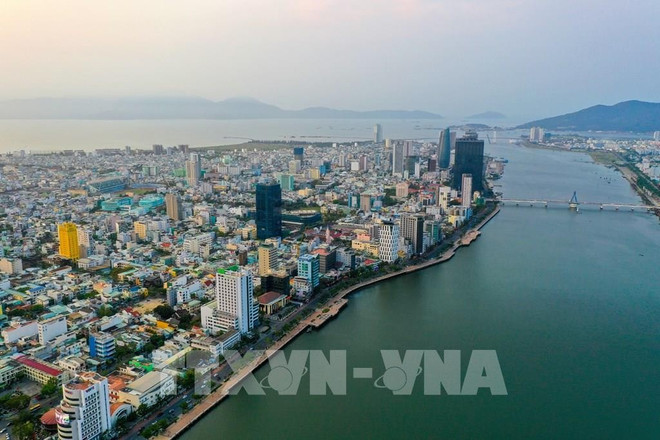
Da Nang has emerged as a key player in Vietnam’s financial innovation strategy. Its strategic location near major Asian financial hubs, modern infrastructure, dynamic business environment, and high quality of life position it well to become a regional financial node. According to Associate Professor Dr Dang Tung Lam from the Da Nang University of Economics under the University of Da Nang, plans to develop a free trade zone in Da Nang are a strategic step toward deeper financial and commercial integration.
In practice, Da Nang is already leading in three critical areas - green finance aligned with sustainable development goals, trade finance powered by a free trade zone model that enables regulatory flexibility, and digital finance and innovation, driven by sandbox mechanisms that allow for safe experimentation of new financial technologies.
With the IFC in place, Da Nang will attract significant capital inflows, providing a powerful engine for local development, said Chinh.
Sandbox: Open lab for financial innovation
The sandbox mechanism is emerging as a key catalyst in Vietnam’s financial innovation ecosystem. According to Ben El-Baz, CEO of HashKey Group (Hong Kong, China), sandbox environments allow fintech startups and innovators to test new ideas and business models without the constraints of traditional financial regulations. Crucially, it also enables public-private collaboration in refining both product offerings and the legal framework.
Vietnam has institutionalised this mechanism through Decree No. 94/2025/ND-CP, issued on April 29, 2025, and effective from July 1, 2025. The decree establishes a controlled trial framework (sandbox) in the banking sector, allowing credit institutions and fintech firms to pilot three types of services: credit scoring, data sharing via open APIs, and peer-to-peer (P2P) lending.
Each trial is limited to two years, with potential extensions. Participants must operate within their licensed scope, report periodically, manage risk effectively, and protect consumers. This framework lays the groundwork for a modern financial ecosystem aligned with global service trends.
Vietnam is among the first in the region to enshrine sandbox regulations in banking law — an important step toward broader financial innovation. However, as noted by Associate Professor Dr Phan Dung of the Foreign Trade University, further expansion is needed. By opening APIs, for example, businesses could integrate financial services into tech platforms, creating new models that meet diverse market needs while remaining under appropriate regulatory oversight.
This focus on institutional experimentation — not just infrastructure — reflects Vietnam’s forward-looking IFC strategy. The dual-location model relieves pressure on any single city while enhancing national agility in responding to global financial shifts. Within this framework, Da Nang acts as an “open laboratory” for testing innovative products, policies, and technologies before scaling them nationally.
For the dual-centre model to succeed, experts stressed the need for clearly defined roles for each location. As Dr Lam emphasised, the goal is not internal competition but strategic complementarity, with each city playing a distinctive role in a unified national strategy.
Equally vital is coordinated investment in both “hard” and “soft” infrastructure — including logistics, smart transport, urban financial spaces, digital technology, institutional agility, and skilled human resources. These foundational elements are key to building true global competitiveness.
If implemented effectively, Vietnam could secure a new position on the global financial map within the next 10 to 15 years, according to McClellan.
Experts held that Da Nang can be the launchpad for the country’s next-generation financial landscape. Strategic vision, flexible execution, and open collaboration will be critical to shaping a sustainable financial future for Vietnam in this era of transformation./.