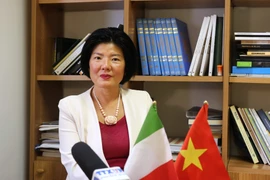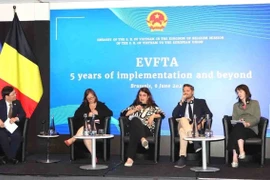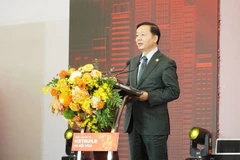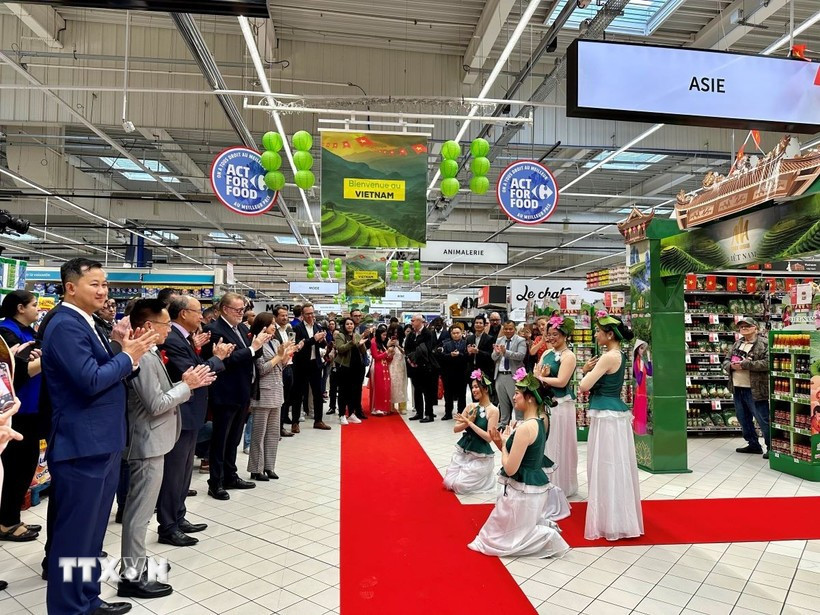
Paris (VNA) - Vu Anh Son, Head of the Vietnam Trade Office in France, expressed optimism about the prospect of Vietnam-France cooperation under the EU-Vietnam Free Trade Agreement (EVFTA), affirming that five years after implementation, the agreement has significantly propelled bilateral trade.
In an interview with the Vietnam News Agency (VNA) in Paris on the occasion of the fifth anniversary of the EVFTA’s entry into force, Son noted that the agreement has not only delivered economic benefits but also played a strategic stabilising role in Vietnam-France relations.
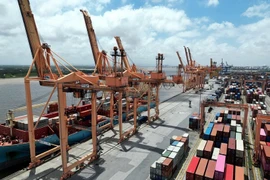
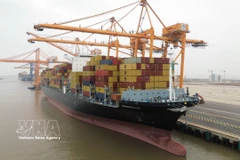
He emphasised that five years on, bilateral trade has grown impressively in both scale and resilience, withstanding unprecedented global supply chain disruptions. Between 2021 and 2024, Vietnam-France trade rebounded strongly, with Vietnamese exports to France increasing from 6.1 billion USD to 7.5 billion USD, a 23% rise that far surpasses the pre-COVID-19 peak of 6.5 billion USD in 2019. Beyond tariff advantages, the EVFTA has spurred reforms in rules of origin, improved goods management quality, and broadened access to logistics, finance, and insurance services.
A key milestone was the official upgrade of bilateral ties to a "Comprehensive Strategic Partnership" during General Secretary To Lam’s visit to France in October 2024. This not only strengthened political and diplomatic links but also ushered in a new era of deeper economic and trade cooperation, with bilateral trade expected to sustain annual growth of 6–7% and reach 12–15 billion USD in the coming years.
Regarding investment, the EVFTA has played a pivotal role through commitments on investment protection, national treatment, and most-favoured-nation status. Capital from France has flowed into high-value-added sectors such as precision engineering, renewable energy, environmental technology, pharmaceuticals, and high-tech agriculture.
Son attributed the success of these sectors to three key factors: direct competitive advantages from tariff preferences, favourable timing amid Europe’s push to diversify supply chains, and the internal capacity and proactiveness of Vietnamese enterprises.
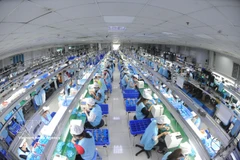
Textiles and footwear have been among the most immediate and clear beneficiaries of the EVFTA. The gradual elimination of tariffs has enhanced the price competitiveness of Vietnamese products. French retail giants like Decathlon have seen a significant increase in orders from Vietnam as a result.
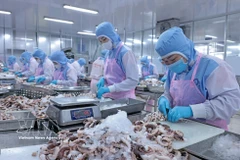
The agriculture and seafood sectors have also seen remarkable growth, demonstrating their ability to penetrate high-standard market segments.
Electronics, machinery, and components constitute Vietnam’s largest export group to France, playing a critical role in global supply chains. Vietnam has emerged as a key hub for the production and assembly of electronic goods, with phones, computers, and electronic components making up a substantial share of exports to France and the EU.
The most pressing challenges stem from new EU sustainability policies. The Corporate Sustainability Due Diligence Directive (CSDDD) mandates that large companies be legally accountable for negative impacts on human rights and the environment throughout their supply chains. Meanwhile, the Carbon Border Adjustment Mechanism (CBAM) imposes a “carbon tax” on energy-intensive imports, which could undermine the competitiveness of Vietnamese goods not produced through “green” processes.
According to Son, Vietnam can turn these challenges into advantages by aligning its implementation of the Just Energy Transition Partnership (JETP) with compliance strategies for CBAM and CSDDD requirements.
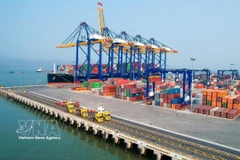
To move up the value chain and overcome these hurdles, Son proposed three strategic pillars for Vietnam. First, build strong domestic industrial capacity. Vietnam must shift from passive FDI attraction to a proactive industrial policy, targeting support industries and upstream investment in textiles, specialised chemicals, and high-tech components. Second, modernise logistics and digital infrastructure to reduce costs and enhance competitiveness. Third, develop a skilled workforce aligned with the demands of emerging industries and international standards.
He also underscored the importance of proactive economic diplomacy. Vietnam should actively negotiate mutual recognition agreements (MRAs) with the EU on conformity assessment and technical standards to reduce export certification burdens. In parallel, it should work with the European Commission to secure equivalence for Vietnam’s carbon pricing and greenhouse gas reporting standards, thereby mitigating CBAM impacts.
With the newly upgraded Comprehensive Strategic Partnership, Son expressed his hope for breakthroughs in Vietnam-France economic and trade ties. Vietnam is increasingly asserting itself not just as a manufacturing base, but as an essential and indispensable link in the global value chain, he noted./.