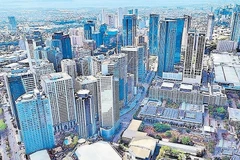
Tokyo (VNA) - A new centre that provides specialised education for young people who want to work in Japan has opened at Marikina Polytechnic College in Marikina City, the Philippines.
The facility was established in response to a growing shift in the Filipino labour force from the Middle East to Japan, where workers are seeking safer working environments.
The centre is the result of a four-party collaboration between Tokyo-based Onodera User Run, the Marikina City administration, Marikina Polytechnic College, and the town of Sakai in Ibaraki Prefecture, Japan. Under the partnership, Marikina City is providing classrooms at the college free of charge, while Onodera User Run is responsible for recruitment, training, and employment support in Japan.
It targets young people aged 17 to 30, offering six months of training. Upon graduation, trainees will be eligible to work across Japan, with some expected to take up positions in private factories or nursing care facilities in Sakai Town.
Masahiro Hashimoto, Mayor of Sakai Town in Ibaraki Prefecture, said the local administration will offer housing support to incoming Filipino workers by repurposing vacant homes in the area. He emphasised the goal of turning this project into a model for local-level public-private partnerships, helping to address Japan’s labour shortages while fostering mutually beneficial cooperation.
“Specified skilled worker” is a residency status that allows foreign nationals to work in industries facing labour shortages in Japan, such as caregiving and hospitality. Those who have not previously participated in the Technical Intern Training Programme must pass Japanese language and professional skills tests before entering Japan. To support this, the newly opened centre will offer free training in both the Japanese language and job-specific skills for prospective workers.
Data from the Philippine Statistics Authority show that over half of the more than 2 million overseas Filipino workers are employed in Middle Eastern countries, with 20% in Saudi Arabia and 13.6% in the United Arab Emirates. In contrast, only 4.5% are currently working in Japan. However, due to increasing instability in the Middle East, many Filipinos considering work abroad are becoming more cautious about migrating to the region./.