Foreign media impressed by Vietnam’s robust economic growth

This outcome far exceeds expectations, aligning with the Vietnamese Government’s ambitious target of 8.2–8.5% growth this year and surpassing forecasts from international financial institutions such as the World Bank (6.6%) and the International Monetary Fund (6.5%).

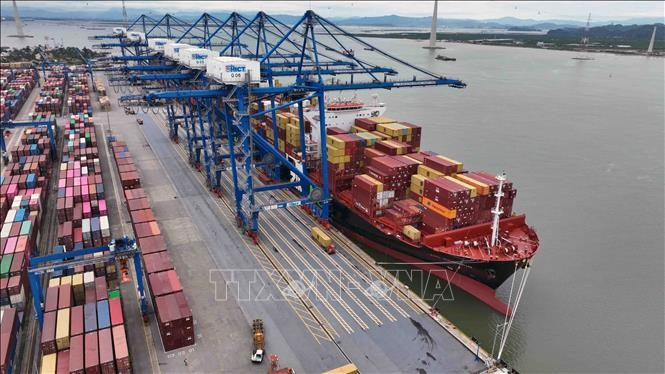
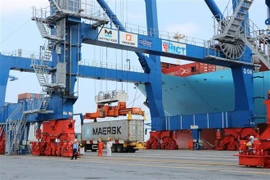
Loading and unloading exports at Hai Phong port (Photo: VNA)

Hanoi (VNA) – Asian and Western news outlets such as channelnewsasia.com and uz.kursiv.media, have praised Vietnam’s impressive economic growth, noting that the Southeast Asian economy is showing strong resilience despite the effects of recent US tariff policies.

This outcome far exceeds expectations, aligning with the Vietnamese Government’s ambitious target of 8.2–8.5% growth this year and surpassing forecasts from international financial institutions such as the World Bank (6.6%) and the International Monetary Fund (6.5%).

According to sources, key drivers of Vietnam’s economic growth include foreign direct investment (FDI) with 18.8 billion USD - the highest in five years; industrial production (up 9.1% in the first nine months); international tourist arrivals (up 21.5%) and retail sales (growing 11.3%). The country’s inflation remains within the target range. These positive economic indicators have boosted the stock market, reflecting investors’ confidence in the economy’s fundamentals.

Khmer-language media in Cambodia have also been impressed by Vietnam’s growth data, noting that, from a technical perspective, the country’s current growth momentum reflects long-term political stability and achievements Vietnam made during nearly 40 years of economic reform.

The UK-based site finimize.com noted that Vietnam’s rapid expansion leads the way, while Australia, Thailand, and others grapple with softer inflation and cautious consumer sentiment across Asia.

Vietnam’s success highlights the payoff of strong policy and trade ties, it said, noting that the country’s economy has outperformed expectations in 2024–2025, despite a weaker local currency, ranking among the region’s leading economies in GDP growth and inflation control.

Vietnam’s growth demonstrates the resilience of emerging economies. Strong production and export performance have helped the country withstand currency fluctuations and global instability. Supply chains continue to shift to Vietnam, and with low unemployment and stable consumer spending, the Southeast Asian nation proves that emerging economies can sustain growth momentum even under currency pressure./.

VNA
See more

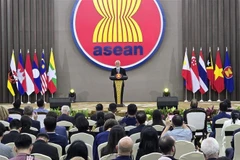
The forum on ASEAN's role in the Indo-Pacific region and prospects for cooperation with Argentina takes place on September 10 (Photo: VNA)

ASEAN highlights its central role in Indo-Pacific

The Ambassador of Indonesia, the country holding the rotating chairmanship of ASEAN in Argentina, stressed that maintaining peace and stability, along with an open, transparent regional environment based on mutual respect, are fundamental conditions for a peaceful, inclusive, and prosperous Indo-Pacific.

A street in Bangkok, Thailand. (Illustrative photo: Xinhua/VNA)

Thailand’s business activity shows signs of gradual recovery

As of August 31, Thailand had more than 1 million active legal entities with total registered capital of 24.13 trillion THB. The service sector accounted for the largest share, with 552,830 entities, or 54.48%, followed by wholesale and retail with 332,791 entities (32.79%) and manufacturing with 129,215 (12.73%).

Prime Minister Hun Manet (front row, centre) and Labour and Vocational Training Minister Heng Sour (front row, right) visit a garment factory in Preah Sihanouk province. MLVT (Photo: khmertimeskh.com)

Cambodia records 7,458 more enterprises in three years

A Cambodian official said that the growth should not be assessed solely by the number of newly established enterprises and facilities, but also by their contributions to investment, production, job creation and household incomes.

The ASEAN Senior Officials’ Meeting (SOM) convenes in Manila, the Philippines, on September 9. The Vietnamese delegation is led by Deputy Minister of Foreign Affairs Dang Hoang Giang (fifth, left), head of the ASEAN-Vietnam SOM.(Photo: asean.org)

Vietnam calls for stronger ASEAN unity, resilience

Deputy Minister of Foreign Affairs Dang Hoang Giang urged ASEAN to make full use of existing mechanisms to enhance dialogue, build trust and prevent risks and conflicts, particularly by strengthening the Treaty of Amity and Cooperation in Southeast Asia (TAC), the Southeast Asia Nuclear Weapon-Free Zone Treaty (SEANWFZ), and cooperation based on international law.

Timor-Leste President Jose Ramos-Horta (Photo: VNA)

Timor-Leste diversifies economy, seeks to attract investment

The President noted Timor-Leste is pursuing sustainable development, stronger regional connectivity and expanded international cooperation while seeking investment opportunities in energy, tourism and emerging economic sectors to reduce its dependence on oil and gas revenues.

Minister Counsellor Nguyen Hai Luu, Deputy Permanent Representative of Vietnam to the UN (Photo published by VNA)

Vietnam cooperates with UN to advance gender equality

Minister Counsellor Nguyen Hai Luu highlighted Vietnam’s positive achievements in promoting gender equality, noting that 13 of the 20 targets under the national strategy on gender equality had been met or exceeded by 2025.

General Secretary of the Communist Party of Vietnam Central Committee and President To Lam meets with Russian President Vladimir Putin in Moscow on September 9, 2026. (Photo: VNA)

Russian public, experts praise top Vietnamese leader’s visit

Positive reactions to General Secretary and President To Lam’s visit have reaffirmed Vietnam’s steady foreign policy amid global changes, while highlighting the enduring trust and friendship between Vietnam and Russia, which are working together to create new breakthroughs in bilateral cooperation.

Thailand eases rules for foreign enterprises

Thailand eases rules for foreign enterprises

The regulatory adjustment is part of Thailand's efforts to simplify regulations governing foreign business operations and clarify licensing requirements, while simultaneously fostering economic development and enhancing the country's international competitiveness.