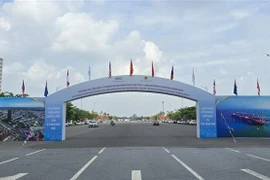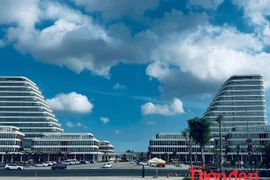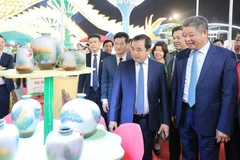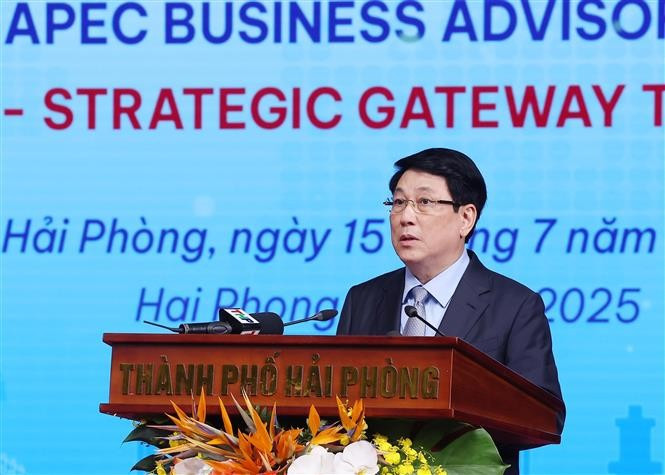
Hanoi (VNA) – State President Luong Cuong attended the Hai Phong Investment Promotion Conference in the northern port city on July 15, during which he affirmed that the event conveys a message of Vietnam’s proactive approach to comprehensive integration, its development aspiration, and its strong commitment to improving the investment environment.
The conference, themed “Hai Phong – Strategic Gateway to the New Era”, is held within the framework of the third meeting of the APEC Business Advisory Council (ABAC III). It also saw presence of more than 1,200 delegates from government agencies and Hai Phong city, businesses from 21 APEC economies, foreign diplomatic missions in Vietnam, executives of foreign-invested enterprises operating in the country, and major Vietnamese corporations.
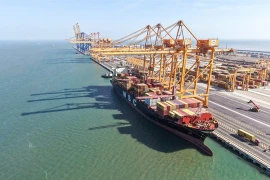
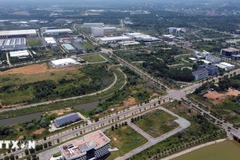
Addressing the event, President Cuong said that amidst rapid changes in geopolitics, technology, and the investment and business environment, adaptability and innovation are vital for the survival of any economy. Hai Phong, with its ecosystem of seaports, industrial zones, and smart urban areas, exemplifies these essential qualities.
He noted that Vietnam is currently one of Asia’s standout performers in terms of economic growth. In 2024, the country recorded a total import-export turnover of over 786 billion USD, ranking among the world’s top 20 trading nations. It has also emerged as an attractive investment destination and an increasingly important link in global production and supply chains.
Hai Phong, in particular, serves as the largest export gateway in the northern region, playing an ever-growing role in the regional network, he stated.
In this context, the leader welcomed investors from Asia, Europe, the Americas, and APEC economies who have chosen Hai Phong as the site for major projects, ranging from supporting industries, electronics manufacturing, and high technology to innovation hubs and smart logistics services.
Praising ABAC for placing key issues such as digital trade, sustainable development, green energy, and smart logistics on its agenda, President Cuong emphasised that these are also strategic pillars in the development plans of both Hai Phong and Vietnam in the coming period.
He expressed his hope that businesses will go beyond merely exploring investment opportunities to co-create value, share knowledge, and work towards a more open, inclusive, and resilient Asia-Pacific in the face of global uncertainties.
The President affirmed that Vietnam remains committed to maintaining political stability, advancing strong institutional reforms, safeguarding the rights and legitimate interests of investors, and enhancing connectivity, not only in terms of infrastructure, but also in governance, data, and human resources.
Through this important event, he showed his hope that investors will not only experience the warmth and hospitality of the host, but also recognise the vision, decisiveness, ambition, and promising cooperation opportunities offered by Hai Phong.
He also described the conference as a crucial platform to discover new partners, connect fresh initiatives, and open up the next phases of development.
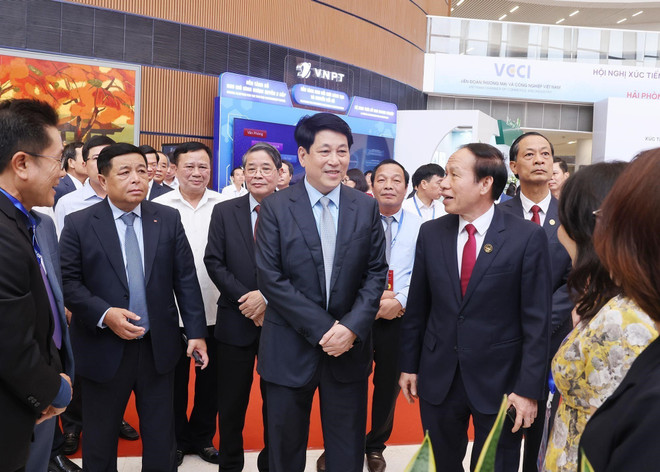
In his remarks, Secretary of the municipal Party Committee Le Tien Chau said Hai Phong is determined to develop based on the pillars of science – technology, innovation, digital transformation, green transition, and inclusive development. The city will take bold actions through four strategic breakthroughs, namely developing a southern coastal economic zone, establishing a next-generation free trade zone, creating a modern, open and enabling institutional framework, and attracting of high-quality human resources, he said
Chau affirmed Hai Phong’s ambition to become a peer to Asia’s standout cities, turning itself into a modern international seaport city, and serve as a regional hub for economy, culture, education, training, and science – technology. Boasting a strategic location, outstanding potential, superior institutional frameworks, and strong political will, Hai Phong stands ready to welcome investors for long-term partnership and growth.
At the conference, investors got insights into the city’s potential, advantages, and strategic investment opportunities. They expressed their confidence in the increasingly improving investment climate, while promising to further study, expand investment, and accompany the city’s development. They also provided the city's leaders with various solutions and creative models to better the investment environment, contributing to the city’s socio-economic development, and the Red River Delta’s as a whole.
On the occasion, Vice Chairman of the National Assembly Nguyen Duc Hai presented the parliament’s resolution on piloting several special mechanisms and policies for Hai Phong’s development.
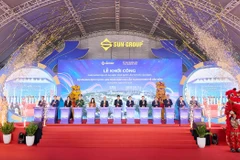
Besides, the city’s leaders handed over investment registration certificates and memoranda of understanding (MoU) on cooperation to domestic and international investors. These large-scale projects serve as important driving forces for Hai Phong's development, with total registered capital reaching over 15.6 billion USD for 32 projects and seven MoUs./.