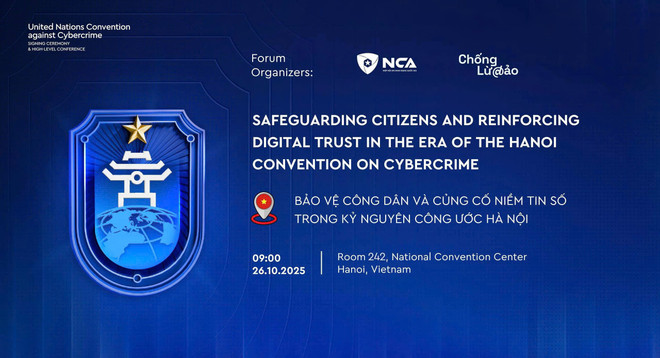
Hanoi (VNA) – As cybercrime spreads amid the rapid growth of the Internet, artificial intelligence (AI), blockchain, and digital technologies, the need for comprehensive international cooperation in combating cybercrime has become more urgent than ever. The United Nations Convention against Cybercrime (Hanoi Convention) has emerged to meet this demand, establishing a global legal framework for digital security cooperation.
A turning point in global cooperation
Vietnam’s capital will host the signing ceremony and high-level conference of the convention, themed "Countering Cybercrime – Sharing Responsibility – Securing our Future," on October 25-26. The event will bring together the UN Secretary-General, heads of state, and leaders from over 100 countries, along with dozens of international delegations, underscoring the scale of this new global cooperation initiative in the digital era.
Adopted by the UN General Assembly nearly a year ago, the Hanoi Convention aims to provide a unified legal framework to prevent, investigate, and prosecute cross-border cybercrimes, facilitate electronic evidence sharing, coordinate joint investigations, and establish training and technical assistance networks among nations. This is the first UN convention on cybercrime in over two decades, since the Budapest Convention (2001), symbolising the world’s renewed commitment to building a secure, stable, and humane cyberspace.
A trusted bridge
According to Dr Vu Viet Anh, a researcher at the UK-based Cambridge Cybercrime Centre, the adoption of the pact carries profound symbolic significance, as Vietnam serves as a trusted bridge between developed and developing countries, fostering dialogue based on equality, respect for sovereignty, and mutual benefit. He noted that in a world where nations differ in cyber governance and legal systems, Vietnam’s flexible intermediary role reflects its maturing multilateral diplomacy and active contributions to shaping emerging international norms. Sharing the same view, Professor Carl Thayer, from the Australian Defence Force Academy at the University of New South Wales, observed that the selection of Vietnam as host reflects its rising cyber security capacity and international stature. He pointed out that Vietnam now ranks 17th among 194 countries in global cyber security capacity, and has earned international recognition for its diversified and proactive diplomacy.
Associate Professor Dr Pham Duc Son of Curtin University (Australia), a member of the Vietnam-Australia Scholars & Experts Association (VASEA), added that the event also highlights Vietnam’s growing influence in shaping global digital governance. He noted that the convention positions Vietnam not just as a participant but as a creator of international consensus, helping nations unite against one of the most complex challenges of the digital age. In many ways, it will bear Vietnam’s name as a symbol of peace, trust, and shared responsibility in the digital era.
A legal shield
According to Dr Son, the Hanoi Convention builds upon and expands the effectiveness of the Budapest Convention to a truly global scope, enabling nations, regardless of their level of development, to share information, assist in investigations, and harmonise legal procedures in tackling cross-border cybercrime. It serves as a comprehensive cooperative platform, ensuring that every country has a voice in building global cyber security.
Echoing this view, Algeria’s daily newspaper Cresus described the Hanoi Convention as not only a legal instrument but a humanistic vision for the digital future, placing human rights and privacy at its core. Ghada Waly, Executive Director of the UN Office on Drugs and Crime (UNODC), stressed that this is a historic milestone, paving the way for unprecedented global cooperation in the fight against cybercrime. According to the World Economic Forum’s Global Cybersecurity Outlook 2025, global losses from cybercrime in 2024 exceeded 1 trillion USD, with some nations losing over 3% of GDP. Disparities between national legal systems have created loopholes exploited by cybercriminals, making the need for a common legal framework increasingly critical. The Hanoi Convention is expected to fill this gap, enabling effective cross-border coordination, enhancing traceability, and strengthening global user protection.
At the regional level, Thong Mengdavid, geopolitical analyst at the Institute for International Studies and Public Policy under the Royal University of Phnom Penh (Cambodia), noted that it could accelerate ASEAN’s legal integration in cyber security, especially in managing and sharing electronic evidence and strengthening judicial cooperation.
At the national level, the convention opens opportunities for Vietnam to enhance cooperation in investigation, technology transfer, and specialised training, expanding its domestic cyber security market and boosting digital self-reliance. Vietnam’s Law on Cybersecurity (2019) has already provided a strong legal foundation for protecting citizens and businesses from threats such as ransomware, online fraud, data theft, terrorism, and attacks on critical infrastructure. As a result, Vietnam ranked among the top 20 nations in global cyber security in 2024, with over 80% of its population active in the digital space.
Ahead of the event, State President Luong Cuong affirmed Vietnam regards combating cybercrime as a priority in its national security policy and remains committed to working closely with the international community in the fight against cybercrime. Given the borderless nature of cyberspace, effective action requires solidarity, cooperation, and rule of law.
The Hanoi Convention, therefore, stands not only as a legal shield protecting global cyberspace, but also as a symbol of Vietnam’s proactive, responsible, and innovative role in shaping a safe, trusted, and humane digital environment for all. As the host city, the capital affirms Vietnam’s position as a reliable and responsible partner in building a secure and transparent cyberspace.
The convention also represents a tangible step toward implementing the Politburo’s Resolution No. 57-NQ/TW on breakthroughs in science, technological innovation, and national digital transformation, paving the way for Vietnam’s robust development in the new era./.