Ho Chi Minh City (VNA) – Ho Chi Minh City is banking on its trade and service sector to drive double-digit gross regional domestic product (GRDP) growth in 2026, with retailers, industry associations and authorities expecting recovering consumer demand, year-end stimulus programmes and an expanding commercial ecosystem to provide fresh momentum for the city's economy.
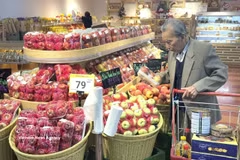
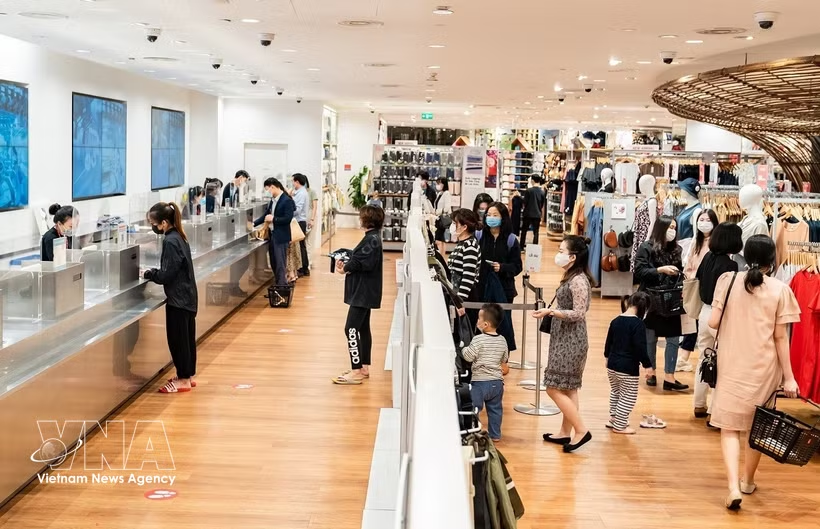
Modern retail chains have already reported stronger sales. WinMart/WinMart+ posted revenue of nearly 23 trillion VND (875.8 million USD) in the first six months of 2026, up 28% year-on-year, while serving around 1.6 million customers daily, a 24% increase. The retailer also maintained its rapid expansion, opening an average of three new stores each day to surpass 5,100 outlets nationwide.
Dam Duc Anh, Regional Director of WinMart supermarket chain, attributed the performance to consumers' increasing preference for modern retail channels and the company's continued investment in technology, data, supply chains and store formats tailored to local markets.
MM Mega Market Vietnam also reported a 10-15% rise in sales compared with the same period last year. While consumers are still spending cautiously, but confidence is clearly improving. More households are buying in bulk to save costs and increasingly favouring safe, traceable food products and private-label goods offering reliable quality at reasonable prices.
Beyond expanding store networks, retailers are investing in integrated consumer ecosystems to enhance customer experiences and encourage longer engagement.
Nguyen Ngoc Thang, Deputy General Director of Saigon Co.op, said modern retail should create added value rather than rely solely on price competition. The cooperative is developing shopping centres, hotels linked with retail, office-service complexes and partnerships to combine shopping, leisure and services into a unified ecosystem centred on consumers.
The final months of the year, covering the back-to-school season, Mid-Autumn Festival, Christmas and Tet (Lunar New Year), traditionally account for the largest share of annual retail sales. Businesses have, therefore, launched extensive promotional campaigns.
MM Mega Market is rolling out discount programmes, agricultural product weeks and competitive pricing while maintaining price stabilisation commitments, ensuring food supplies, expanding omni-channel sales, offering four-hour delivery services and promoting cashless payments through its MCard application.
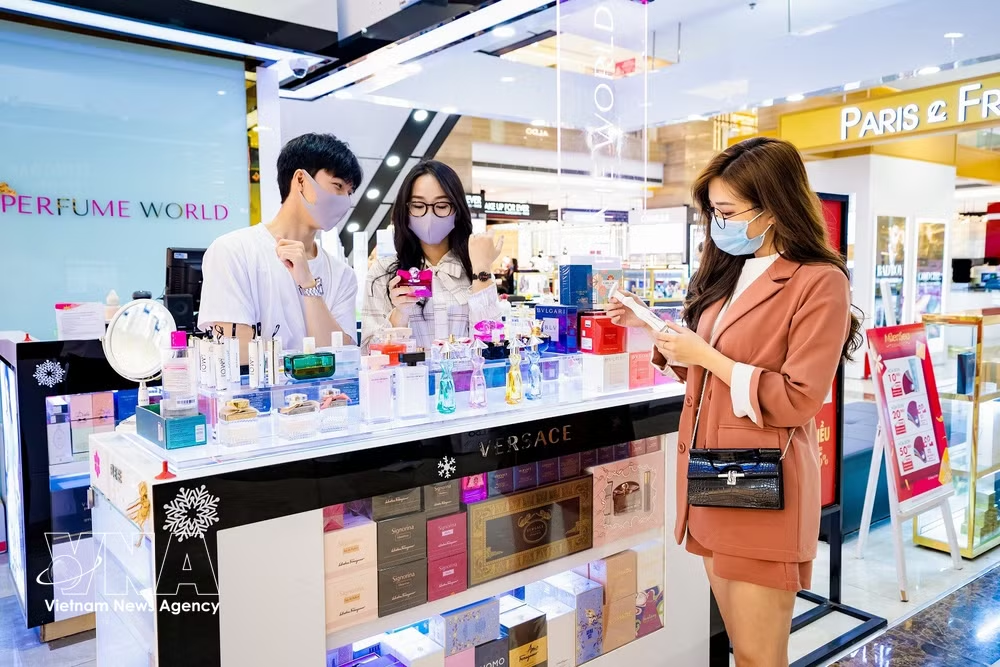
WinMart will continue offering promotions such as "buy one, get one free" and discounts of over 50% on many essential goods to help ease household spending.
Retailers are also strengthening regional linkages to bring more local specialties into distribution systems while supporting cooperatives and farmers in improving product quality and developing stable raw material areas.
Growth drivers
Despite improving consumption, businesses remain cautious about the second half of the year due to inflationary pressures, volatile input costs, household incomes and global economic uncertainties.
Nguyen Minh Hung, Deputy Chief of the Trade Management Division under Ho Chi Minh City's Department of Industry and Trade, said that expanding consumption spaces will be as important as promotional campaigns if the trade sector is to contribute more significantly to growth.
The department is continuing programmes to improve product quality control, including the "Green Tick of Responsibility" initiative, to strengthen consumer confidence in safe and traceable products.
It also aims to tap spending from both local residents and domestic and international tourists by developing shopping destinations, the night-time economy, regional specialty centres, souvenir hubs and integrated commercial-service complexes.
Ly Kim Chi, Chairwoman of the Ho Chi Minh City Food and Foodstuff Association, said lower logistics costs, more reasonable fees, continued access to affordable credit and stronger support for green transition and technological innovation would encourage businesses to participate more actively in the city's demand stimulus programmes.
Economist Huynh Phuoc Nghia said retail would remain the foundation of stable consumption, but stronger long-term growth would come from integrating commerce with higher-value services such as tourism, logistics, finance, cultural industries and technology-based business models.
With domestic demand recovering, tourism expanding and new consumption spaces emerging, the trade and service sector is expected to become not only the outlet for production but also a catalyst for broader economic growth, helping Ho Chi Minh City achieve its ambitious double-digit GRDP target in 2026, he added./.