Hanoi (VNA) – The Politburo's Resolution No. 10-NQ/TW on the foreign-invested economic sector, newly issued by the Politburo, is expected to reshape the country's investment strategy by prioritising high-quality capital, technology transfer and stronger linkages with domestic firms, laying the foundation for a more innovative, self-reliant and sustainable growth model, said insiders.
The resolution calls for a shift in development mindset, positioning FDI as a key driver of growth model transformation, with a focus on quality, value addition and continuous improvement of intrinsic capacity and self-reliance of the economy. Many experts and businesses believe the policy provides a timely strategic boost, helping Vietnam to capitalise on the ongoing global supply chain realignment.
Golden opportunity for high-quality investment
The resolution targets 200-300 billion USD in registered FDI by 2030, with emphasis on attracting technology-intensive and, high-value projects instead of labour-intensive manufacturing. It also seeks to deepen the participation of Vietnamese enterprises in global value chains by making science, technology and innovation the foundation of future growth.
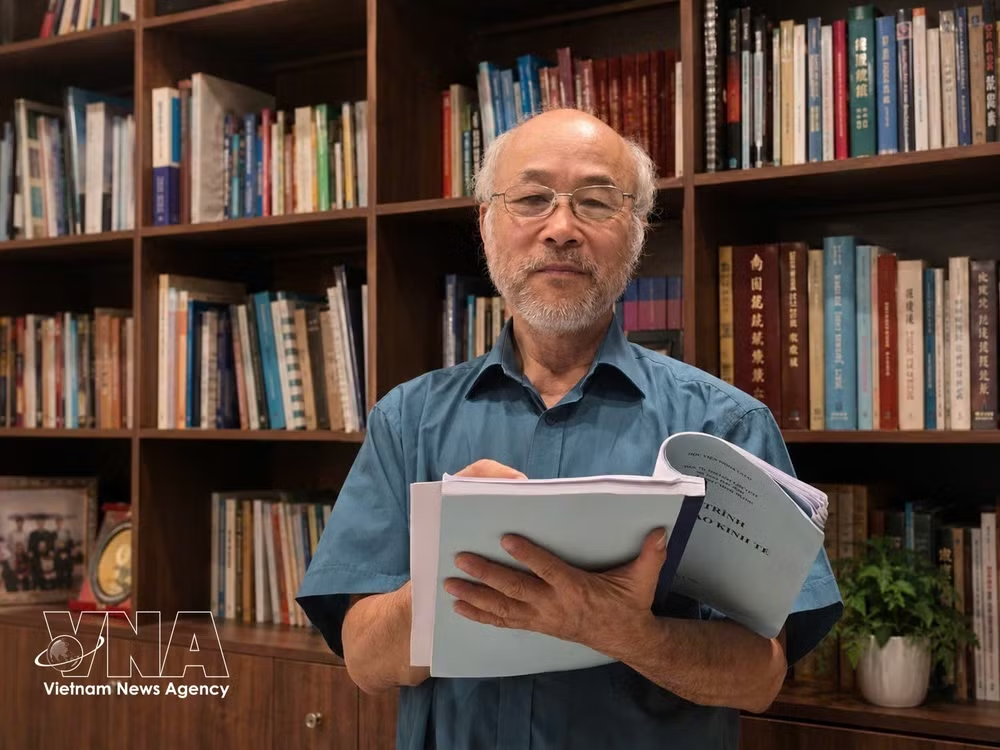
Assoc. Prof. Dr. Nguyen Van Lich from the University of Transport Technology said the target is achievable given Vietnam's strong performance in investment attraction. Annual FDI commitments currently stand at around 40 billion USD, while disbursed capital remains stable at approximately 30 billion USD, making the goal of attracting 50 billion USD per year realistic.
The greater challenge is how to draw more investment from developed economies, he said. Vietnam's favourable investment climate, political stability, strategic location and pro-business policies have earned recognition from international organisations such as the World Bank, the European Chamber of Commerce in Vietnam (EuroCham), and the American Chamber of Commerce (AmCham), creating what he described as a "golden opportunity" to attract high-quality capital inflow.
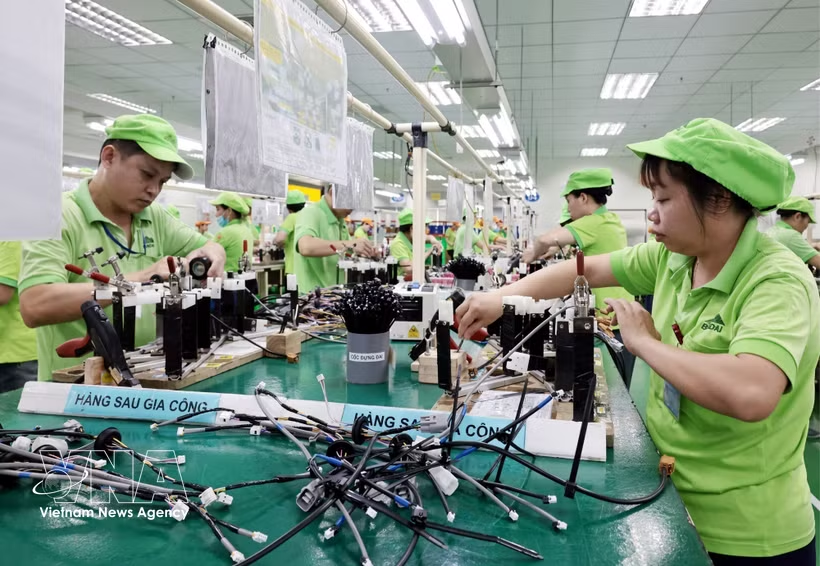
Resolution No.10 also aims to raise localisation rates in key industries to 40-50% and enable around 10,000 Vietnamese firms to join FDI supply chains. However, weak linkages between foreign-invested and domestic enterprises remain a major obstacle, as many local firms have yet to meet international standards on product quality, technological capability, corporate governance and delivery schedules, among other requirements.
To achieve these goals, Lich proposed targeted policies, including preferential credit for technology upgrades, stronger technology transfer, high-quality workforce training, building a national supplier development programme, incentives tied to cooperation between foreign and domestic firms, and consolidating the supporting industry ecosystem.
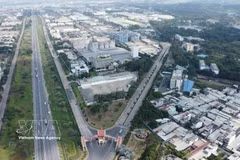
Lich also stressed that smart logistics and infrastructure have become more important than low labour costs in attracting next-generation FDI. He recommended expanding multimodal transport networks, drastically reducing intermediary logistics costs, building modern logistics hubs linked to key economic regions; making substantial investments in digital infrastructure; and adopting a transparent and long-term planning vision.
Strategic investors may be willing to accept slightly higher production costs, but they cannot tolerate an unstable logistics chain. Prioritising investment in transport and logistics infrastructure at this stage is therefore a direct investment in strengthening the country's competitiveness and ensuring that Vietnam's development stays on course toward becoming a modern economy with deep international integration, the expert stressed.
Prioritising advanced technology projects with strong regional linkages
The resolution also reflects Vietnam's broader shift from extensive growth to a development model that prioritises advanced technology, environmental sustainability and stronger regional connectivity.
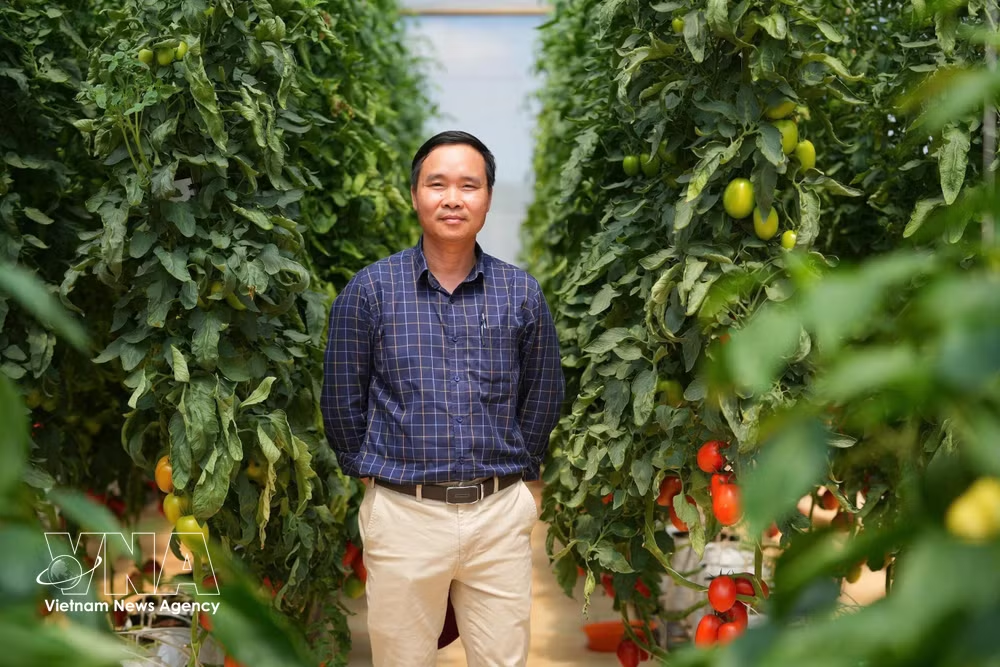
Dang Van Nien, General Director of Rijk Zwaan Vietnam Co., Ltd., said long-term strategic production planning is one of the top priorities for FDI firms when deciding where to invest.
According to him, companies are increasingly drawn to localities with clear long-term planning, well-connected interregional transport infrastructure, and a reliable supply of raw materials for agro-processing plants.
However, he noted that legal uncertainty remains a concern in some localities. Ambiguous regulations on facilities serving agricultural production, such as high-tech greenhouses, can create unnecessary barriers and undermine investor confidence, directly affecting their long-term investment decisions.
Drawing on years of experience in the FDI sector, Nien said Vietnam should further improve investment policies and strengthen the legal framework governing intellectual property rights, copyright protection, competition and import support to encourage closer cooperation between foreign investors and Vietnamese partners.
Rijk Zwaan is currently studying locations for specialised crop research stations in the northern and southern deltas, and is considering establishing seed production facilities in the country, provided legal certainty and investment security are ensured.
Leveraging its global customer network, the company also plans to support Vietnamese producers in exporting fresh and processed agricultural products, helping integrate the country's agriculture more deeply into global economic value chains, Nien said./.