Hanoi (VNA) – Vietnam is moving to turn medical tourism into a key growth sector as the Ministry of Health is finalising a national strategy on medical tourism development for the 2026-2030 period with a vision to 2040.
The draft strategy aims to position Vietnam as a trusted healthcare destination in Southeast Asia by 2030 and eventually among Asia's leading medical tourism hubs. The plan marks a shift from viewing medical tourism as an untapped opportunity to making it a national development priority.
Experts said Vietnam has several advantages, including skilled healthcare professionals, modern medical technologies and treatment costs that are much lower than in many other countries.
Dental care remains one of the country's strongest attractions. According to Dr. Kieu Quoc Thoai of Ho Chi Minh City University of Medicine and Pharmacy, the number of international patients seeking dental treatment in Vietnam has increased steadily.
Besides foreign residents from Japan, China and Taiwan (China), many overseas Vietnamese from the US, Japan and Australia also return home for treatment, often combining healthcare with family visits and holidays.
Many dental procedures can be completed within one or two weeks, allowing visitors to receive treatment while exploring the country.
Competitive pricing is another major advantage. A dental implant in Vietnam typically costs 1,000-1,500 USD, compared with three to four times that amount in countries such as the US and Australia, even when the same implant systems and materials are used. Invisalign treatment also costs around 4,000-5,000 USD in Vietnam, compared with about 10,000 USD in Japan.
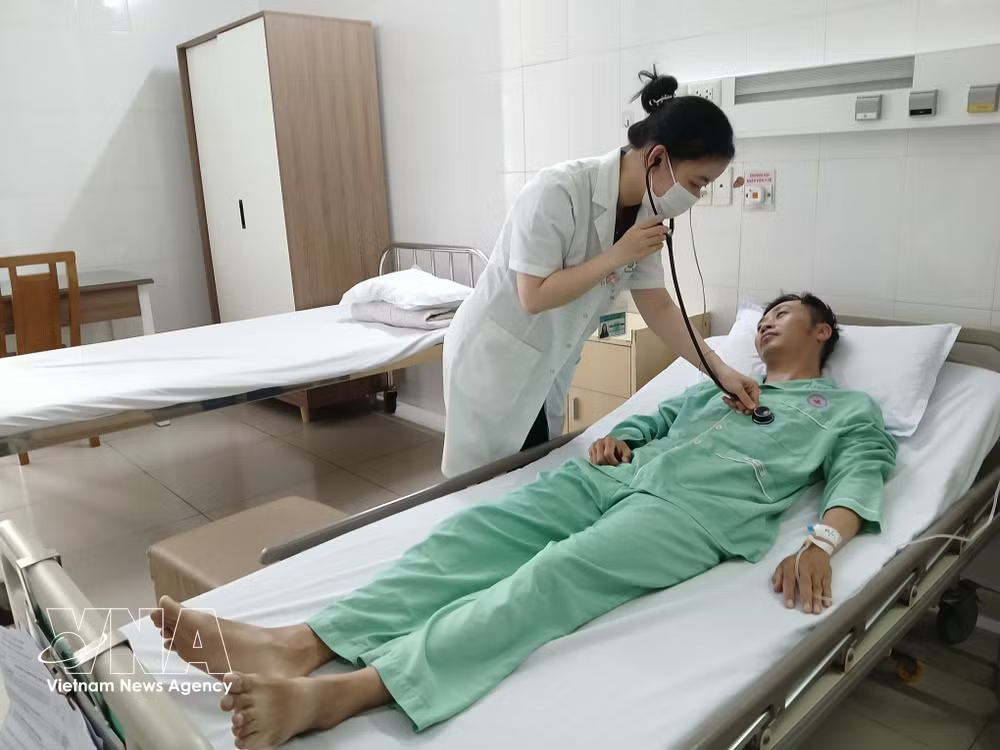
(Photo: VNA)
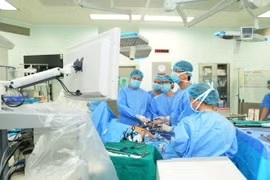
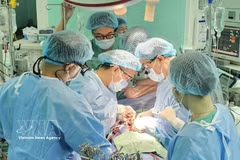
Vietnam's medical tourism sector has also expanded beyond dental care. Advanced treatments, including cardiovascular interventions, organ transplants, in-vitro fertilisation (IVF) and robot-assisted surgery, are now available at many major hospitals and attract tens of thousands of foreign patients each year.
The Ministry of Health's data show that around 300,000 foreign nationals and overseas Vietnamese travel to Vietnam annually for medical services, with more than 50,000 requiring inpatient treatment.
Vietnam has also become a leading IVF destination in Southeast Asia, performing more than 50,000 new treatment cycles each year. Success rates range from 40% to 50%, with some leading centres reporting rates of up to 70%, compared with the global average of about 40-43%.
The cost of one IVF cycle in Vietnam ranges from 3,200 - 5,000 USD, far lower than in Singapore or Thailand, where treatment often costs around 10,000 USD, and the US, where it can exceed 25,000 USD.
Traditional medicine is another area attracting growing international interest. Hospitals and specialised institutes have reported rising numbers of overseas Vietnamese and foreign patients, particularly from Japan, the UK, New Zealand and France, seeking acupuncture, herbal medicine and rehabilitation therapies for chronic illnesses and post-surgery recovery.
Vietnam's medical expertise is also gaining international recognition. The endoscopic thyroid surgery technique developed by Associate Professor Dr. Tran Ngoc Luong at the National Hospital of Endocrinology has attracted more than 270 doctors from 15 countries, including Australia, Portugal, Saudi Arabia and Singapore, for training in Vietnam. Major hospitals have also received increasing numbers of patients from neighbouring countries, especially Laos and Cambodia, for complex surgeries and specialised treatment.
Industry experts said Vietnam's healthcare system is increasingly supported by high-quality tourism infrastructure, creating favourable conditions for medical tourism.
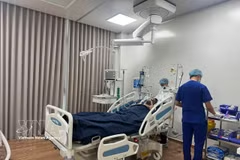
Large hospitals in Hanoi and Ho Chi Minh City have introduced dedicated services for international patients, digitalised administrative procedures and partnered with travel companies to offer complete packages covering airport transfers, treatment and post-treatment accommodation.
At the same time, popular tourist destinations such as Khanh Hoa and Lam Dong are developing wellness tourism centred on traditional medicine, hot mineral springs, detox programmes and meditation retreats.
Meanwhile, Da Nang and Phu Quoc are promoting integrated healthcare and resort models, allowing patients to recover in high-end accommodation with personalised nutrition, rehabilitation programmes and wellness services instead of remaining in hospital.
The sector has grown rapidly in recent years. According to market research firm IMARC Group, Vietnam's medical tourism market is currently valued at between 700 million USD and 850 million USD and is forecast to approach 4 billion USD by 2033, with average annual growth of around 18%.
Medical tourists are estimated to account for 3-5% of Vietnam's international arrivals, while the proportion is significantly higher in major cities such as Ho Chi Minh City.
Cambodia has emerged as one of the fastest-growing source markets. Many Cambodian visitors now combine shopping trips with health check-ups or medical treatment in Vietnam, attracted by competitive costs, easy transport connectivity and confidence in Vietnamese doctors, particularly in cancer screening, cardiovascular care, obstetrics, paediatrics and surgery.
According to Duong Duc Minh, Deputy Director of the Ho Chi Minh City Institute for Development Studies' Institute of Economic and Tourism Development Research, Vietnam is well placed to develop medical tourism across multiple segments, from preventive health screening and specialised treatment to fertility services and wellness tourism.
He said continued investment in healthcare quality, tourism services and stronger coordination between hospitals, travel companies and local authorities would be essential for Vietnam to establish itself as one of Asia's leading medical tourism destinations./.