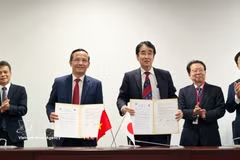
Hanoi (VNA) - Vietnam is set to begin producing its first homegrown next-generation vaccines in 2028 under a partnership between French pharmaceutical company Sanofi and Vietnam Vaccine Joint Stock Company (VNVC), marking a major step toward strengthening the country's vaccine self-sufficiency.
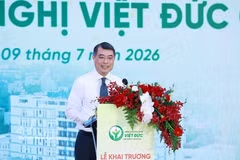
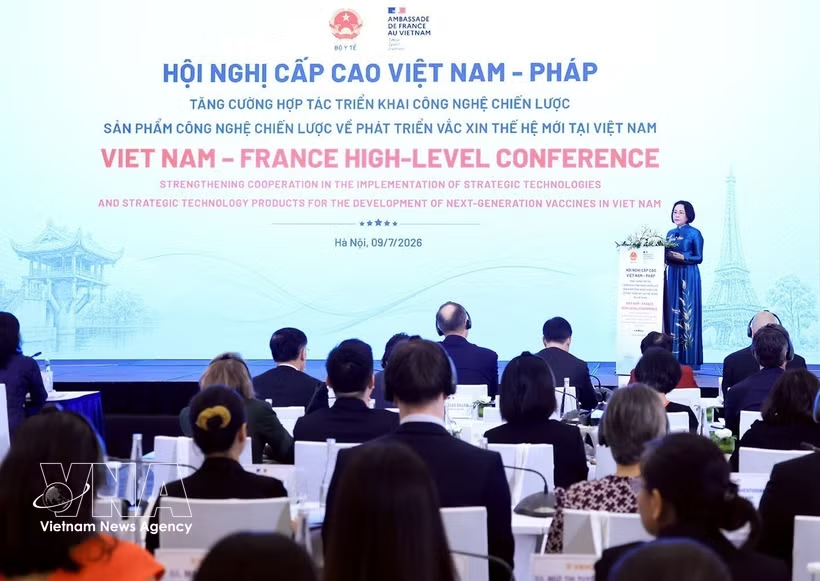
The roadmap was unveiled at the Vietnam-France High-Level Conference held in Hanoi on July 9. The event was jointly organised by Vietnam's Ministry of Health and the French Embassy, with the participation from senior Vietnamese leaders, representatives of the World Health Organisation (WHO), UNICEF, scientists, and executives from Sanofi and VNVC.
Under the agreement, Sanofi will transfer technology to VNVC to manufacture selected high-demand vaccines for children and adults at VNVC Vaccine and Bioproduct Plant. The first next-generation vaccines produced in Vietnam are expected to roll off production lines in 2028.
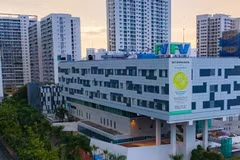
VNVC also updated delegates on the construction of its vaccine manufacturing plant in Tay Ninh province. The factory, backed by an initial investment of more than 2.5 trillion VND (about 95 million USD), covers over 26,000 sq.m and is designed to meet EU-GMP, WHO-GMP and US FDA standards. It will have an annual production capacity of around 100 million doses.
The plant is scheduled to become operational by the end of 2027, begin vaccine production in 2028 and commercially launch next-generation vaccines from 2029. It is expected to support the expansion of Vietnam's National Immunisation Programme while improving public access to advanced vaccines at more affordable costs.
Addressing the conference, National Assembly Vice Chairwoman Nguyen Thi Thanh said developing and manufacturing next-generation vaccines is not only a healthcare priority but also a matter of national health security and sustainable development. She noted that the Party, National Assembly and Government of Vietnam have introduced breakthrough policies to promote vaccine research, technology transfer and industrial development, with next-generation vaccines designated as strategic national technology products.
Thanh called for a clear cooperation roadmap to accelerate vaccine development, greater participation by the private sector, supportive public procurement policies, investment in domestic technological capabilities and high-quality human resources, with the long-term goal of making Vietnam a regional hub for vaccine research, clinical trials, manufacturing and distribution.
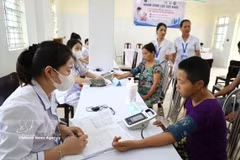
VNVC Chairman and CEO Ngo Chi Dung said the company has invested heavily in building an integrated vaccine ecosystem, including nearly 300 vaccination centres nationwide and a modern manufacturing facility. He expressed his hope for further policy support to encourage private investment in strategic technologies, enabling Vietnam to secure domestic supplies of advanced vaccines while enhancing national healthcare resilience./.